9/11 Trial Delayed to 2028, Nearly 27 Years After Attacks
Left says
- •The years of delay stem in large part from unresolved legal disputes over CIA torture, including waterboarding, that tainted evidence and complicated prosecution under lawful standards.
- •A rejected plea deal that would have secured guilty pleas and life sentences without parole was overturned after political interference from the Defense Secretary, prolonging the case unnecessarily.
- •The military commissions system itself, untested and repeatedly restructured, bears responsibility for the dysfunction, not just the defendants or their lawyers.
- •Due process protections, even for accused terrorists, require resolving questions about coerced confessions before a fair trial can proceed.
Right says
- •Victims' families have waited a quarter-century for justice and are rightly frustrated that another two-year delay has been imposed on a case with overwhelming evidence of guilt.
- •Khalid Sheikh Mohammed has openly confessed to planning the attacks 'from A to Z,' making the prolonged legal wrangling feel like an affront to accountability.
- •The plea deal that would have let the accused avoid the death penalty was properly rejected, and the system should not offer leniency to those responsible for mass murder of nearly 3,000 Americans.
- •Endless procedural delays and a revolving door of judges reflect a broken system that has failed to deliver swift justice for one of the most significant crimes in American history.
Common Take
High Consensus- A military judge, Lt. Col. Michael Schrama, set June 5, 2028 as the tentative trial date, rejecting the prosecution's proposed January 2027 date as unrealistic.
- The case has been repeatedly delayed for years, partly due to legal battles over evidence obtained through CIA torture and interrogation of the defendants.
- A federal appeals court threw out plea agreements in summer 2025 that would have spared some defendants the death penalty, reopening the path to a full trial.
- Nearly 3,000 people died in the 9/11 attacks, and families of victims have waited decades for a resolution.
The Arguments
Left argues
The delays stem largely from unresolved legal questions over CIA torture, including waterboarding KSM 183 times, which taint confessions and require careful judicial resolution to ensure any conviction meets lawful evidentiary standards.
Right counters
Regardless of interrogation methods used decades ago, Mohammed has openly and repeatedly confessed to planning the attacks 'from A to Z,' so endless litigation over tainted evidence should not indefinitely block a trial when guilt is not seriously in dispute.
Right argues
Victims' families have waited a quarter-century, and each additional delay compounds their suffering while doing nothing to change the overwhelming evidence of guilt against men accused of murdering nearly 3,000 Americans.
Left counters
The urgency of victims' families is understandable, but due process protections exist precisely for the hardest cases; rushing past unresolved torture and coerced-confession issues risks a conviction being overturned later, creating even longer delays and a hollow form of justice.
Left argues
A negotiated plea deal that would have secured guilty pleas and life sentences without parole was thrown out after Defense Secretary Lloyd Austin's late political intervention, prolonging a case that could have already been resolved.
Right counters
The plea deal was properly rejected because it would have let the men responsible for orchestrating mass murder escape the death penalty entirely, and a system that offers such leniency for the worst crime in modern American history fails the victims it claims to serve.
Right argues
The parade of five different judges, a broken military commissions system, and repeated procedural resets reflect a fundamentally dysfunctional process that has failed to deliver the swift justice the case demands.
Left counters
That dysfunction is itself largely a product of the commissions being an untested, ad hoc legal framework built to accommodate evidence derived from torture — the system's flaws are a direct consequence of trying to shortcut normal legal safeguards, not an argument for abandoning them now.
Left argues
The military commissions system itself — novel, repeatedly restructured, and used for the first time in cases like this — bears structural responsibility for the dysfunction, not merely the defendants, their lawyers, or any single actor.
Right counters
Whatever structural flaws exist, they don't change the fact that confessed perpetrators of a mass-casualty attack have spent two decades in legal limbo while their victims' families are denied the closure and accountability the justice system exists to provide.
Challenge Questions
These questions target genuine internal contradictions — meant to provoke honest reflection.
Right asks Left
“If due process concerns over coerced confessions are serious enough to justify years of additional delay, why should a plea deal—arrived at through negotiation rather than trial—not have been allowed to stand as a legitimate resolution that avoided the evidentiary disputes altogether?”
Left asks Right
“If the evidence of guilt is truly overwhelming and confessions are freely given, why oppose resolving the torture and evidentiary disputes now, since doing so would only strengthen rather than weaken a future conviction and death sentence?”
Outlier Report
Left Fringe
ACLU and Sen. Dick Durbin represent a minority (~15-20%) of the left who view the military commissions as fundamentally illegitimate.
Right Fringe
Sen. Lindsey Graham and hardline victims' groups represent a minority (~20-25%) of the right who reject any plea deal outright and demand execution.
Noise Assessment
Moderate: media and advocacy amplification outpaces the more unified, less nuanced public sentiment favoring justice/accountability over procedural debates.
Sources (7)
<p>A military judge on Wednesday set a June 2028 trial date for <a href="https://www.axios.com/2024/12/31/911-plea-deal-appeal-khalid-sheikh-mohammed" target="_blank">Khalid Sheikh Mohammed</a> and three other men accused of plotting the Sept. 11, 2001, terrorist attacks.</p><p><strong>The big picture:</strong> Air Force Lt. Col. Michael Schrama, a military commissions judge, set the tentative trial date for June 5, 2028 — some 20 years after <a href="https://www.axios.com/2024/08/03/911-plea-deal-revoked-khalid-sheikh-mohammed" target="_blank">Mohammed</a> and his co-defendants were first arraigned in 2008 and 27 years after the 9/11 attacks.</p><hr /><ul><li><a href="https://www.axios.com/2024/07/31/9-11-guilty-plea-guantanamo-pentagon?utm_source=chatgpt.com" target="_blank">Plea agreements</a> that would have spared Mohammed and two co-defendants the death penalty were <a href="https://www.mc.mil/News-Media-Resources/Commissions-News/ItemId/14113" target="_blank">thrown out </a>by a divided federal appeals court in July 2025. The Supreme Court is considering whether to review that decision.</li></ul><p><strong>Zoom in:</strong> Mohammed is due to stand trial alongside Walid bin Attash, Ali Abdul Aziz Ali and Mustafa Ahmed al-Hawsawi.</p><ul><li>Military prosecutors had wanted a January 2027 trial, but Schrama determined that wasn't realistic.</li></ul><p><strong>Flashback: </strong><a href="https://www.axios.com/2019/08/30/911-plotters-trial-date-khalid-sheikh-mohammed-2021" target="_blank">Military judge sets 2021 trial date for alleged 9/11 plotters</a></p>
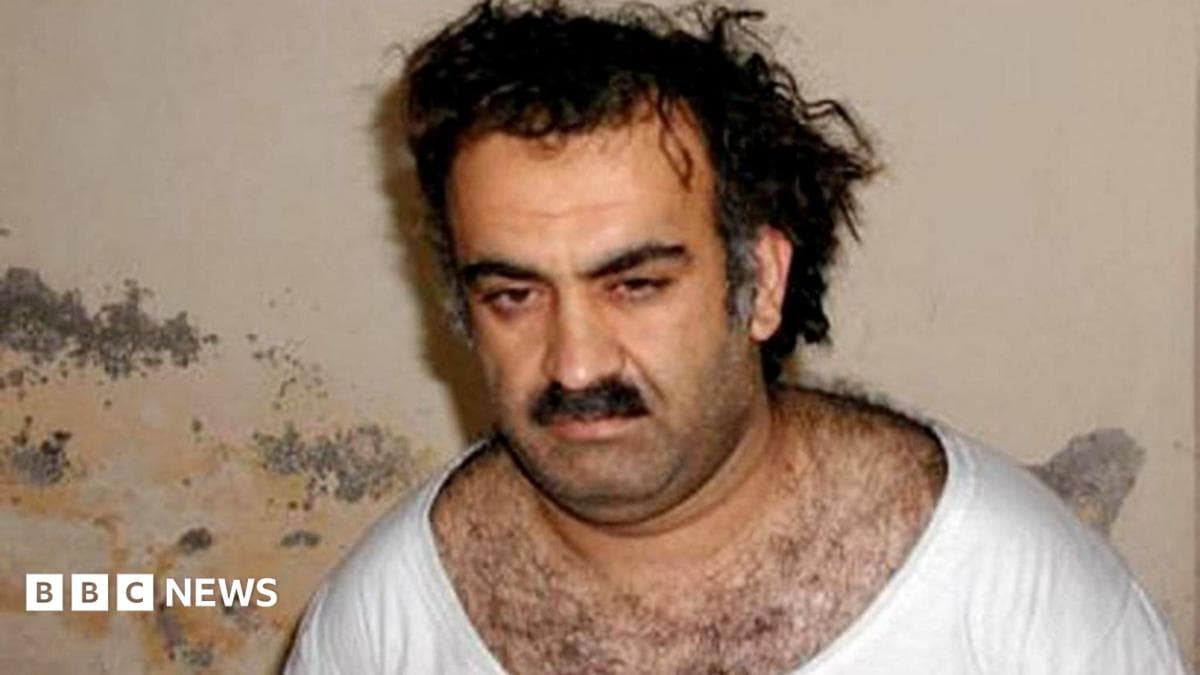
His plea deal to avoid a death-penalty trial was rejected by a federal appeals court last summer.
The judge, Lt. Col. Michael Schrama, tentatively scheduled the trial for June 5, 2028, after siding with the defense that a January 2027 date was unrealistic.
A military judge has set a June 2028 trial date for Khalid Sheikh Mohammed, the man accused of plotting the September 11 terrorist attacks. NBC News' Kelly O'Donnell reports.
Khalid Sheikh Mohammed, who has been held at Guantánamo Bay since 2006, is scheduled to go on trial in June 2028.
Khalid Sheikh Mohammed, the accused mastermind of the Sept. 11 terrorist attacks, and three alleged co-conspirators are set to stand trial in 2028 after decades of delays, a military judge ruled Wednesday.