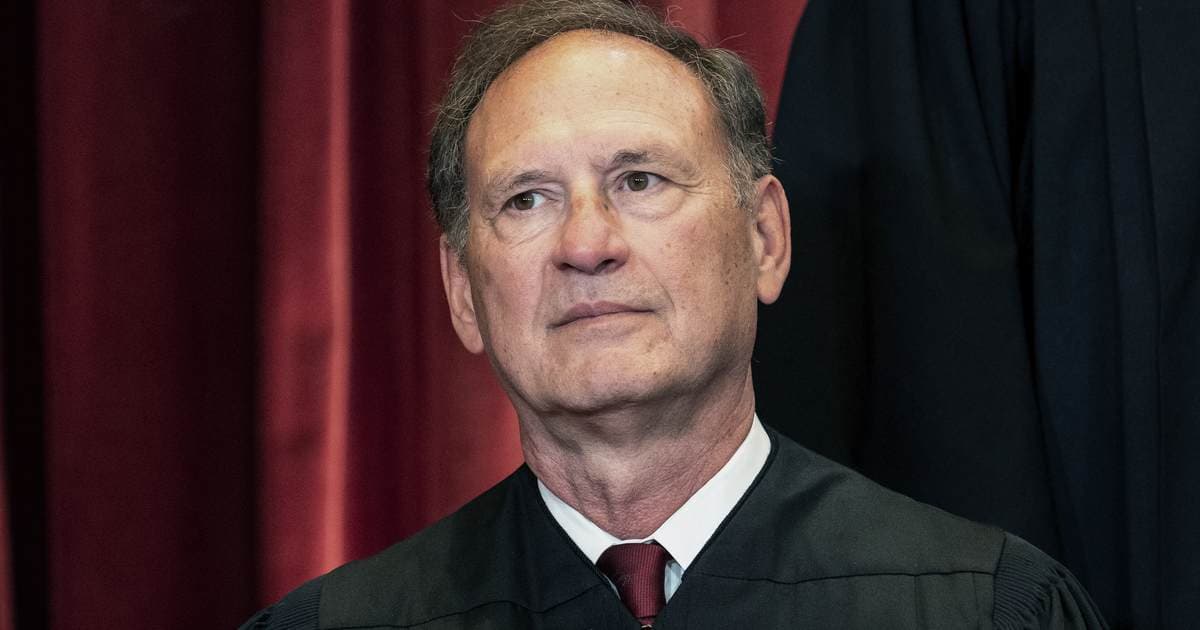
Alito Reverses Course, Recuses From Major Oil Climate Case
Left says
- •The recusal validates months of advocacy from environmental and judicial watchdog groups who argued Alito's oil and gas holdings created a conflict of interest under the court's own ethics code.
- •Alito's initial refusal to step aside, followed by a reversal just a week before arguments, reinforces concerns about the Supreme Court's inconsistent self-policing on ethics and its resistance to outside scrutiny.
- •A potential 4-4 split now looms over a case with billions of dollars and nationwide implications for holding fossil fuel companies accountable for deceiving the public about climate change.
- •The timing underscores why binding, enforceable ethics rules for the court are necessary rather than relying on individual justices to judge their own conflicts.
Right says
- •Alito does not own stock in either Suncor Energy or ExxonMobil, the actual parties to the case, and his recusal came without any stated explanation or admission of wrongdoing.
- •The pressure campaign against Alito came primarily from left-leaning environmental and judicial watchdog groups seeking to tilt the case's outcome by removing a conservative justice.
- •Alito had previously and consistently defended his participation as appropriate, and his recusal should not be read as confirmation that activists' ethics complaints were valid.
- •The case carries major First Amendment implications, since energy companies argue that imposing liability based partly on their public statements and advocacy threatens free speech rights.
Common Take
High Consensus- Alito recused himself on September 28, one week before oral arguments were scheduled to begin October 5.
- The clerk's letter gave no explanation for the decision, stating only that Alito would not continue to participate.
- Alito does not own stock in Suncor Energy or ExxonMobil but holds investments in other oil and gas companies including ConocoPhillips and Phillips 66.
- The case addresses whether Colorado local governments can hold oil companies liable under state tort law for climate-related damages, with outcomes that could affect similar lawsuits nationwide.
The Arguments
Left argues
Alito's reversal, coming right after months of sustained pressure from environmental and judicial watchdog groups citing his oil and gas holdings, suggests the ethics concerns raised had genuine merit under the court's own recently adopted code of conduct.
Right counters
Alito never owned stock in either party to the case, Suncor or ExxonMobil, and the unexplained letter offers no admission that the activists' specific legal theory about indirect benefit to ConocoPhillips or Phillips 66 was correct.
Right argues
The pressure campaign was organized almost entirely by left-leaning advocacy groups like Consumer Watchdog who had an obvious interest in removing a conservative justice from a case whose outcome could gut climate liability lawsuits nationwide.
Left counters
The identity of the groups raising concerns doesn't determine whether the ethics standard itself was sound; the same conflict-of-interest reasoning would apply regardless of which political side raised it, and Alito had recused from a related petition in this same litigation before.
Left argues
The lack of any explanation for either the original refusal to recuse or the sudden reversal exemplifies the Supreme Court's opaque, self-policing approach to ethics that leaves the public unable to evaluate whether justices are applying consistent standards.
Right counters
Justices have long declined to explain individual recusal decisions as a matter of practice, and reading a one-sentence procedural letter as proof of systemic failure assumes bad faith rather than ordinary judicial discretion exercised close to argument.
Right argues
The case raises serious First Amendment questions, since Boulder's theory of liability rests partly on the companies' public statements and advocacy about climate science, meaning the merits deserve serious consideration independent of any recusal controversy.
Left counters
Framing the case as primarily a free-speech dispute minimizes the core question of whether corporations can be held accountable in state courts for allegedly deceiving the public, a consumer-protection and tort issue with billions of dollars in real-world climate harm at stake.
Left argues
A resulting 4-4 split would leave the fossil fuel accountability question unresolved nationally, illustrating how individual recusal decisions by justices can have outsized, unpredictable effects on major policy outcomes that Congress or clearer rules should address.
Right counters
A split affirms the lower court by default without setting new nationwide precedent, which is a normal and legitimate outcome of the judicial process rather than evidence that ethics rules need to be rewritten.
Challenge Questions
These questions target genuine internal contradictions — meant to provoke honest reflection.
Right asks Left
“If Alito's recusal is treated as proof the ethics complaints were valid, how do you account for his consistent, non-explained recusal practices in other unrelated cases, and does treating any recusal as an admission of wrongdoing risk pressuring justices to avoid sitting on cases based purely on public campaigns rather than legal conflict standards?”
Left asks Right
“If the absence of an explanation and lack of direct stock ownership in the named parties is enough to defend Alito's initial resistance to recusal, why did he ultimately change course just a week before arguments, and doesn't that timing itself suggest the underlying conflict concerns had some legitimate weight?”
Outlier Report
Left Fringe
Groups like Consumer Watchdog (Alexandra Nagy) and the 30-organization coalition pushing for Senate Judiciary investigation represent a vocal minority (~15% of the left) pushing for court-packing or aggressive court delegitimization framing beyond mainstream Democratic officials' calls for ethics reform.
Right Fringe
Commentators at outlets like Breitbart or figures who suggest the recusal itself was capitulation to left-wing pressure and improper (~10-15% of the right) represent a fringe view; most conservatives simply see the recusal as a neutral procedural matter without strong feelings either way.
Noise Assessment
High noise-to-signal ratio; this is largely an elite media/activist/legal-commentary story with limited broad public engagement, so vocal online reactions from advocacy groups and partisan commentators likely overrepresent actual public sentiment, which is probably closer to indifferent or mildly informed on the specifics.
Sources (9)
‘will not continue to participate’
The issue at hand is whether the city of Boulder, Colo., may sue oil companies over climate change.
Alito will sit out the first case the Supreme Court hears this term after facing calls from the left to do so because he owns stock in oil companies. He had previously pushed back.
Justice Samuel A. Alito Jr. had faced pressure to recuse himself from the climate case because he owns stock in oil companies.
<p>Decision from conservative justice comes before court hears case on whether fossil-fuel firms deceived US public</p><p>Supreme court justice Samuel Alito recused himself on Monday from a major climate-change case after facing calls to step aside due to stock holdings in oil companies.</p><p>A letter posted in the case did not specify a reason, but the conservative justice has previously recused himself from other cases involving companies where he holds stock.</p> <a href="https://www.theguardian.com/us-news/2026/sep/28/samuel-alito-supreme-court-oil-climate-case">Continue reading...</a>
Justice Samuel Alito on Monday recused from a major climate case set to be heard next week, stepping aside with no explanation after previously participating in the vote to take up the dispute. Alito has long held financial interests in the oil and gas sector, and as one of the only justices to own individual…
<p>Supreme Court Justice Samuel Alito will not take part in a climate change case involving two oil companies and local governments in Colorado, the court announced Monday, one week before the justices are scheduled to hear arguments.</p> <p>The post <a href="https://www.breitbart.com/politics/2026/09/28/justice-alito-recuses-himself-major-climate-lawsuit-oil-companies/" rel="nofollow">Justice Alito Recuses Himself from Major Climate Lawsuit Against Oil Companies</a> appeared first on <a href="https://www.breitbart.com" rel="nofollow">Breitbart</a>.</p>
Supreme Court Justice Samuel Alito has recused himself from a major climate change case after scrutiny for his stock holdings in oil companies.