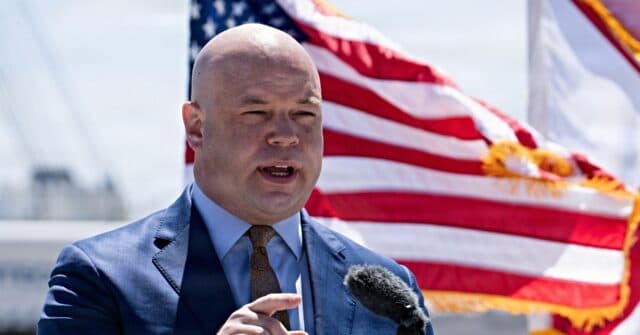
Army Secretary Abruptly Ousted After Clashing With Hegseth Over Purges
Intra-Party Split Detected
Reports indicate internal Republican/administration tension between Driscoll (an ally of Vice President Vance) and Defense Secretary Hegseth over the removal of senior Army generals, suggesting a rift within Trump's own administration rather than a clean partisan divide.
Left says
- •Driscoll's exit follows months of documented friction with Hegseth over the removal of senior military leaders, including Army Chief of Staff Gen. Randy George and Gen. Chris Donahue, both seen as competent, apolitical professionals.
- •The ousted leaders had championed the Army Transformation Initiative, a modernization plan emphasizing drones and force restructuring, raising concerns that politically motivated purges could undermine institutional expertise and long-term readiness.
- •Driscoll's ties to Vice President JD Vance and his bipartisan relationships in Congress suggest his removal may reflect internal power struggles rather than performance issues.
- •Bypassing the Army's normal chain of succession to install Telle, a Trump loyalist with no military command experience, raises questions about politicization of a historically nonpartisan civilian post.
Right says
- •Trump acted decisively and swiftly to ensure continuity of leadership at a critical moment, naming a replacement within days and effective immediately.
- •Telle brings more than two decades of relevant experience working with Republican senators and in the Trump White House, including a key role advancing the Abraham Accords and the U.S. Space Force.
- •Hegseth's personnel changes reflect a broader effort to reform Army leadership and eliminate officials resistant to the administration's priorities, which is a legitimate exercise of civilian oversight over the military.
- •Driscoll was praised by the White House for his effective leadership and contributions to modernizing the Army during a historic period of military operations, framing his departure as an amicable transition rather than a firing.
Common Take
High Consensus- Dan Driscoll resigned as Army Secretary this week after 18 months in the role.
- Reports across the political spectrum describe ongoing tensions between Driscoll and Defense Secretary Pete Hegseth over the removal of senior generals.
- Trump named Adam Telle, current assistant secretary of the Army for civil works, as acting Army secretary effective immediately.
- The transition occurs amid an active U.S. conflict with Iran, with significant Army resources deployed in the Middle East.
The Arguments
Left argues
Driscoll's departure caps months of documented friction with Hegseth over the ouster of respected, apolitical generals like Randy George and Chris Donahue, suggesting competence and institutional expertise are being sacrificed to political loyalty tests.
Right counters
Civilian control of the military is a bedrock constitutional principle, and a Defense Secretary reshaping military leadership to align with the administration's priorities is a legitimate exercise of that oversight, not an abuse of it.
Right argues
Trump acted decisively to fill the vacancy 'effective immediately' with Telle, a seasoned Washington operator with 20-plus years of relevant experience including work on the Abraham Accords and Space Space Force launch, ensuring no leadership gap during an active conflict with Iran.
Left counters
Swift decisiveness doesn't excuse bypassing the Army's normal chain of succession to install a loyalist with no military command experience, which raises legitimate concerns about politicizing a historically nonpartisan post rather than filling it on merit.
Left argues
Driscoll's bipartisan relationships in Congress and his friendship with Vice President Vance suggest his removal may reflect internal power struggles and a purge of independent-minded officials rather than any performance failure.
Right counters
The White House explicitly praised Driscoll as 'highly effective' in advancing the administration's agenda and modernizing the Army, framing this as an amicable transition rather than a punitive firing, which undercuts the narrative of a hostile purge.
Right argues
Personnel changes under Hegseth reflect a broader, legitimate effort to ensure Army leadership is aligned with the administration's reform priorities, which is well within the authority any Defense Secretary has to shape the institution he leads.
Left counters
When the officials being removed were the ones implementing a widely praised modernization plan—the Army Transformation Initiative—the changes look less like reform and more like undermining the very readiness improvements the administration claims to want.
Left argues
NBC and other outlets note the surprising nature of bypassing the Army's second-most senior official in favor of Telle, a pattern that fits a broader concern about eroding established institutional norms in favor of personal loyalty.
Right counters
Presidents have broad discretion to appoint acting officials they trust to execute their agenda quickly, and Telle's extensive legislative and national security experience make him a credible, qualified choice regardless of the normal succession order.
Challenge Questions
These questions target genuine internal contradictions — meant to provoke honest reflection.
Right asks Left
“If Driscoll was, as reported, actively involved in advancing the administration's own Army Transformation Initiative, why should removing officials who clashed with the Defense Secretary's separate personnel decisions be seen as evidence of a broader anti-reform purge rather than a legitimate disagreement over specific removals?”
Left asks Right
“If Driscoll's tenure was genuinely as effective as the White House claims, and his departure was truly amicable, why was he replaced within days by bypassing the normal chain of succession instead of allowing the deputy secretary to serve in an interim capacity while a merit-based search took place?”
Outlier Report
Left Fringe
Commentators like those at MSNBC (e.g., Rachel Maddow-style framing) and some retired generals such as Mark Hertling who publicly warn of 'politicization of the military' represent a vocal minority (~15-20% of the left) pushing an alarmist 'military coup-adjacent' framing rather than simple bureaucratic concern.
Right Fringe
Figures like Sebastian Gorka or some MAGA-aligned commentators who frame any ousted general as a 'woke holdover' deserving removal represent an aggressive minority (~15-20% of the right) that goes beyond the more measured 'legitimate personnel authority' argument most conservatives make.
Noise Assessment
High noise relative to actual public engagement — most Americans have limited awareness of Army Secretary turnover, so the intensity of coverage and framing battles on X and cable news outstrips genuine broad public sentiment, which is more indifferent than either side's rhetoric suggests.
Sources (11)
<p>Adam Telle is the new acting U.S. Army Secretary with President Donald Trump making clear late Thursday night his appointee assumes the role "immediately."</p> <p>The post <a href="https://www.breitbart.com/politics/2026/09/04/trump-picks-adam-telle-as-new-acting-u-s-army-secretary/" rel="nofollow">Trump Picks Adam Telle as New Acting U.S. Army Secretary</a> appeared first on <a href="https://www.breitbart.com" rel="nofollow">Breitbart</a>.</p>
President Trump has named Adam Telle as the acting Army secretary, following the departure of Dan Driscoll amid widespread reports of tensions with Defense Secretary Pete Hegseth.
President Donald Trump moved quickly to fill the void created with the resignation of Army Secretary Dan Driscoll, naming seasoned Washington operator Adam Telle to take the reins as acting Army secretary. Telle, who currently serves as the assistant secretary of the Army for Civil Works, is no stranger to high-stakes political battles. A Capitol ...
Telle is currently Assistant Secretary of the Army for Civil Works and oversees public engineering, including the U.S. Army Corps of Engineers, and infrastructure projects for the Army.
President Donald Trump on Thursday named Adam Telle, a civilian leader in the U.S. Army Corps of Engineers, as the acting Army secretary following the departure of Dan Driscoll amid widespread reports of tensions with Defense Secretary Pete Hegseth. The move is surprising because it bypasses the Army’s second most senior official who would normally take over. NBC's Garrett Haake reports for TODAY.
President Donald Trump on Thursday named Adam Telle as the acting Army secretary following the departure of Dan Driscoll amid widespread reports of tensions with War Secretary Pete Hegseth.
The move came days after the resignation of Daniel P. Driscoll, who had clashed with Defense Secretary Pete Hegseth over the purge of top generals in the Army.
<p>Telle has previously worked for Trump during his first term as a special assistant to the president for legislative affairs</p><p>Donald Trump on Thursday named Adam Telle as the acting army secretary after the departure of Daniel Driscoll amid widespread reports of tensions with defense secretary Pete Hegseth.</p><p>Telle is currently the assistant secretary of the army for civil works.</p> <a href="https://www.theguardian.com/us-news/2026/sep/03/adam-telle-acting-army-secretary">Continue reading...</a>
President Trump announced Thursday evening that Adam Telle, the current assistant secretary of the Army for Civil Works, will be the acting Army secretary following this week’s resignation of Dan Driscoll. “He is a Great Patriot, who is respected by all,” the president wrote in a Truth Social post announcing Telle’s appointment. As assistant secretary…
President Trump on Thursday named Adam Telle, a civilian leader in the U.S. Army Corps of Engineers, as the acting Army secretary following the departure of Dan Driscoll amid widespread reports of tensions with Defense Secretary Pete Hegseth.