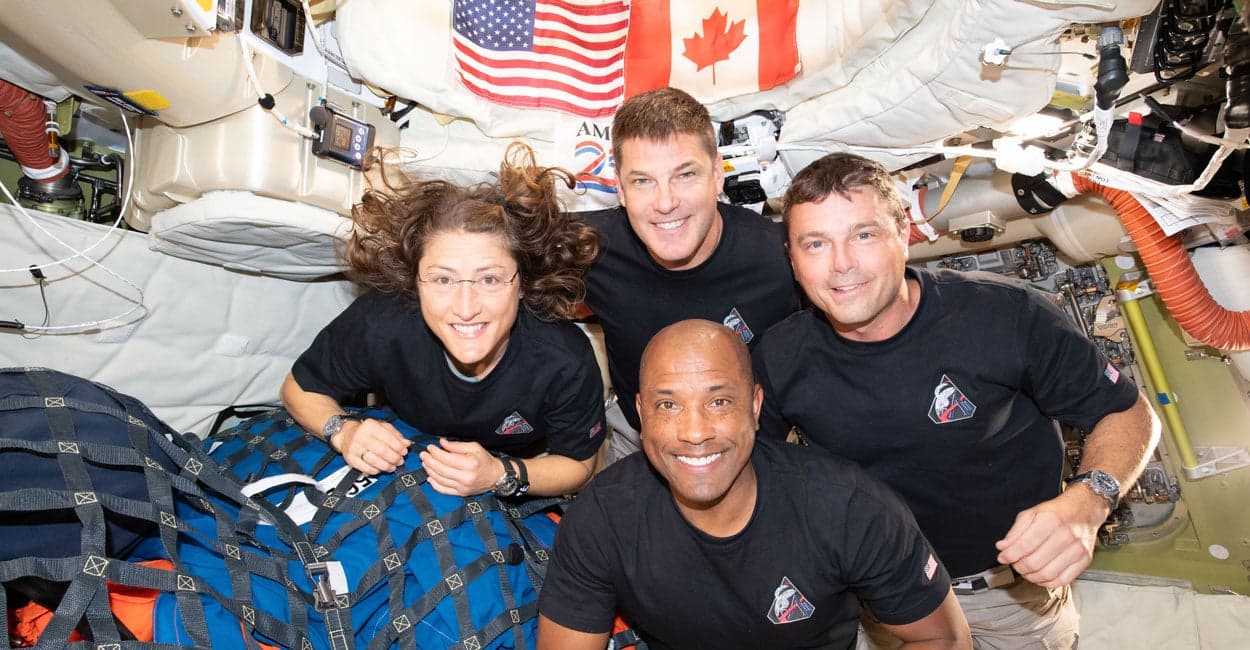
Artemis II Success Highlights American Exceptionalism vs Space Program Chaos
Left says
- •The mission demonstrates the power of international cooperation and diversity, with the first woman and person of color to travel beyond low Earth orbit alongside a Canadian astronaut
- •NASA's scientific capabilities remain strong despite organizational challenges, as evidenced by the crew's successful data collection and unprecedented lunar observations
- •The astronauts' emotional moments, like naming a crater after Wiseman's late wife, highlight the human dimension of space exploration beyond nationalist rhetoric
- •The mission's success shows government-funded space programs can achieve remarkable feats when properly supported and managed
Right says
- •The mission exemplifies American leadership in space exploration and technological innovation, proving the nation can still accomplish seemingly impossible feats
- •President Trump's personal call to the astronauts and his commitment to establishing a permanent lunar base demonstrate strong executive leadership in space policy
- •The successful mission counters negative narratives about American decline and shows the country remains capable of inspiring global achievement
- •NASA's ability to break Apollo-era records after decades proves American space dominance can be restored through proper priorities and investment
Common Take
High Consensus- The Artemis II crew successfully broke the human spaceflight distance record, traveling 252,756 miles from Earth
- The mission represents the first human lunar flyby in over 50 years and captured unprecedented images of the moon's far side
- The astronauts' naming of a lunar crater after Commander Wiseman's late wife Carroll was a deeply moving moment for the crew
- The mission serves as a crucial stepping stone toward future lunar landings and establishing a permanent human presence on the moon
The Arguments
Right argues
The Artemis II mission demonstrates American technological supremacy and leadership, with President Trump's direct engagement showing strong executive commitment to space dominance and his promise of a permanent lunar base proving America can still achieve the impossible.
Left counters
The mission's success stems from decades of international collaboration and diverse expertise, with the inclusion of a Canadian astronaut and the historic participation of the first woman and person of color to travel beyond low Earth orbit showing that progress comes through cooperation, not nationalism.
Left argues
The astronauts' emotional moments, like naming a crater after Wiseman's late wife, and their focus on scientific discovery and data collection demonstrate that space exploration's true value lies in human connection and advancing knowledge for all humanity.
Right counters
These personal moments, while touching, occurred within a mission that fundamentally showcases American engineering excellence and space program capabilities that inspire global respect and demonstrate what proper leadership and investment can achieve.
Right argues
Breaking Apollo-era records after decades proves that American space dominance can be restored through proper priorities and investment, countering narratives of national decline and showing the country remains capable of inspiring global achievement.
Left counters
The mission's success despite organizational challenges and technical setbacks actually highlights the resilience of government-funded science programs and international partnerships, not American exceptionalism, as evidenced by the heat shield problems and schedule delays that required collaborative problem-solving.
Left argues
NASA's ability to overcome technical challenges like the heat shield issues and achieve unprecedented lunar observations demonstrates that well-supported government science programs can accomplish remarkable feats through methodical engineering and international cooperation.
Right counters
The mission's ultimate success in overcoming these very challenges proves American resilience and technological superiority, with the crew traveling farther than any humans in history and capturing groundbreaking images that showcase what American leadership in space can accomplish.
Challenge Questions
These questions target genuine internal contradictions — meant to provoke honest reflection.
Right asks Left
“If this mission truly represents international cooperation over American leadership, why did it require American rockets, American spacecraft, American mission control, and American technological infrastructure to succeed, with international partners playing supporting rather than leading roles?”
Left asks Right
“If American exceptionalism and leadership are the key factors in this mission's success, how do you explain the significant technical problems, schedule delays, and organizational challenges that nearly derailed the program, and why did it take decades to return to capabilities America had in the 1970s?”
Outlier Report
Left Fringe
Progressive activists like Alexandria Ocasio-Cortez and Bernie Sanders who have previously criticized NASA spending as wasteful when social programs need funding, representing roughly 15-20% of the left coalition.
Right Fringe
Isolationist figures like Tucker Carlson and some America First advocates who oppose international cooperation aspects and want purely American missions, representing about 10-15% of the right.
Noise Assessment
Relatively low noise ratio - this is a genuinely popular achievement that most Americans celebrate. The main amplification comes from partisan media trying to claim credit or emphasize their preferred angles, but the underlying public enthusiasm is authentic.
Sources (22)
<p>The Artemis II crew are on their way home after completing a record-breaking mission around the moon, but their ship’s re-entry to Earth’s atmosphere will... <a class="call-to-action" href="https://www.dailysignal.com/2026/04/08/dangerous-test-still-ahead-for-artemis-ii-crew/">Read More</a></p> <p>The post <a href="https://www.dailysignal.com/2026/04/08/dangerous-test-still-ahead-for-artemis-ii-crew/">Dangerous Test Still Ahead for Artemis II Crew</a> appeared first on <a href="https://www.dailysignal.com/">The Daily Signal</a>.</p>
<p><a href="https://www.axios.com/2026/04/03/artemis-ii-earth-photo-picture" target="_blank">Artemis II's</a> four astronauts have officially gone where no one has gone before, setting on Monday a new distance-from-Earth record for human spaceflight.</p><p><strong>Why it matters: </strong>Artemis II broke <a href="https://www.axios.com/2020/03/17/apollo-mission-website-experience-real-time" target="_blank">Apollo 13's</a> 248,655-mile record, set over 55 years ago on that ill-fated ship's emergency flight home.</p><ul><li>Upon crossing that mark, Artemis II mission commander Reid Wiseman named a lunar crater "Carroll," after his wife who passed away from cancer in 2020.</li></ul><hr /><p><strong>Driving the news: </strong>The <a href="https://www.axios.com/2026/04/01/moon-artemis-ii-launch-florida" target="_blank">lunar quartet</a> has further to go yet.</p><ul><li>They'll reach their maximum distance <em>(252,760 miles)</em> just after 7 p.m. ET tonight.</li></ul><p><strong>What's next: </strong>The crew is starting their seven-hour lunar orbit and observation period this afternoon. <em><a href="https://www.youtube.com/watch?v=m3kR2KK8TEs" target="_blank">(Watch live.)</a></em></p><ul><li>At 6:44 p.m. ET, the crew will enter an expected 40-minute radio blackout on the dark side of <a href="https://www.axios.com/local/huntsville/2026/04/01/artemis-nasa-space-moon-huntsville" target="_blank">the Moon</a>.</li><li>They will later witness a solar eclipse, with the Moon blocking <a href="https://www.axios.com/2024/12/23/nasas-parker-solar-probe-sun-closest-point" target="_blank">the Sun</a> from their perspective.</li></ul><p><strong>Also planned: </strong>A chance to shoot a new version of <a href="https://time.com/5479821/earthrise-picture-history-apollo-8/" target="_blank">"Earthrise"</a> — perhaps the Apollo era's most famous photo not taken on the Moon itself.</p><p><strong>What they're saying: </strong>Apollo 8 and 13's Jim Lovell, in a message to the Artemis II crew recorded before his 2015 death: "Welcome to my old neighborhood!"</p><ul><li>"It's a historic day and I know how busy you'll be, but don't forget to enjoy the view."</li></ul><p><strong>Go deeper... </strong><a href="https://www.axios.com/2026/04/03/artemis-ii-earth-photo-picture" target="_blank">PHOTO: See Earth from Artemis II's POV</a></p>
<p>NASA's <a href="https://www.axios.com/local/huntsville/2026/03/16/nasa-artemis-mission-changes-2028-moon-landing-sls" target="_blank">Artemis II Moon mission</a> successfully launched from Florida's John F. Kennedy Space Center on Wednesday afternoon at 6:35pm ET.</p><p><strong>Why it matters: </strong>Artemis II's planned crewed lunar flyby is set to mark the closest humanity has come to the Moon since the Apollo days.</p><hr /><ul><li>It's also a key step towards NASA's grand ambition to return human boots to lunar soil, and the <a href="https://www.axios.com/politics-policy/donald-trump" target="_blank">Trump</a> administration's dreams of a permanent Moon base.</li></ul><p><strong>The latest: </strong>President Trump congratulated NASA and the astronauts on the successful launch during his address to the nation on Wednesday night.</p><ul><li>"These are brave people," Trump said. "God bless those four unbelievable astronauts."</li></ul><p><strong>Driving the news: </strong><a href="https://www.axios.com/local/raleigh/2026/04/01/nasa-s-moonshot" target="_blank">NASA astronauts</a> Reid Wiseman, Victor Glover and Christina Koch, plus Canada's Jeremy Hansen, are just beginning what's expected to be a 10-day mission around the Moon and back.</p><ul><li>Artemis II is designed as a "dress rehearsal" before a lunar landing planned for later this decade. (Apollo 8 and 10 served similar roles before Apollo 11 and Neil Armstrong's "one giant leap.")</li><li>It marks the second launch of NASA's Space Launch System (SLS) rocket, and the first crewed mission for the Lockheed Martin/Airbus Orion spacecraft.</li></ul><img src="https://images.axios.com/jaOqW6XO5GOkCjNLNOR7StXCPjs=/2026/03/30/1774885906470.png" /> <div>Graphic: NASA</div><p><strong>Between the lines: </strong>Artemis II is expected to make several bits of space history.</p><ul><li>Glover and Koch will become the first person of color and woman to travel beyond low Earth orbit, respectively.</li><li>Hansen will become the first non-American to voyage beyond that mark.</li></ul><p><strong>Yes, but: </strong>NASA Administrator Jared Isaacman recently <a href="https://apnews.com/article/nasa-moon-artemis-astronauts-83132fc4f86c3491984844fc309e25d2" target="_blank">rejiggered the Artemis schedule,</a> shifting Artemis III from a lunar landing to a test flight of one or both of SpaceX and Blue Origin's lunar landers in low Earth orbit.</p><ul><li>The next crewed Moon landing is now planned for Artemis IV in 2028.</li></ul><p><strong>What's next: </strong>The agency plans to follow that up with <a href="https://www.nasa.gov/news-release/nasa-unveils-initiatives-to-achieve-americas-national-space-policy/" target="_blank">yearly Moon visits</a> to build a permanent lunar base.</p><p><em>Editor's note: This article has been updated with President Trump's comments. </em></p>
<p>Just a few hours remain in the countdown for Artemis II, NASA's mission to return astronauts to lunar orbit for the first time since the Apollo era.</p><ul><li>The agency's new lunar hopes and dreams are sitting on pad 39B at Florida's Kennedy Space Center in the form of a 322-foot-tall rocket set to launch three Americans and one Canadian on a 10-day flyby of Earth's nearest celestial companion. </li></ul><hr /><p><strong>Why it matters: </strong>The mission — a crewed dress rehearsal for a lunar landing, like Apollo 8 and 10, decades ago — will set several space milestones.</p><ul><li>NASA astronauts<strong> </strong>Victor Glover and Christina Koch will become the first person of color and woman, respectively, to travel beyond low Earth orbit </li><li>Canada's Jeremy Hansen will become the first non-American to voyage beyond that mark.</li></ul><p><strong>What they're saying: </strong>NASA chief historian Brian Odom <a href="https://www.axios.com/local/huntsville/2026/04/01/artemis-nasa-space-moon-huntsville" target="_blank">tells Axios' Derek Lacey</a>: "I think this [mission] signals a picking up where we last left off."</p><ul><li>"There's still that<strong> </strong>'shoulders of giants' mentality." </li></ul><p><strong>What we're watching: </strong>The two-hour launch window opens Wednesday at 6:24pm ET. <em><a href="https://www.youtube.com/watch?v=Tf_UjBMIzNo" target="_blank">(Watch live on NASA's YouTube channel.)</a></em></p><ul><li>If needed,<strong> </strong>the next window opens Thursday at 7:22pm ET. Space travel can be unpredictable, after all.</li></ul><p><strong>Case in point: </strong>The Artemis II "stack" — that's the Space Launch System (SLS) rocket plus the Orion spacecraft atop it — had to be <a href="https://www.nasa.gov/blogs/missions/2026/02/25/nasa-artemis-ii-rocket-rolls-back-to-vehicle-assembly-building/" target="_blank">rolled back</a> into its hangar in late February to fix technical issues that prevented an earlier launch attempt.</p><ul><li>The SLS is a NASA-led Boeing/Northrop Grumman/United Launch Alliance/Aerojet Rocketdyne endeavor, while Orion is a Lockheed Martin/Airbus Defense and Space effort.</li></ul><img src="https://images.axios.com/jaOqW6XO5GOkCjNLNOR7StXCPjs=/2026/03/30/1774885906470.png" /> <div>Graphic: NASA</div><p><strong>Between the lines: </strong>While no small feat, Artemis II is only a lunar flyby.</p><ul><li>NASA once planned a Moon landing with Artemis III, but recently rejiggered its schedule.</li><li>Artemis III will now involve testing one or both of SpaceX and Blue Origin's lunar lander vehicles in low Earth orbit. A Moon landing is now targeted for Artemis IV in 2028.</li></ul><p><strong>What's next: </strong>NASA eventually hopes to return to the Moon annually, if not more often, with the ambitious goal of establishing a lunar base.</p><ul><li>But first: A quick visit to check out the cosmic neighborhood before getting into the real estate market.</li></ul>
The four astronauts said they were returning to Earth with "so many more pictures, so many more stories".
With Artemis II astronauts closing out on-board tests, flight controllers are prepping for reentry and splashdown Friday.
The four Artemis II astronauts hold an in-flight news conference from aboard the Orion spacecraft before their return to Earth. They discuss naming the lunar crater after Reid Wiseman's late wife, Carroll, how the mission has changed them and more.
The moon music tradition started more than 50 years ago, NASA said as it shared the Artemis II crew's playlist this week.
The launch of NASA's Artemis II against the backdrop of the Iran war is drawing parallels to another moon mission in the middle of a conflict nearly 60 years ago. Marsha Barrett, associate professor at the University of Illinois Urbana-Champaign, joins to discuss.
<p>Distance Records, Mineral Moonscapes, and a San Diego Finale.</p> The post <a href="https://legalinsurrection.com/2026/04/artemis-ii-mission-begins-return-trip-to-earth/">Artemis II Mission Begins Return Trip to Earth</a> first appeared on <a href="https://legalinsurrection.com">Le·gal In·sur·rec·tion</a>.
The successful launch of Artemis II marks a moment of great hope. <img src="https://i0.wp.com/www.nationalreview.com/wp-content/uploads/2026/04/artemis-040726-2B.jpg?fit=617%2C360&ssl=1" />
Artemis II crew reflects on mission ahead of return
Astronaut reacts to naming moon crater after his wife
Without science, the stunning images of Earth from space are only pretty pictures.
Strength, courage, expertise, wonder: NASA’s moon-mission crew has reset the bar for greatness.
Pictures of the Earth from the Artemis II mission offer a sense that humans are united. If only a bellicose president could feel the same.
It’s all in a name.
On April 6, 2026, four astronauts aboard NASA’s Orion spacecraft, Integrity, swung around the far side of the moon, traveling farther from the Earth than any humans had ever gone before, and taking spectacular photographs along the way.
<img alt="Artemis II mission to the moon." class="webfeedsFeaturedVisual wp-post-image" src="https://thefederalist.com/wp-content/uploads/2026/04/Artemis-II-1200x675.jpg" style="display: block; margin: auto; margin-bottom: 5px;" />Pushing the boundaries of what was once thought to be impossible is a hallmark of American greatness. And the recent mission to circle the moon is no different. The crew of NASA’s Artemis II mission set a record on Monday for traveling further into space than any humans have ever gone before. As part of […]
NASA officials will provide another update on the Artemis II mission, as the four astronauts aboard the test flight prepare to return to Earth at the end of the week. The lunar flyby mission, which launched on April 1, took the crew — Cmdr. Reid Wiseman, pilot Victor Glover, mission specialist Christina Koch and Canadian Space Agency…
The crew of four astronauts is on the way back to Earth after traveling farther into space than any humans in history.