Berlin Pride Attack Suspect Tied to 'Islamist Circles', Manhunt Underway
Left says
- •The attack targeted a celebration of LGBTQ+ identity and community, and the loss of life at what should be a joyful, affirming event compounds the trauma for a community that already faces disproportionate violence and discrimination.
- •Officials, including Chancellor Merz and Berlin's mayor, are framing this as an attack on an open, pluralistic society rather than solely a religiously or ethnically motivated crime, emphasizing solidarity and resilience over division.
- •Details about the suspect's background are still emerging, and premature emphasis on his religious or ethnic identity risks fueling broader stigmatization of Muslim communities before facts are fully established.
- •The response should prioritize supporting victims and their families and reinforcing protections for LGBTQ+ public gatherings going forward.
Right says
- •The suspect's documented ties to 'Islamist circles' and prior contact with police raise pointed questions about how such individuals are monitored and why he was at large after recent release from juvenile detention.
- •This incident fits a recognizable pattern of vehicle-ramming attacks linked to Islamist extremism seen across European cities in recent years, underscoring recurring failures in threat assessment and border or security policy.
- •The scale of casualties, including possible stabbing injuries alongside the vehicle attack, suggests a coordinated or premeditated assault rather than a random act, warranting urgent scrutiny of radicalization pathways.
- •Public safety demands transparency from authorities about the suspect's history and how he came to rent the vehicle, rather than downplaying the ideological dimension of the attack.
Common Take
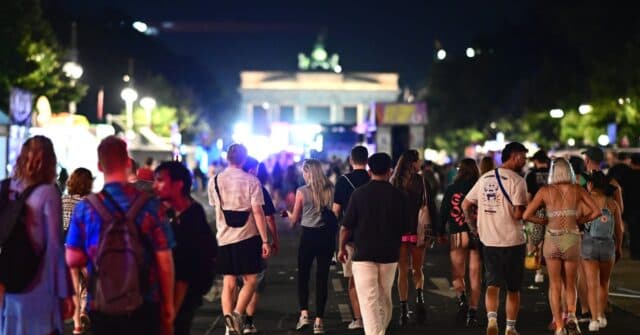
High Consensus- One person died and at least 15-17 people were injured, some with life-threatening wounds, when a vehicle was driven into the crowd at Berlin's Christopher Street Day Pride parade on Saturday night.
- Berlin police identified a suspect known to them with ties to 'Islamist circles,' a 21-year-old identified as Abdul B., and launched a manhunt, warning he may be armed and dangerous.
- German officials, including Chancellor Merz and Berlin's mayor, condemned the attack as a heinous act against an open, free society.
- The event was called off early and authorities urged witnesses to come forward as the investigation continues.
The Arguments
Right argues
The suspect's documented ties to Islamist circles and his prior contact with police—including a recent release from juvenile detention—raise urgent questions about how known extremists are monitored and why he was free to rent a vehicle used in an attack.
Left counters
Focusing immediately on monitoring failures before facts are confirmed risks scapegoating an entire community and pre-judging a case where the suspect's precise motive and history are still under investigation.
Left argues
Officials like Chancellor Merz and Mayor Wegner are right to frame this as an attack on an open, pluralistic society rather than reducing it to a single religious or ethnic narrative, since doing so protects social cohesion and avoids collective blame.
Right counters
Naming the broader societal values under attack shouldn't come at the expense of naming the specific ideological pattern—vehicle-ramming attacks tied to Islamist extremism—that has recurred across European cities, since obscuring that pattern hampers honest threat assessment.
Right argues
The combination of a vehicle-ramming attack and reported stabbing injuries suggests a premeditated, possibly coordinated assault, which demands transparency about radicalization pathways rather than a rush to downplay the ideological dimension.
Left counters
Details about coordination and motive are still unconfirmed by police, and drawing firm conclusions about premeditation or ideology before the investigation concludes can distort public understanding and inflame tensions prematurely.
Left argues
The attack struck at a celebration of LGBTQ+ identity, compounding trauma for a community that already faces disproportionate violence, so the response should center victims, their families, and reinforcing protections for future gatherings.
Right counters
Supporting victims and preventing future attacks are not mutually exclusive with scrutinizing the suspect's ideological ties—understanding why this specific community was targeted requires examining the attacker's motive, not setting it aside.
Right argues
Public safety requires full transparency from authorities about the suspect's background, his rental of the vehicle, and his time in juvenile detention, since withholding or downplaying these facts erodes public trust in institutions.
Left counters
Transparency is important, but premature emphasis on the suspect's religious or ethnic identity before an official determination of motive can fuel stigmatization of Muslim communities that will persist even if facts later complicate the initial narrative.
Challenge Questions
These questions target genuine internal contradictions — meant to provoke honest reflection.
Right asks Left
“If officials say this attack should not be framed primarily around the suspect's religious identity, how should the public reconcile that with police explicitly citing his ties to 'Islamist circles' as central to the manhunt?”
Left asks Right
“If prior contact with police and time in juvenile detention didn't prevent this suspect from acting, what specific policy change is being proposed, and how would it avoid sweeping up many people with similar backgrounds who never commit violence?”
Outlier Report
Left Fringe
Figures like some contributors at Jacobin or activists such as Judith Butler-aligned academics who frame such attacks primarily through anti-Muslim backlash concerns represent roughly 10-15% of the left, as most mainstream Democrats still support naming ideological motives once confirmed.
Right Fringe
Commentators like Laura Loomer or some Breitbart/Gateway Pundit contributors who use the attack to call for mass deportations or blanket immigration bans represent about 15-20% of the right, going further than mainstream conservative calls for stricter vetting and monitoring.
Noise Assessment
High noise ratio on social media, with OSINT accounts and partisan amplifiers rapidly politicizing fragmentary information; actual American public opinion is likely calmer and more focused on victim sympathy and basic security questions than the loudest online voices suggest.
Sources (4)
<p>Berlin's Christopher Street Day LGBTQ+ pride parade was forced to end early on Saturday evening after a van was driven by an unknown motorist into a crowd of people, injuring several.</p> <p>The post <a href="https://www.breitbart.com/europe/2026/07/25/van-driven-into-pride-parade-crowd-in-berlin-several-people-injured/" rel="nofollow">Van Driven Into Pride Parade Crowd in Berlin, One Dead, 16 People Injured</a> appeared first on <a href="https://www.breitbart.com" rel="nofollow">Breitbart</a>.</p>
Police called off the event and told everyone to exit
Berlin police <a href="https://x.com/polizeiberlin/status/2081188935871418557?s=20" target="_blank">said</a> they have identified a suspect who "is known to police" and has links to "Islamist circles."