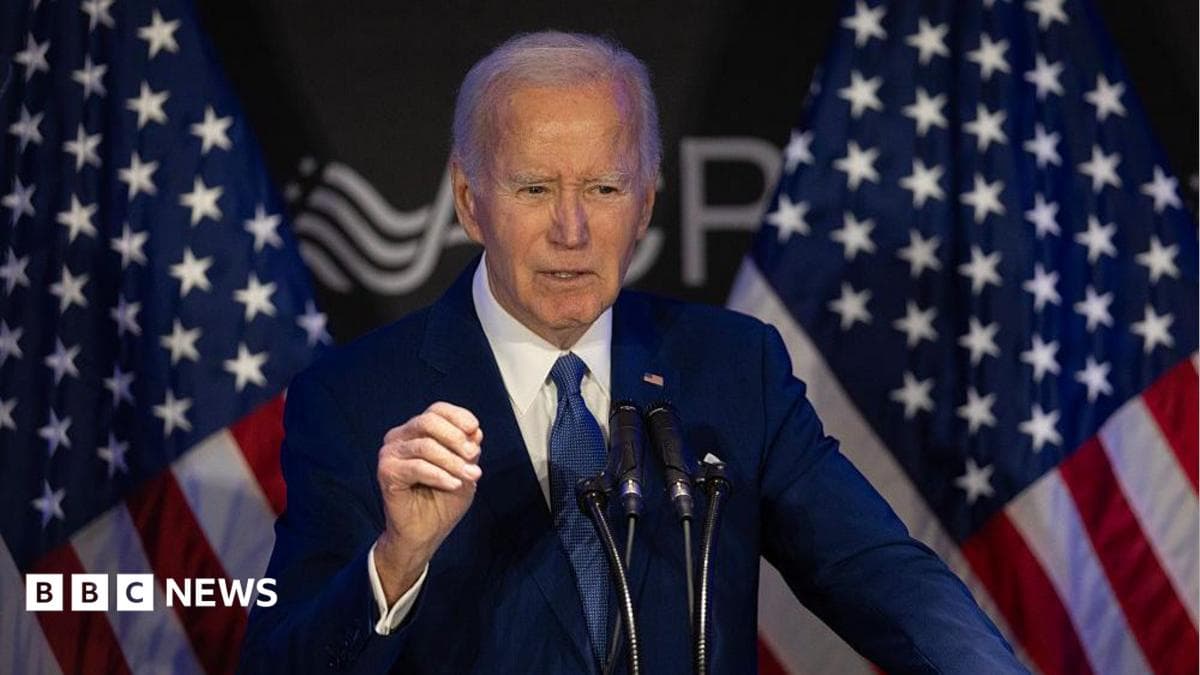
Biden Admitted Classified Info on Tape, Tapes Reveal Memory Gaps
Left says
- •The recordings were made in 2016-2017 before Biden was president, and no classified material ever appeared in the published memoir, indicating no public harm resulted.
- •Special Counsel Hur, a Trump-appointed prosecutor, already reviewed this same material and declined to bring charges, concluding a jury would see Biden as a sympathetic, well-meaning person with memory issues rather than a criminal.
- •The release was pursued by a conservative nonprofit and House Republicans through a politically motivated legal campaign, and Biden's team calls it 'weaponizing the DOJ for political retribution.'
- •Extensive redactions in the transcripts show the government still treats much of the content as sensitive, complicating claims that Biden recklessly exposed secrets.
Right says
- •Biden told reporters in February 2024 that he never shared classified information with his ghostwriter, but the tapes directly contradict that denial with him saying things like 'this is classified' and 'be careful.'
- •Hur's report described Biden as having significant memory limitations and 'diminished faculties' as far back as 2016, and the tapes' halting, confused speech patterns corroborate that characterization.
- •Biden's own legal team fought for over two years and lost multiple court battles trying to keep these recordings sealed from the public, suggesting awareness the content was damaging.
- •Legal commentators, including some not aligned with conservatives, have noted Biden appeared to knowingly retain and disclose classified material for years, raising questions about why no charges were pursued.
Common Take
High Consensus- The recordings, roughly 70 hours in total with about 2.5 hours released, were made in 2016-2017 during work on Biden's memoir 'Promise Me, Dad' with ghostwriter Mark Zwonitzer.
- No classified material ended up in the final published book.
- Special Counsel Robert Hur reviewed these tapes during his 2024 investigation and declined to recommend criminal charges against Biden.
- The release followed a two-year legal fight, ending when a federal court ruled 2-1 that the public interest outweighed Biden's privacy claims and his legal team dropped its opposition.
The Arguments
Right argues
Biden told reporters in February 2024 that he never shared classified information with his ghostwriter, but the tapes directly capture him saying 'this is classified' and 'be careful,' showing his public denial was false.
Left counters
The recordings were made in 2016-2017 before he was president, no classified material ever appeared in the published memoir, and Hur — a Trump-appointed prosecutor who already reviewed this exact material — declined to bring charges.
Left argues
The release was driven by a conservative nonprofit and House Republicans through a two-year politically motivated legal campaign, and Biden's team calls it 'weaponizing the DOJ for political retribution' rather than a genuine public-interest disclosure.
Right counters
The public has a legitimate interest in evaluating the basis for a prosecutorial decision not to charge a sitting president, and a federal appeals court explicitly ruled 2-1 that this public interest outweighed Biden's privacy claims.
Right argues
Hur's report described Biden as having 'diminished faculties' and significant memory limitations as far back as 2016, and the tapes' halting, confused speech — including moments where he loses his train of thought entirely — corroborate that characterization.
Left counters
CBS News itself noted that if Biden was struggling with his memory during that period, 'the signs of it are subtle' in the actual audio, suggesting the cognitive-decline narrative may be overstated relative to what the tapes actually show.
Left argues
Biden's own legal team fighting for over two years to keep these recordings sealed does not by itself prove wrongdoing — private citizens and public figures alike often resist releasing personal, unpublished material regardless of its actual content.
Right counters
The extraordinary lengths taken — including a lawsuit against the DOJ itself after leaving office — go well beyond ordinary privacy concerns and suggest Biden's team understood the recordings were politically damaging, not merely private.
Right argues
Even CNN legal analyst Elie Honig, no conservative partisan, said Biden 'knew he had highly classified documents... and arguably broke the law,' indicating concerns about the tapes' implications cross ideological lines.
Left counters
Hur, the prosecutor who actually reviewed all the evidence including these tapes, concluded a jury would see Biden as a sympathetic elderly man with memory problems rather than a criminal, and declined charges — that professional judgment carries more weight than a cable pundit's commentary.
Challenge Questions
These questions target genuine internal contradictions — meant to provoke honest reflection.
Right asks Left
“If the redactions and Hur's declination are proof the matter was handled appropriately, why did Biden's own team spend two years and multiple court battles fighting to prevent the public from seeing material that was supposedly not damaging?”
Left asks Right
“If the goal is genuinely accountability and transparency rather than political point-scoring, why has the same scrutiny and demand for tape releases not been applied consistently to instances of classified mishandling by politicians across the political spectrum?”
Outlier Report
Left Fringe
Figures like MSNBC's most committed Biden defenders or Democratic strategists who argue this is purely partisan retribution with zero substantive concern represent maybe 15-20% of the left; most Democrats privately acknowledged Biden's decline was real by 2024.
Right Fringe
Commentators like Jeff Clark of the Oversight Project or some RedState/Townhall writers pushing for criminal prosecution or claiming this proves a 'cover-up' conspiracy represent a more aggressive minority, maybe 25-30% of the right, versus the broader right which sees this as vindication without necessarily wanting prosecution now.
Noise Assessment
High noise ratio - this is heavily amplified by partisan media and X accounts (RNC Research, Oversight Project) for political point-scoring, while the average American's actual view is likely more measured: mild vindication of concerns about Biden's age/memory without strong appetite for legal consequences at this point.
Sources (10)
Recordings between Biden and his ghostwriter reveal references to classified information and memory gaps.
Audio recordings that former President Joe Biden fought for years to keep private have now been released.
Audio recordings of former President Joe Biden's interviews with his ghostwriter, which Biden fought to keep sealed, were released Monday. CBS News investigative reporter Josh Boswell reports on what they reveal.
Roughly 70 hours of recordings of an interview former President Joe Biden did with a ghostwriter in 2017, before he was president, were released Monday over Biden's objections. Weijia Jiang reports.
Over 2.5 hours of recordings between Joe Biden and memoir ghostwriter Mark Zwonitzer reveal halting speech and memory struggles during the 2017 sessions.
The 117-page transcript was covered in redactions, signifying classified information, some of which the former president admitted that he knew was classified.
The recordings cover approximately 70 hours of interviews between Zwonitzer and Biden, which were related to his 2017 memoir "Promise Me, Dad: A Year of Hope, Hardship, and Purpose."