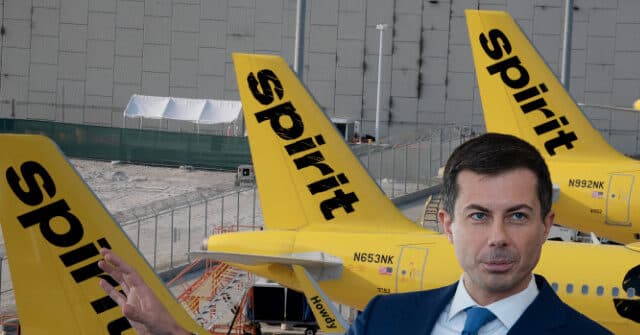
Biden Officials Blocked Spirit-JetBlue Merger, Now Spirit Shuts Down
Intra-Party Split Detected
Former Biden aide Neera Tanden questions whether blocking the merger was the right decision, breaking from the administration's position
Left says
- •The merger would have eliminated Spirit's ultra-low-cost model that provided affordable travel options for working-class families, reducing competition and leading to higher fares across the industry
- •Blocking airline consolidation protects consumers from monopolistic practices, as decades of mergers have already reduced competition and choice in air travel
- •The Biden administration's antitrust enforcement represented a necessary shift to prevent corporate concentration that harms ordinary travelers
Right says
- •The blocked merger could have provided Spirit with the financial resources and operational stability needed to survive, potentially saving 17,000 jobs
- •Government interference prevented market-based solutions that might have strengthened both airlines' ability to compete against larger carriers
- •The administration's ideological opposition to mergers prioritized regulatory theory over practical outcomes for workers and consumers
Common Take
High Consensus- Spirit Airlines employed over 17,000 people who lost their jobs when the airline shut down
- The Biden administration's Department of Justice and Transportation Department actively opposed the JetBlue-Spirit merger
- Spirit served as an ultra-low-cost carrier that provided affordable travel options for price-sensitive consumers
- The airline industry has experienced significant consolidation over recent decades
The Arguments
Left argues
The merger would have eliminated Spirit's ultra-low-cost model that provided essential affordable travel options for working-class families, as JetBlue historically operates at higher price points than Spirit's bare-bones service structure.
Right counters
The merger could have preserved affordable options while providing Spirit the financial stability to continue operations, whereas blocking it resulted in the complete elimination of Spirit's low-cost seats from the market.
Right argues
Government interference prevented a market-based solution that could have saved 17,000 jobs and strengthened both airlines' ability to compete against the four major carriers that dominate the industry.
Left counters
Decades of airline consolidation have already reduced competition from dozens of carriers to just four major ones, and allowing further mergers would accelerate this harmful trend toward monopolistic control.
Left argues
Blocking airline consolidation was necessary to prevent the concentration of market power that has historically led to higher fares and reduced service quality, as evidenced by the industry's transformation from a competitive market to an oligopoly.
Right counters
The administration's ideological opposition to mergers prioritized regulatory theory over practical outcomes, resulting in Spirit's complete failure rather than a combined entity that could have provided both low-cost and premium options.
Right argues
The blocked merger eliminated the possibility of creating a stronger fifth-largest airline that could have provided meaningful competition to the industry's Big Four carriers (American, Delta, United, Southwest).
Left counters
JetBlue's business model focuses on premium service at higher price points, making it unlikely that a merged entity would have maintained Spirit's commitment to ultra-low-cost travel that served price-sensitive consumers.
Left argues
Antitrust enforcement protected consumer choice by preventing the elimination of Spirit's unique no-frills model, which forced other airlines to compete on price and drove down industry-wide fares.
Right counters
The enforcement resulted in zero consumer choice regarding Spirit flights and eliminated all competitive pressure that Spirit previously exerted on pricing, achieving the opposite of its stated goal.
Challenge Questions
These questions target genuine internal contradictions — meant to provoke honest reflection.
Right asks Left
“If protecting consumer choice and low fares was the primary goal, how do you reconcile that Spirit's complete shutdown eliminated both the airline's affordable options and its competitive pressure on industry pricing—achieving exactly what you claimed the merger would cause?”
Left asks Right
“If market-based solutions and job preservation were paramount concerns, why didn't you advocate for alternative approaches like conditional merger approval with binding commitments to maintain low-cost service, rather than supporting a complete merger that historically would have eliminated the ultra-low-cost model?”
Outlier Report
Left Fringe
Elizabeth Warren represents about 20% of the left with her aggressive anti-merger stance that prioritizes antitrust theory over immediate economic consequences. Her celebration of blocking the merger as a 'Biden win' while ignoring job loss risks reflects the progressive wing's ideological approach to corporate regulation.
Right Fringe
Some conservative commentators like those at Breitbart who frame this as purely about Pete Buttigieg 'bragging' represent about 15% of the right, making it more about partisan point-scoring than substantive policy critique. Most conservatives focus on the economic consequences rather than personal attacks.
Noise Assessment
Moderate noise level - while partisan outlets are amplifying the story for political gain, the core issue of job losses versus regulatory theory resonates with genuine public concerns about government overreach and economic consequences.
Sources (7)
<p>In a 2023 video, former Transportation Secretary Pete Buttigieg was seen bragging about how the Department of Transportation (DOT) was getting involved in opposing a merger between Spirit Airlines and JetBlue Airlines.</p> <p>The post <a href="https://www.breitbart.com/politics/2026/05/02/2023-video-buttigieg-brags-about-helping-kill-spirit-airlines-jetblue-merger/" rel="nofollow">2023 Video: Buttigieg Brags About Helping Kill Spirit Airlines, JetBlue Merger</a> appeared first on <a href="https://www.breitbart.com" rel="nofollow">Breitbart</a>.</p>
<p>Neera Tanden, a former aide for former President Joe Biden, pointed out that people should question whether the Biden administration's DOJ "stopping" the merger between JetBlue Airlines and Spirit Airlines was "the right call," as Spirit Airlines ceased all operations.</p> <p>The post <a href="https://www.breitbart.com/politics/2026/05/02/fformer-biden-aide-neera-tanden-questions-if-biden-doj-stopping-jetblue-merger-with-spirit-airlines-was-right-call/" rel="nofollow">Former Biden Aide Neera Tanden Questions if Biden DOJ ‘Stopping JetBlue Merger’ with Spirit Airlines Was ‘Right Call’</a> appeared first on <a href="https://www.breitbart.com" rel="nofollow">Breitbart</a>.</p>
'This is a Biden win for flyers!'
"Maybe the merger would have made both Jet Blue and Spirit better? Jet Blue is a perfectly comfortable airline," Neera Tanden wrote on X
Sen. Elizabeth Warren, D-Mass., is under fire after Spirit Airlines abruptly shut down, with critics citing her claim that blocking a merger that could have saved the troubled carrier was "a Biden win for flyers."