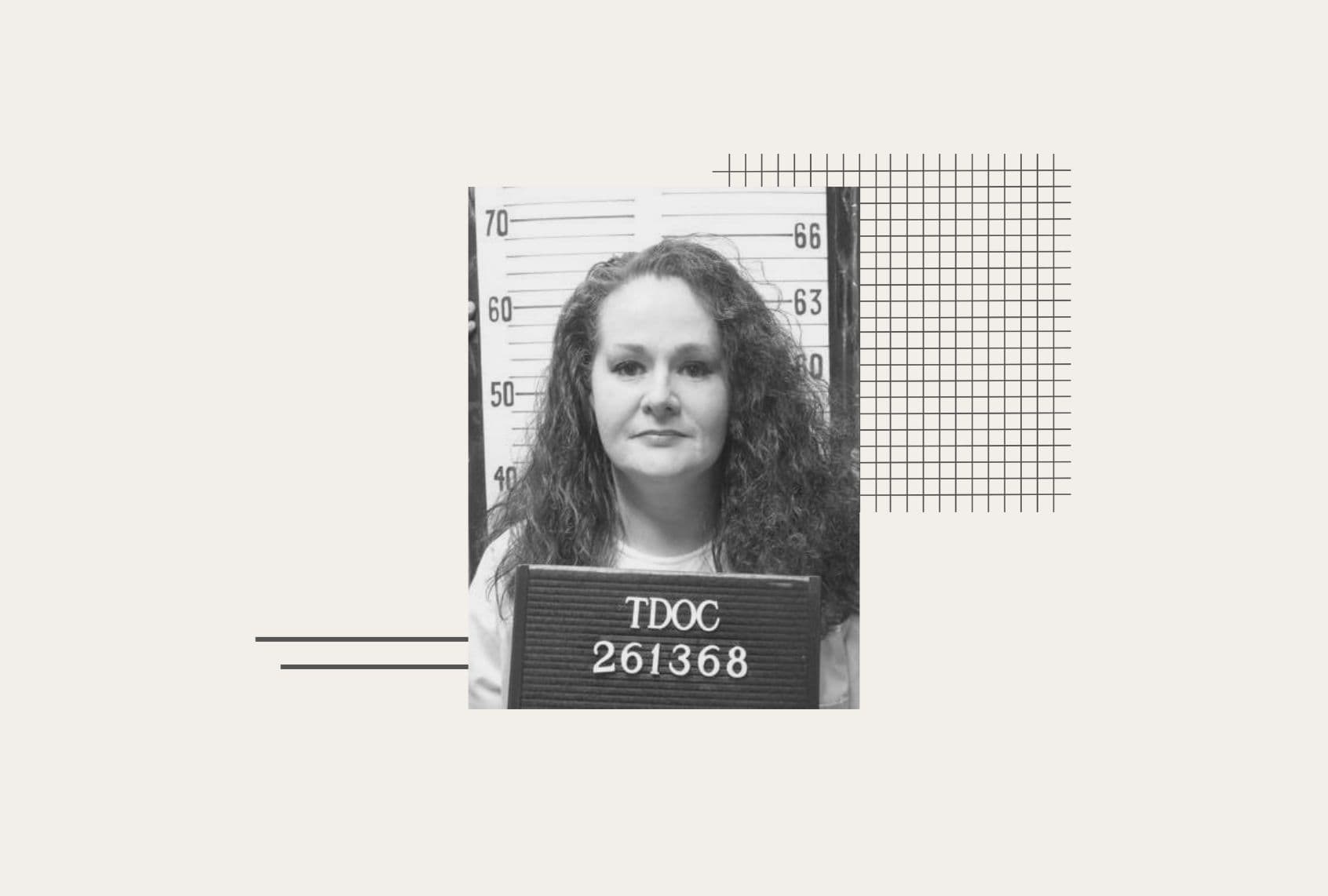
 Mugshot of a death row inmate, reflecting the story on botched executions.
Botched Execution Reignites Death Penalty Debate in Tennessee
Intra-Party Split Detected
Most Republican officials quoted (e.g., Sen. Blackburn, Rep. Burchett) called for resuming executions by alternative methods like the electric chair or firing squad, while Gov. Bill Lee took a more cautious stance by ordering a review and pausing executions for the year, reflecting a split on how to respond to the botched procedure.
Left says
- •Christa Pike's botched execution, in which she survived two lethal injection attempts and remains unconscious on a ventilator, exposes the inherent cruelty and unreliability of capital punishment regardless of method.
- •Lethal injection's clinical, medicalized appearance has long masked the reality of state violence, and courts have repeatedly approved flawed protocols without adequate scrutiny.
- •The system disproportionately executes defendants who are poor, mentally ill, or otherwise unable to afford skilled legal representation, raising deep questions about fairness.
- •Warnings about Pike's small veins and blood disorder were reportedly ignored beforehand, suggesting this outcome was foreseeable and preventable, which strengthens the case for abolition or a moratorium.
Right says
- •Victims' families and advocates emphasize that justice for the 1995 murder of Colleen Slemmer still matters and should not be erased by procedural failures in carrying out a lawfully imposed sentence.
- •Some officials argue the solution is fixing execution methods rather than abandoning capital punishment altogether, including returning to alternatives like the electric chair or firing squad that may be more reliable.
- •State leaders, including Governor Bill Lee, are treating this as an institutional failure requiring accountability, ordering a third-party review and leadership change at the prison system rather than conceding the death penalty itself is unjust.
- •A pause on executions for the rest of the year reflects a responsible, measured response aimed at fixing procedural problems while preserving the state's ability to carry out capital punishment going forward.
Common Take
High Consensus- Christa Pike's execution was severely botched, leaving her unconscious and on a ventilator in critical condition.
- Tennessee officials, including Governor Bill Lee, have acknowledged serious problems with how the execution was carried out and ordered a review.
- The state's prison system leadership has changed in the aftermath, with the head of the department stepping down.
- Prior warnings existed about Pike's medical condition that may have made lethal injection especially risky in her case.
The Arguments
Left argues
Pike's botched execution, following ignored warnings about her small veins and blood disorder, shows that lethal injection's failures are foreseeable and systemic rather than freak accidents, undermining claims the method is humane.
Right counters
A single case of medical mismanagement reflects a failure of execution protocol and personnel, not proof that capital punishment itself is unconstitutional or unworkable.
Right argues
The 1995 murder of Colleen Slemmer was a real crime with a real victim, and a botched execution attempt doesn't erase the jury's lawful sentence or the state's obligation to deliver justice to her family.
Left counters
Justice cannot be served through a process that risks torturing the condemned; a sentence carried out cruelly and incompetently undermines rather than vindicates the rule of law.
Right argues
Governor Lee's response—ordering a third-party review, pausing executions, and replacing prison leadership—demonstrates responsible governance that treats this as a fixable procedural failure rather than grounds for abolishing capital punishment entirely.
Left counters
Lethal injection has a long documented history of botches nationwide, suggesting this isn't an isolated leadership failure but an inherent flaw in trying to medicalize what is fundamentally an act of violence.
Left argues
The pattern of executing defendants who are poor, mentally ill, or poorly represented—as seen in capital cases nationally—raises fundamental questions of fairness that no amount of protocol tweaking can resolve.
Right counters
Flaws in legal representation or case selection are arguments for improving indigent defense and judicial review, not for discarding a punishment that voters and legislatures have democratically chosen to retain for the most heinous crimes.
Right argues
Proposals to return to methods like the electric chair or firing squad reflect a search for genuinely reliable execution methods, arguing that the problem lies in lethal injection's complexity, not in capital punishment as a concept.
Left counters
Resorting to historically brutal methods like firing squads or electrocution to solve lethal injection's failures only underscores how difficult it is to kill someone 'humanely,' reinforcing the case that the death penalty cannot be administered without cruelty.
Challenge Questions
These questions target genuine internal contradictions — meant to provoke honest reflection.
Right asks Left
“If a death penalty moratorium or abolition is justified whenever an execution method proves unreliable, does that standard imply any method of execution—including ones not yet tried—could eventually be deemed sufficiently reliable, or is the real objection to capital punishment itself regardless of method?”
Left asks Right
“If officials are willing to consider reverting to the electric chair or firing squad after acknowledging lethal injection's failures, doesn't that concession suggest the state itself doubts any method can reliably avoid the cruelty critics are describing?”
Outlier Report
Left Fringe
Groups like the ACLU and Death Penalty Action (Abraham Bonowitz) who call for immediate nationwide abolition represent roughly 15-20% of the left, as most Democratic-leaning moderates favor reform or reduced use rather than total abolition.
Right Fringe
Figures like Sen. Marsha Blackburn and Rep. Tim Burchett, who publicly called for reviving the electric chair or firing squad with visible enthusiasm, represent a vocal but not universal faction, roughly 20-25% of the right, as many conservatives prefer quieter procedural fixes over inflammatory rhetoric.
Noise Assessment
High noise ratio: cable news and social media amplify the most extreme quotes (Burchett's 'firing squad' comment, abolitionist framing) far beyond their actual prevalence, while the median American reaction is more ambivalent, focused on procedural competence and victim justice rather than ideological death penalty debates.
Sources (6)
What happens when states combine ineptitude with the death penalty
Corinna Barrett Lain on lethal injection's secrets and Sen. Sheldon Whitehouse on a captured court.
Botched executions like Christa Pike’s have also fueled new calls to halt executions, with death penalty opponents saying the Tennessee case shows its inherent cruelty.
State officials tried and failed to execute Christa Pike. She is now in critical condition, her lawyers said Thursday, and they have not been able to see or speak with her since she was hospitalized.
Lethal injection is a cruel procedure. If it's going to be done, doctors should be allowed to administer it