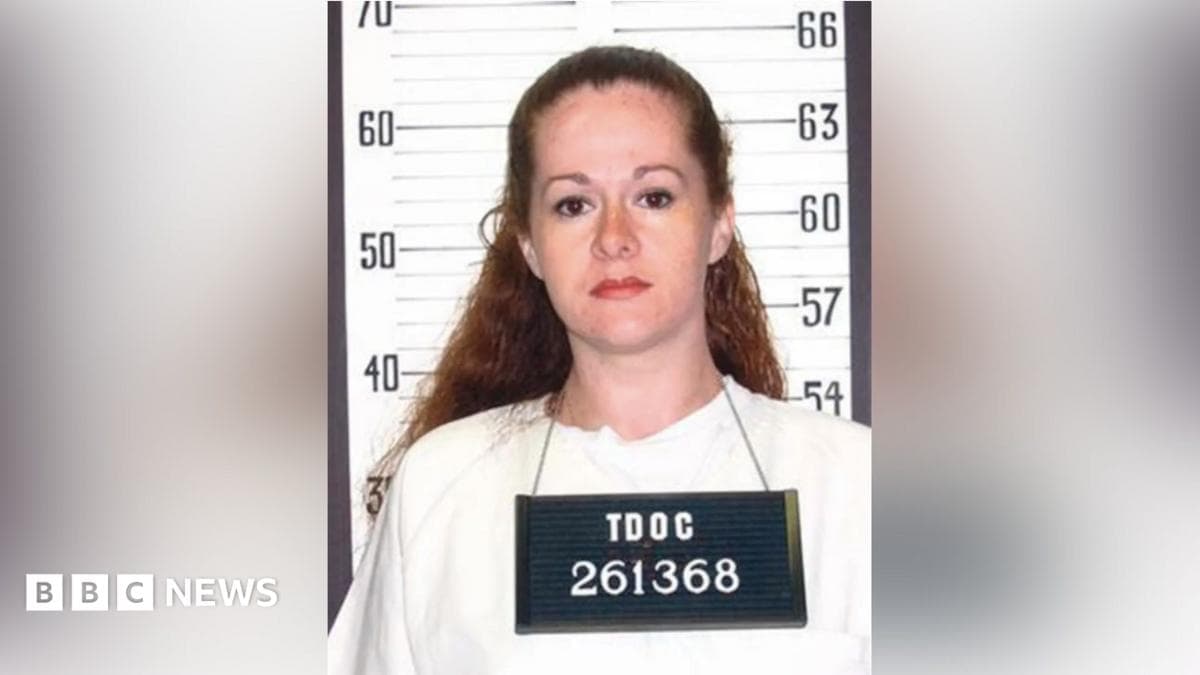
Botched Execution: Torture or Justice Delayed Too Long?
Intra-Party Split Detected
Most right-leaning coverage frames the botched execution as evidence of bureaucratic failure or excessive appeals delays while defending the death penalty itself, but some conservative voices (e.g., Sen. Blackburn) criticize the state's execution process and call for alternative methods like the electric chair, while the Daily Wire's opinion piece takes a harder line condemning sympathy for Pike, reflecting some variation in tone and emphasis rather than core disagreement on capital punishment.
Left says
- •The hour-long struggle to establish an IV, the use of at least seven needles, and Pike surviving two full doses of pentobarbital demonstrate that lethal injection cannot reliably be carried out without inflicting severe pain and suffering, amounting to cruel and unusual punishment.
- •Attorneys warned the state months in advance about Pike's documented vein problems, meaning this outcome was foreseeable and preventable, raising questions about the state's willingness to listen to credible medical concerns before proceeding.
- •The secrecy around the process, including closing curtains while Pike was still breathing and officials being unreachable by phone during the crisis, points to a lack of transparency and accountability in how executions are overseen.
- •This is the second botched execution in Tennessee this year, suggesting a systemic failure in the state's execution protocol rather than an isolated incident, which supports calls to commute Pike's sentence rather than attempt a third execution.
Right says
- •Christa Pike was convicted of torturing and murdering 19-year-old Colleen Slemmer in a brutal 1995 crime that included carving a pentagram into the victim's body, and she has never disputed her guilt, so the focus should remain on the long-delayed justice owed to the victim's family.
- •The victim's mother traveled to witness the execution and was left devastated that the state failed to deliver the justice she waited three decades for, and her anger at the state's failure deserves central attention.
- •The decades-long appeals process that delayed this execution for 30 years reflects a broken system that allows clearly guilty defendants to exploit procedural delays, and the technical failure of the injection should not be used to reopen debate about her guilt or sentence.
- •State officials maintain the Department of Correction followed its lawful, approved protocol, and practical failures in administering an IV line are a procedural problem to be fixed through review, such as considering alternative methods like the electric chair, rather than grounds for commuting a lawfully imposed death sentence.
Common Take
High Consensus- Christa Pike was convicted of the 1995 torture and murder of 19-year-old Colleen Slemmer and has not contested her guilt.
- The execution attempt on Wednesday involved an hour-long struggle to establish an IV line and administration of two full doses of pentobarbital without causing death.
- Governor Bill Lee halted all remaining executions in Tennessee for the year and ordered an independent, third-party review of what went wrong.
- This was the second time in 2026 that Tennessee has failed to carry out a scheduled execution due to problems with the lethal injection process.
The Arguments
Left argues
The hour-long struggle to establish an IV, the use of at least seven needles, and Pike surviving two full doses of pentobarbital demonstrate that lethal injection cannot reliably be carried out without inflicting severe pain and suffering, amounting to cruel and unusual punishment.
Right counters
The Department of Correction followed its lawfully approved protocol step by step, and a technical failure to find a vein is a fixable procedural problem, not proof that the underlying death sentence itself is unconstitutional or unjust.
Right argues
Christa Pike was convicted of torturing and murdering 19-year-old Colleen Slemmer in a brutal 1995 crime she has never disputed, and the victim's mother waited three decades only to watch the state fail to deliver the justice she was owed.
Left counters
The severity and undisputed nature of the crime does not exempt the execution process itself from scrutiny; the Eighth Amendment protects even the guilty from cruel and unusual punishment, and botching the procedure doesn't honor the victim, it compounds the state's failures.
Left argues
Attorneys warned the state months in advance about Pike's documented vein problems, meaning this outcome was foreseeable and preventable, raising serious questions about the state's willingness to heed credible medical concerns before proceeding.
Right counters
Foreseeability of a difficult IV placement doesn't mean the state acted unlawfully or with intent to harm; officials followed the approved protocol, and the proper response is to refine execution methods going forward, not to treat every logistical warning as grounds to halt a lawfully imposed sentence.
Right argues
The decades-long appeals process that delayed this execution for 30 years reflects a broken system that allows clearly guilty defendants to exploit procedural delays, and a technical failure during the injection itself should not be used to reopen debate about a guilt and sentence that were never in question.
Left counters
Lengthy appeals exist precisely because errors occur in capital cases, and the botched execution itself is fresh evidence that the system's safeguards around how the state kills people are inadequate, justifying renewed scrutiny rather than demands for speed.
Left argues
This is the second botched execution in Tennessee this year, and the secrecy around the process, including curtains closing while Pike was still breathing and officials being unreachable by phone during the crisis, points to a systemic failure and lack of accountability that supports commuting her sentence.
Right counters
Two isolated incidents of IV difficulty, now under independent review, reflect execution logistics that can be corrected through protocol improvements or alternative methods like the electric chair, not evidence that the state should abandon a lawfully imposed death sentence entirely.
Challenge Questions
These questions target genuine internal contradictions — meant to provoke honest reflection.
Right asks Left
“If the left's objection is specifically to lethal injection's reliability rather than to capital punishment itself, would the left support Tennessee switching to a different method, such as the electric chair or firing squad, to carry out Pike's sentence, or is the botched execution being used as a vehicle to oppose the death penalty altogether regardless of method?”
Left asks Right
“If the state's own Department of Correction insists it followed lawful protocol perfectly and nothing went wrong procedurally, how can the right simultaneously argue the failure was just a fixable logistical problem, and if nothing was done wrong, what exactly would the promised independent review be investigating?”
Outlier Report
Left Fringe
Groups like the ACLU's Capital Punishment Project and abolitionist commentators (e.g., journalist Elizabeth Bruenig) who argue this case proves lethal injection is inherently unconstitutional and that the death penalty itself should be abolished nationwide; this represents maybe 15-20% of the left, as most Democrats support death penalty reform/moratoriums rather than full abolition.
Right Fringe
Figures like some Daily Wire commentators (e.g., Michael Knowles-style commentary) framing this explicitly as 'left-wing radicals' siding with a murderer, dismissing any humane-treatment concerns entirely; this represents roughly 15-20% of the right, with most conservatives (including Gov. Bill Lee) acknowledging the botched process was 'deeply disturbing' and warranting genuine review.
Noise Assessment
Significant amplification from partisan outlets on both sides turning a procedural/medical failure story into a culture-war flashpoint, while actual polling suggests most Americans hold more nuanced, conflicted views combining support for capital punishment with discomfort at execution-method failures.
Sources (16)
Pike’s lawyers have asked for her death sentence to be commuted following the botched execution.
‘Critically ill but not in a coma.’
The failed execution of Christa Pike is not the first time Tennessee has struggled to carry out a death sentence by lethal injection, raising questions about the drug at the center of the procedure and prompting some politicians to consider alternative forms of execution. Before Pike, no inmate in the modern era of the death ...
Thirty years ago, Christa Pike tortured a young girl to death using, at various points in the lengthy process, a knife, a meat cleaver, and a chunk of asphalt. Last night, finally, after three decades on death row, she was supposed to face the consequences of her crime. There’s no reason why it should have ...
Tennessee death row inmate Christa Pike survived two rounds of lethal injection Wednesday in an apparent botched execution and was rushed to a hospital as her attorneys filed emergency litigation to stop the state from trying again. “This execution is causing Ms. Pike unnecessary agony and occurring in violation of her right to be executed ...
Her attorney said the failed execution amounted to “torture,” and he called for her death sentence to be commuted.
The attorneys claimed at least seven needles were used to administer the lethal injection into Pike’s left arm over the course of an hour and that she was “continuing to show signs of life” after at least two full doses of the lethal drug, pentobarbital.
Tennessee Republican Gov. Bill Lee has halted a third execution attempt in light of Wednesday's issues and has ordered a "comprehensive, third-party review to determine exactly what occurred." The next attempt will not take place this year.
<p>“She's talking throughout this, then starts breathing, moaning, snoring.” At that point, the curtains closed.</p> The post <a href="https://legalinsurrection.com/2026/10/tennessee-death-row-inmate-christa-pike-survives-two-botched-lethal-injections/">Tennessee Death Row Inmate Christa Pike Survives Two Botched Lethal Injections</a> first appeared on <a href="https://legalinsurrection.com">Le·gal In·sur·rec·tion</a>.
A Tennessee woman convicted of murder survived two doses of lethal injection on Wednesday night before state officials suspended the execution and had her taken to a hospital for medical care, her lawyers said. It was the second botched execution in the state this year.
<p>Tennessee death row inmate Christa Pike's attorneys said she was "in critical condition" and "receiving life-saving care" Thursday, a day after <a href="https://www.axios.com/local/nashville/2026/10/01/chaos-questions-christa-pike-execution-attempt" target="_blank">she survived an execution attempt</a> during which the state administered two doses of the lethal injection drug.</p><ul><li>A death penalty expert <a href="https://apnews.com/article/christa-pike-failed-botched-execution-5638e4f7d25d5490b402ae53cfa2626d" target="_blank">told the Associated Press</a> that Pike's survival after receiving the execution drug was unprecedented.</li></ul><p><strong>The latest:</strong> State and federal elected officials are pressing for public accountability after the second failed execution this year. Gov. Bill Lee ordered a independent review of the Pike execution attempt.</p><ul><li>On Thursday morning, he told reporters there were "very few answers" about what had gone wrong.</li></ul><hr /><p><strong>U.S. Sen. Marsha Blackburn,</strong> the frontrunner to succeed Lee as governor next year, blasted the "botched process" <a href="https://x.com/VoteMarsha/status/2105651199542177864?s=20" target="_blank">in a statement</a> and pushed for the state to "bring back the electric chair."</p><p><strong>Pike's attorneys</strong> told reporters Thursday that Lee's pledge to launch an investigation did not go far enough. They urged him to commute her death sentence.</p><p><strong>What they're saying: </strong>Attorney Randy Spivey, who was inside the prison during the execution attempt, said prison officials spent about an hour trying to establish IV access. He counted at least seven needles used in Pike's left arm alone.</p><ul><li>Pike complained of sharp pain during the lethal injection. Spivey said he noticed her right arm turning purple, especially after the second round of chemicals. He said the lawyers had also been told of blistering and burning around the injection sites.</li></ul><p><strong>Between the lines:</strong> Federal public defender Stephen Ferrell said the lawyers had warned courts months earlier about medical problems with Pike's veins that made it harder to establish an IV.</p><p><strong>Zoom in: </strong>The attorneys also said they weren't able to quickly reach their colleagues or court officials responsible for overseeing the execution.</p><ul><li>Spivey said it took seven minutes and passage through six locked doors to get to a telephone so he could reach the rest of Pike's legal team.</li><li>Ferrell said an emergency telephone number provided for the Tennessee Supreme Court went to voicemail.</li></ul><p><strong>The state's response:</strong> Lee called the latest failed execution "a tragedy" on Thursday morning.</p><ul><li>"It's deeply disturbing to me that that has happened in this state," he told reporters, according to Reuters.</li></ul><p><strong>The big picture: </strong>This isn't the first time Tennessee's prison officials have faced scrutiny for their approach to the death penalty. After a 2022 execution was halted over <a href="https://www.axios.com/local/nashville/2022/05/03/tennessee-launches-lethal-execution-investigation" target="_blank">failures to properly test the drugs</a>, Lee paused all executions so the state could investigate and overhaul its lethal injection protocol.</p><ul><li>Executions resumed last year. </li></ul><p><strong>But more problems surfaced in 2026. </strong>Tennessee prison officials abruptly <a href="https://www.axios.com/local/nashville/2026/05/21/tennessee-stopped-execution-problem-lethal-injection?utm_source=chatgpt.com" target="_blank">stopped another inmate's execution</a> in May after staff had difficulties finding a vein for an IV line used in the lethal injection.</p><ul><li>Critics blasted prison officials for disregarding Pike's concerns that there might be similar problems during her execution.</li></ul><p><strong>Zoom out: </strong>Pike was convicted and sentenced to death for the 1995 beating death of 19-year-old Colleen Slemmer. Her legal team does not contest her guilt.</p><ul><li>Slemmer's mother, May Martinez, traveled to Nashville this week to witness the execution.</li><li>"It was a mess," she <a href="https://www.aol.com/articles/mess-tennessee-fails-execute-inmate-075058000.html?utm_source=chatgpt.com" target="_blank">told NBC News</a> early Thursday. "They went to try to execute her, and she didn't die."</li></ul><p><strong>Martinez vented her anger</strong> with the governor and prison officials: "They f----- up."</p>
<p>Lethal injections are under scrutiny after <a href="https://www.axios.com/local/nashville/2025/10/01/execution-date-christa-pike-tennessee-death-row" target="_blank">Christa Pike</a> survived two rounds of drugs during Tennessee's failed attempt to execute her.</p><p><strong>Why it matters: </strong>Lethal injection has been the <a href="https://deathpenaltyinfo.org/executions/methods-of-execution" target="_blank">dominant U.S. execution method</a> for decades, accounting for roughly 89% of the 1,683 executions carried out since 1976, per the <a href="https://deathpenaltyinfo.org/executions/methods-of-execution?did=245&scid=8" target="_blank">Death Penalty Information Center</a>.</p><hr /><p><strong>Driving the news: </strong><a href="https://www.axios.com/local/nashville/2026/10/01/chaos-questions-christa-pike-execution-attempt" target="_blank">Pike</a>, convicted of killing a classmate three decades ago, survived two rounds of lethal injection drugs Wednesday in what would have been the state's first execution of a woman in 200 years.</p><ul><li>In response, Gov. Bill Lee halted executions and ordered a "comprehensive, third-party review" of the failed attempt.</li><li>Pike's execution attempt <a href="https://www.axios.com/local/nashville/2026/09/30/christa-pike-execution-stayed-appeals-court" target="_blank">followed hours of legal whiplash</a> in which courts first stayed the execution before reversing course.</li><li>Pike is still alive as of Thursday afternoon, her attorney said at a news conference, <a href="https://apnews.com/article/christa-pike-failed-botched-execution-5638e4f7d25d5490b402ae53cfa2626d" target="_blank">according to the AP</a>. She is receiving "lifesaving care" after a failed attempt Wednesday night that her attorney said amounted to "torture."</li></ul><p><strong>The big picture: </strong>Execution protocols vary by state, but lethal injections generally follow the same basic process.</p><p><em>Here's what to know.</em></p><div>Data: <a href="https://urldefense.com/v3/__https%3A//deathpenaltyinfo.org/executions/methods-of-execution__;!!Al82Z4c!xgnQjyLOltNwc-7VIKcynqUL38z-obebs_amCkfuy_rTgwRadm2imqG-YPIZmY4IwU-9ZEIXNVRSbmE$" target="_blank">Death Penalty Information Center</a>; Note: New Hampshire abolished the death penalty but retains one prisoner on death row; Map: Erin Davis/Axios Visuals</div><h2>Why states adopted lethal injection</h2><p><strong>Flashback: </strong>Lethal injections emerged after the <a href="https://www.amnesty.org/en/latest/campaigns/2012/06/pause-for-thought-40-years-since-us-supreme-court-briefly-stopped-executions/" target="_blank">Supreme Court</a> allowed capital punishment to return in the 1970s.</p><ul><li><a href="https://nondoc.com/wp-content/uploads/2017/05/OklaDeathPenalty.pdf?utm_source=chatgpt.com" target="_blank">Oklahoma</a> became<strong> </strong>the first state to authorize the practice in 1977. <a href="https://www.history.com/this-day-in-history/december-7/first-execution-by-lethal-injection" target="_blank">Texas</a> carried out its first five years later.</li><li>Before lethal injections, states commonly used methods like electrocution, gas, hanging and firing squads. Lawmakers considered injections to be less violent and cheaper.</li></ul><p><strong>Lethal injections are </strong>now used in all<strong> </strong>death penalty states.</p><ul><li>The Supreme Court requires states to reserve the death penalty only for the most heinous murders.</li></ul><p><strong>Several states </strong>— Idaho, Mississippi, Oklahoma, South Carolina and Utah — <a href="https://deathpenaltyinfo.org/executions/methods-of-execution/authorized-methods-by-state?utm_source=chatgpt.com" target="_blank">allow firing squads</a>.</p><ul><li><a href="https://idahonews.com/news/local/firing-squad-set-to-become-primary-method-of-execution-in-idaho" target="_blank">Idaho</a> made firing squad its primary execution method in July.</li></ul><h2>How lethal injections are administered</h2><p><strong>There isn't one </strong>standard procedure. States use<strong> </strong>different protocols, but the basic process is similar.</p><ul><li>A fatal dose of drugs is delivered through an IV while the prisoner is restrained, often to a gurney.</li><li><a href="https://corrections.az.gov/sites/default/files/documents/policies/700/DO%20710%20-%20Eff.%205-20-25.pdf" target="_blank">Arizona</a>, for example, requires<strong> </strong>two IV catheters, one as a backup in case the first line fails.</li></ul><p><strong>Physicians often </strong>don't administer lethal injections because the American Medical Association's <a href="https://code-medical-ethics.ama-assn.org/chapters/professional-self-regulation" target="_blank">Code of Medical Ethics</a> says doctors should not participate in executions.</p><ul><li>States instead sometimes rely on execution teams that can include prison guards, corrections employees and other personnel trained to administer the drugs.</li></ul><h2>What drugs are used in lethal injections</h2><p><strong>How it works</strong>: There are <a href="https://deathpenaltyinfo.org/executions/methods-of-execution/state-by-state-execution-protocols" target="_blank">two main ways</a> these drugs are administered.<strong> </strong></p><ul><li><strong>One drug path</strong> — The state administers a sedative or barbiturate, commonly pentobarbital, to cause death.</li><li><strong>Three drug path </strong>— Another method includes giving a sedative or anesthetic, then a paralytic before a final drug stops the heart.</li></ul><p><strong>Yes, but: </strong>Pentobarbital itself is <a href="https://abcnews.com/Health/wireStory/drug-tennessees-failed-execution-past-scrutiny-136921222" target="_blank">controversial</a>, with critics questioning whether it really causes a painless death.</p><ul><li>A <a href="https://www.justice.gov/ag/media/1384566/dl" target="_blank">Justice Department</a> review under the Biden administration cited <a href="https://deathpenaltyinfo.org/department-of-justice-withdraws-federal-execution-protocol-and-keeps-moratorium-on-executions-in-place" target="_blank">concerns</a> that the drug possibly caused pain and suffering.</li><li>President <a href="https://www.nytimes.com/2026/04/24/us/politics/trump-firing-squad-executions-death-penalty.html" target="_blank">Trump</a>'s <a href="https://www.justice.gov/opa/pr/justice-department-takes-actions-strengthen-federal-death-penalty" target="_blank">DOJ</a> reauthorized the federal<strong> </strong>use of pentobarbital.</li></ul><h2>Lethal injections don't always work as planned</h2><p><strong>Pike's case is not the first </strong>lethal injection <a href="https://www.theatlantic.com/ideas/archive/2023/05/elizabeth-bruenig-pulitzer-finalist-2023/673996/" target="_blank">gone</a> wrong. The <a href="https://deathpenaltyinfo.org/executions/botched-executions" target="_blank">DPIC</a> says 75 of 1,054 lethal injections (about 7%) were botched from 1890 to 2010 — the most of any method.</p><p><strong>What they're saying:</strong> Witnesses to some executions have described prisoners gasping for air and struggling to breathe.</p><ul><li>Some<strong> </strong>prisoners survive the initial attempt but later die from complications or other medical causes, sometimes linked to the execution attempt. Others are executed at a later date.</li><li>Autopsies have found evidence of prisoner suffering from pulmonary edema, which is a buildup of fluid in the lungs that can create the same sensation as drowning, per <a href="https://www.npr.org/2020/09/21/793177589/gasping-for-air-autopsies-reveal-troubling-effects-of-lethal-injection" target="_blank">NPR</a>.</li></ul><p><strong>Case in point:</strong> In 2022, Alabama called off <a href="https://deathpenaltyinfo.org/kenneth-smith-describes-alabamas-failed-attempt-to-execute-him" target="_blank">Kenneth Smith</a>'s execution after officials couldn't insert an IV before his death warrant expired.</p><ul><li>Smith survived but was later executed in 2024 through nitrogen <a href="https://deathpenaltyinfo.org/the-world-is-watching-witnesses-report-kenneth-smith-appeared-conscious-shook-and-writhed-during-first-ever-nitrogen-hypoxia-execution" target="_blank">hypoxia</a>, a first in American history.</li><li>In 2014, the execution of <a href="https://deathpenaltyinfo.org/oklahoma-botches-execution-of-clayton-lockett" target="_blank">Clayton Lockett</a> in Oklahoma went badly after officials failed to properly establish an IV. He died nearly an hour later.</li></ul><p><strong>Go deeper: </strong><a href="https://www.axios.com/2026/09/02/death-penalty-executions-surging-florida" target="_blank">America is seeing an uptick in executions</a></p>
The BBC’s Ione Wells reports from outside the Tennessee hospital where Pike is said to have arrived Wednesday night after surviving two lethal injection attempts.
<p>Tennessee death row inmate Christa Pike is in the hospital after efforts to execute her by two lethal injections failed on Wednesday night.</p> <p>The post <a href="https://www.breitbart.com/politics/2026/10/01/death-row-inmate-christa-pike-survives-two-lethal-injections/" rel="nofollow">Death Row Inmate Christa Pike Survives Two Lethal Injections</a> appeared first on <a href="https://www.breitbart.com" rel="nofollow">Breitbart</a>.</p>
Tennessee canceled its remaining scheduled execution this year after Christa Pike, the only woman on its death row, survived two doses of a botched lethal injection. A witness said she was "clearly very alive."
Attorneys for Christa Pike, who survived an attempt by the state of Tennessee to put her to death, say they warned that her execution could be botched in exactly the way it was.