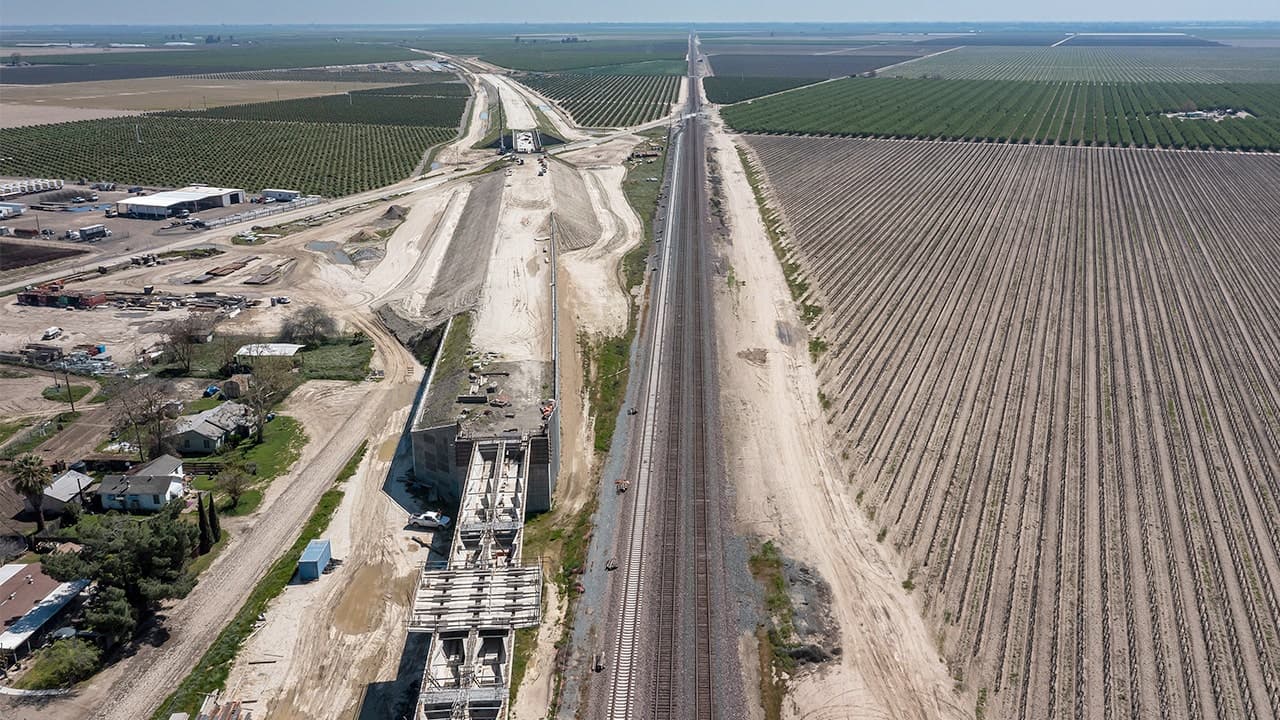
California's High-Speed Rail Balloons to $126B With No Tracks Laid
Intra-Party Split Detected
Some Democratic officials acknowledge mistakes and fair criticisms of the project, breaking from typical defense of progressive infrastructure initiatives
Left says
- •Major infrastructure projects require significant upfront investment and face inevitable cost increases due to inflation, regulatory compliance, and unforeseen challenges over multi-decade timelines
- •Environmental protections and thorough review processes, while causing delays, prevent ecological damage and ensure projects meet safety standards that protect communities
- •High-speed rail represents critical climate action and long-term economic benefits that will reduce carbon emissions, create jobs, and provide sustainable transportation alternatives
- •Complex megaprojects worldwide regularly experience cost overruns and delays, making California's challenges part of normal infrastructure development rather than unique failure
Right says
- •The project represents a massive betrayal of voter trust, with costs ballooning from $33 billion to $126 billion while delivering zero operational rail service after 18 years
- •California's bureaucratic red tape and excessive environmental regulations have created an unworkable system that wastes taxpayer money on consultants and lawyers instead of actual construction
- •The state continues pouring money into an undeliverable project while facing budget crises, homelessness, and residents fleeing due to high taxes and poor governance
- •Government officials admitted they misled voters about the true scope and cost, making this a textbook example of progressive policy failure and fiscal irresponsibility
Common Take
High Consensus- The project has cost nearly four times the original $33 billion estimate presented to voters in 2008
- No operational tracks have been laid despite 18 years passing since voter approval
- California officials acknowledge that mistakes were made and that the public sector underestimated project complexity
- The delays and cost overruns have damaged public confidence in large-scale infrastructure projects
The Arguments
Right argues
The project represents a fundamental betrayal of voter trust, with costs exploding from $33 billion to $126 billion while delivering zero operational rail service after 18 years, proving that California's government cannot competently manage major infrastructure projects.
Left counters
Major infrastructure projects worldwide regularly experience significant cost increases over multi-decade timelines due to inflation, regulatory changes, and unforeseen challenges—this is the normal pattern for complex megaprojects, not evidence of unique failure.
Left argues
Environmental regulations and thorough review processes, while causing delays, are essential to prevent ecological damage and ensure projects meet safety standards that protect communities for generations to come.
Right counters
California's excessive regulatory framework has created an unworkable system that prioritizes bureaucratic process over results, wasting taxpayer money on consultants and lawyers instead of actual construction that could deliver promised benefits.
Left argues
High-speed rail represents critical climate action that will provide long-term economic benefits by reducing carbon emissions, creating jobs, and offering sustainable transportation alternatives that justify the upfront investment.
Right counters
The project continues consuming resources while California faces urgent crises including homelessness, budget shortfalls, and residents fleeing due to high taxes—priorities should focus on immediate needs rather than theoretical future benefits.
Right argues
State officials have admitted they misled voters about the true scope and cost of the project, with Transportation Secretary Omishakin acknowledging 'there were mistakes made' and that neither voters nor officials understood what delivery would require.
Left counters
Complex infrastructure projects inherently involve evolving understanding of requirements and challenges—acknowledging mistakes and adapting plans demonstrates responsible governance rather than deception.
Left argues
Significant upfront investment in infrastructure is necessary for long-term economic competitiveness, and abandoning the project now would waste the billions already invested while forgoing the substantial benefits that high-speed rail will eventually provide.
Right counters
Continuing to pour money into an undeliverable project represents the sunk cost fallacy—cutting losses now would prevent further waste of taxpayer resources that could address California's immediate governance failures.
Challenge Questions
These questions target genuine internal contradictions — meant to provoke honest reflection.
Right asks Left
“If environmental protections and thorough review processes are truly essential, why didn't California accurately account for these known requirements and their associated costs and timelines when presenting the original $33 billion proposal to voters?”
Left asks Right
“If the project truly represents government waste and mismanagement that should be stopped, what specific alternative would you propose for the billions already invested and the legitimate transportation and climate challenges the rail system was designed to address?”
Outlier Report
Left Fringe
Progressive climate activists like Sunrise Movement leaders and some Democratic Socialists of America chapters who argue any cost is justified for climate action, representing roughly 15% of the left coalition.
Right Fringe
Anti-government libertarians like Reason Magazine contributors and some Tea Party remnants who use this as evidence that all government infrastructure spending should be eliminated, representing about 20% of the right coalition.
Noise Assessment
Moderate noise level - while partisan media amplifies the story for political points, the underlying facts are so stark that genuine public frustration exists across party lines, making this less performative than typical infrastructure debates.
Sources (4)
60 Minutes on Sunday profiled the "Ghost train" in California — the high-speed rail project that was approved by voters in 2008 and supposed to connect Los Angeles and San Francisco. Instead, the project has turned into an estimated $125 billion stain on the state, with Californians still waiting for the first tracks to be laid down, years after the train was expected to starting running. Correspondent Jon Wertheim wanted to get an answer on why the train is so far behind schedule — and over budget. He pointed to a few reasons, including "California's exacting environmental regulations, which triggered all manner of reviews, lawsuits, and delays."
California's delayed, over-budget high-speed train from Los Angeles to San Francisco is running fast in only one direction: Rising costs to even get rolling, which are now estimated to be $126 billion. "Today, we estimate with the right optimization just over $125 billion," California High Speed Rail Authority board member Anthony Williams told CBS's "60 Minutes" on Sunday. "I think $126 billion is the current estimate for that." That is nearly four times the $33 billion price tag presented to voters in 2008, making the long-delayed project a black eye for Democratic-run California, derided as the latest political example of "waste" in deep-blue America and a "train to nowhere."
California's high-speed rail costs have ballooned to an estimated $126 billion, with critics calling the LA-to-San Francisco project a "train to nowhere."