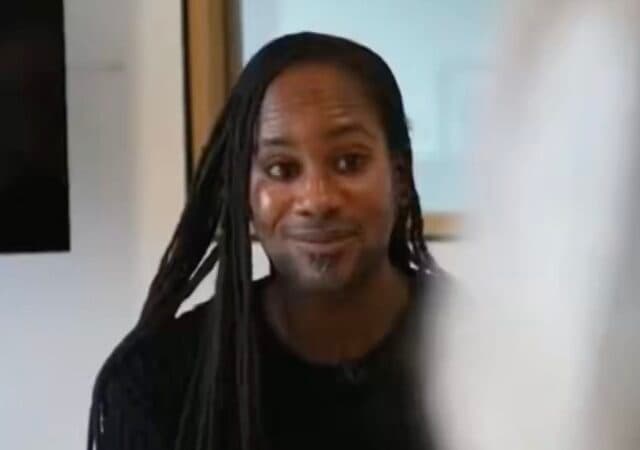
 Close-up of the academic at the center of the Cambridge plagiarism controversy.
Cambridge's DEI 'Success Story' Unravels Into Plagiarism, Resignation
Intra-Party Split Detected
Some left-leaning and mainstream outlets (e.g. Good Law Project, some Guardian coverage, Jesus College leadership, politicians and activists) defended Arday and dismissed allegations as racially motivated smears, while others, including the Guardian's own investigative reporting and the New York Times, ultimately corroborated substantial evidence of plagiarism and fabricated claims, breaking from the defensive narrative.
Left says
- •Arday's resignation followed sustained, months-long scrutiny that he and his supporters characterize as disproportionate and racially inflected harassment rather than proportionate accountability.
- •His defenders emphasize that formal university and journal investigations into the plagiarism allegations did not find intentional misconduct, and that he attributes documentation gaps to autism and a mimicry-based learning style.
- •Concern exists that questioning a Black scholar's extraordinary achievements so relentlessly, including sending police to investigate a journalist's harassment complaint against him, sends a chilling message to aspiring Black and Brown students about how much scrutiny success invites.
- •Signatories to the solidarity petition, including MPs, peers, and his own college's master, frame the campaign against him as politically motivated rather than a neutral pursuit of truth.
Right says
- •Extensive side-by-side textual comparisons showed over 100 passages in Arday's doctoral thesis closely mirroring another scholar's earlier work, a level of detail that goes well beyond vague suspicion.
- •Numerous biographical claims beyond the plagiarism allegations proved verifiably false or unconfirmed, including a fabricated appearance on the 'Seven Up' documentary series, a disputed Ohio State visiting professorship, and a charity run that took twice as long as claimed.
- •A journalist who simply asked Cambridge and Arday routine questions was reported to Scotland Yard and investigated for months, illustrating how scrutiny of a favored DEI figure was actively suppressed rather than welcomed.
- •Institutions and media outlets that had built up Arday's inspirational narrative, including Cambridge's own leadership, denounced the plagiarism findings as a 'vile campaign' before verifying the underlying facts, suggesting ideological investment overrode basic verification.
Common Take
High Consensus- Jason Arday resigned from his Cambridge professorship 'with immediate effect' after months of controversy over plagiarism allegations and disputed biographical claims.
- Cambridge launched a formal investigation into his academic qualifications and honorary appointments following new information, alongside separate ongoing complaints about academic misconduct.
- Multiple institutions, including the University of Glasgow and Ohio State, disputed claims made in his official biography about visiting professorships.
- A journalist investigating Arday's claims was reported to police and investigated for months before the case was closed without any action taken.
The Arguments
Right argues
Side-by-side textual comparisons showed over 100 passages in Arday's doctoral thesis closely mirroring another scholar's earlier work, a level of specificity that goes well beyond baseless innuendo, and this evidence exists independent of who first raised it.
Left counters
Formal university and journal investigations into those same passages did not find intentional misconduct, and Arday's defenders argue that textual overlap can result from documented supervisory failures and a disability-linked, mimicry-based learning process rather than deliberate deception.
Left argues
Arday's resignation came after months of relentless, disproportionate scrutiny that many supporters, including MPs, peers, and his own college's master, view as politically and racially charged harassment rather than neutral fact-finding.
Right counters
Calling documented, verifiable discrepancies 'baseless' or a 'vile campaign' before checking facts like the Ohio State appointment or the Seven Up claim isn't proportionate defense — it's institutional leaders prioritizing narrative over verification, which is itself a serious failure of accountability.
Right argues
Numerous biographical claims beyond the plagiarism itself — a fabricated Seven Up appearance, a disputed Ohio State visiting professorship, a charity run that took twice as long as claimed, and an unverifiable police investigation into a pig's head incident — collectively suggest a pattern of embellishment that can't be explained by autism or documentation gaps alone.
Left counters
Many of these claims involve ordinary human imprecision about long-ago events or institutional record-keeping (e.g., a real Glasgow professorship later mischaracterized as 'visiting'), and treating every discrepancy as proof of fraud ignores that Arday has openly acknowledged some errors while denying deliberate dishonesty.
Left argues
A journalist's routine, professional questions to Cambridge and Arday resulted in a four-month Scotland Yard harassment investigation, which chills legitimate inquiry far less than it chills scrutiny of a Black academic — the actual suppression came from Arday's camp using police and an aggressive law firm, not from journalists overreaching.
Right counters
That same episode is better read as evidence that scrutiny of a favored DEI figure was being actively resisted and weaponized against reporters, since the police ultimately found no basis for action and Grove wasn't even interviewed — showing the complaint was used to intimidate rather than protect anyone.
Right argues
Institutions and media outlets that built up Arday's inspirational narrative, including Cambridge's leadership and past glowing profiles from outlets like the Guardian, denounced the plagiarism findings as a 'vile campaign' before verifying basic facts, suggesting ideological investment in the DEI success story overrode ordinary journalistic and institutional diligence.
Left counters
Institutions defending a colleague against allegations raised by academics with previously stated controversial racial views isn't ideological capture — it's reasonable caution about motive, especially when formal investigations subsequently declined to find intentional misconduct.
Challenge Questions
These questions target genuine internal contradictions — meant to provoke honest reflection.
Right asks Left
“If formal investigations cleared Arday of intentional misconduct, why did his own supporters and institutions rush to call well-documented, verifiable discrepancies (like the Seven Up claim and Ohio State appointment) 'entirely false' and 'baseless' before those specific claims were ever formally investigated?”
Left asks Right
“If the plagiarism findings and biographical discrepancies are treated as self-evidently damning regardless of motive, why does the ideological background of the accusers (a self-described 'race realist' and others with controversial views) matter so much to the right's coverage of Grove and the journalist investigated by police, but not to their assessment of who raised the original allegations?”
Outlier Report
Left Fringe
The Good Law Project and UK signatories (MPs, peers, Jesus College's master) who call the allegations 'entirely false' and 'baseless' despite substantial evidence represent a small, ideologically committed fringe—likely under 15% of the left—that prioritizes narrative protection over fact-finding.
Right Fringe
Figures like Nathan Cofnas, who holds explicitly race-essentialist views ('race realism'), represent an extreme fringe on the right, likely under 10%, whose broader ideological agenda about race and intelligence goes well beyond the specific plagiarism/fraud allegations and taints how mainstream conservatives might discuss the story.
Noise Assessment
High noise ratio: this is largely a UK academic and media controversy amplified into American culture-war discourse about DEI, with much of the loudest commentary (Blaze, Townhall, Legal Insurrection) using the story as a broader ideological cudgel rather than reflecting deep public engagement from the average American, who is likely only vaguely aware of Arday specifically.
Sources (7)
<img src="https://www.theblaze.com/media-library/cambridge-star-jason-arday-was-the-perfect-dei-success-story-is-that-why-nobody-questioned-him.jpg?id=67573387&width=1245&height=700&coordinates=0%2C0%2C0%2C0" /><br /><br /><p>The youngest black professor in Cambridge University's 800-year history is under attack.</p><p>At least that's what some of Britain's most prominent academics, politicians, and racial activists would like you to believe.</p><p class="pull-quote">Anyone curious about why the allegations refuse to disappear can examine some of the evidence for himself.</p><p>“Rightwing newspapers are trying to smear him with fake accusations of plagiarism,” <a href="https://goodlawproject.org/petition/stand-in-solidarity-with-jason-arday/" rel="noopener noreferrer" target="_blank">declares a petition</a> organized by the Good Law Project. “We can't let them.”</p><p>The letter describes the allegations against Jason Arday as “entirely false” and repeatedly calls them “baseless,” while warning that continued scrutiny of the Cambridge professor sends a dangerous message to “aspiring Black and Brown young people.”</p><p>Among the signatories are members of Parliament, peers, professors, the leader and deputy leader of Britain’s Green Party, a Black Lives Matter organizer, and, perhaps most remarkably, the master of Arday’s own Jesus College at Cambridge.</p><p>These are educated people, so presumably they know what “baseless” means.</p><p>An accusation is baseless when there is no factual basis for making it. Whatever else can be said about the allegations against Arday, that plainly isn't true.</p><p>Researchers didn't simply announce that they suspected him of plagiarism. They produced side-by-side comparisons identifying extensive passages in Arday's academic work that appeared identical or strikingly similar to previously published scholarship. Universities and journals subsequently investigated those allegations and declined to find intentional misconduct.</p><p>That is evidence that Arday may have been wrongly accused of plagiarism. It does not magically erase the evidence that prompted the accusations — the basis for these accusations, if you will.</p><h2>'Unlikely story'</h2><p>Arday himself has acknowledged errors in his academic work while denying deliberate plagiarism. As questions have spread from his scholarship to the extraordinary claims in his biography, he has offered a <a href="https://www.pressreader.com/foryou?popupArticleId=281573772500733" target="_blank">simple defense</a>: “Nobody lives their life having a receipt for every single thing they say or they’ve done.”</p><p>Fair enough. But few people have a résumé quite like Jason Arday’s.</p><p>A man who couldn't read until he was 18 goes on to earn a doctorate and become a professor at Cambridge University. Along the way, he runs 30 marathons in 35 days, the final nine with a broken leg. He raises £5.5 million for charity. He runs 600 miles in six days. He survives a brain tumor. He plays semi-professional football. He appears as a child on a celebrated television documentary series.</p><p>Even the Guardian, in <a href="https://www.theguardian.com/society/2023/jul/11/jason-arday-cambridge-university-youngest-black-professor" rel="noopener noreferrer" target="_blank">a glowing 2023 profile</a>, called Arday’s biography “an unlikely story.”</p><p>In retrospect it does sound a little too good to be true.</p><p>But then came the details that turned an old-fashioned inspirational story into something considerably more valuable in our DEI-obsessed era: Arday achieved all of this while overcoming poverty, autism, and the disadvantages of growing up black, the son of Ghanaian immigrants, on a council estate in south London.</p><p>Now it was too good <em>not</em> to be true.</p><h2>No fact-checking, please</h2><p>And therein lies the problem.</p><p>Arday wasn't merely an extraordinarily accomplished man. He embodied a story that Britain's academic and media establishment desperately wanted to tell: about race, class, disability, perseverance, and the institutions enlightened enough to recognize his brilliance.</p><p>Once enough people had invested in that story, questioning it meant questioning considerably more than Jason Arday. What would once have been called fact-checking now required something closer to apostasy: risking running afoul of elite culture's modish yet already entrenched creed about race, adversity, and its own enlightened virtue.</p><p>The moratorium on skepticism now appears to be over. One of the peculiarities of groupthink is how quickly it can run in reverse: once somebody finally pulls the first thread, everyone else suddenly becomes quite eager to participate in the unraveling.</p><p>The <a href="https://www.telegraph.co.uk/news/2026/07/24/cambridges-diversity-poster-boy-in-plagiarism-row/" target="_blank">plagiarism allegations</a> came first. Then journalists began attempting to confirm the extraordinary athletic and charitable claims that had been repeated for years. Arday acknowledged that his supposed 600-mile run took <a href="https://www.theguardian.com/education/ng-interactive/2026/aug/01/playbooks-plagiarism-pigs-head-new-claims-surrounding-cambridge-professor-jason-arday" target="_blank">12 days, not six</a>, and that he had not personally raised £5.5 million for charity but had participated in a fundraising syndicate of around 100 people.</p><p>Who were the other 99?</p><p>Arday says he can't name them because he signed a non-disclosure agreement.</p><h2>Run, Forrest, run</h2><p>Then there's Arday's Forrest Gump-like brush with British television history.</p><p>During a 2022 talk, Arday <a href="https://www.telegraph.co.uk/news/2026/08/02/cambridge-diversity-poster-boy-claims-he-was-in-seven-up/" target="_blank">recalled appearing as a child on "Seven Up,"</a> the landmark British documentary project that began following a group of 7-year-olds and returned to them every seven years. Arday said he participated at 7 and was removed from the project at 14.</p><p>There's a problem.</p><p><a href="https://www.theguardian.com/commentisfree/2024/mar/13/seven-up-series-british-tv-uk-50-years" target="_blank">"Seven Up"</a> first aired in 1964. Its subjects were born in 1957. Arday was born in 1985.</p><p>The BBC later produced a similar series called "Up: Millennium Generation," but that began in 2000, when Arday was 15. The BBC says he wasn't in that one either.</p><p>His academic résumé reveals similar discrepancies.</p><p>Arday's official <a href="https://www.jesus.cam.ac.uk/people/jason-arday" target="_blank">Jesus College biography</a> lists him as a visiting professor at both the University of Glasgow and Ohio State University.</p><p>The University of Glasgow <a href="https://www.heraldscotland.com/news/26433564.glasgow-university-denies-jason-arday-visiting-prof-claim/?show-onboarding=yes" target="_blank">now says</a> that isn't true.</p><p>“I can confirm that Professor Arday isn't a visiting professor at the University of Glasgow,” a spokesman told the Herald. Asked whether he had ever held the position, the university was even more categorical: he “was never a visiting professor here.”</p><p>The confusion is easy to understand. Arday really was a professor at the University of Glasgow's School of Education beginning in 2021 before leaving for Cambridge in 2023. Somewhere along the way, however, that former professorship appears to have been transformed into an ongoing visiting one.</p><p><a href="https://www.telegraph.co.uk/news/2026/08/04/journalist-questioned-by-police-for-investigating-cambridge/" target="_blank">Ohio State says</a> it has "no record of an employee by that name." Arday's profile specifically places him in Ohio State's Office of Diversity and Inclusion, which <a href="https://www.10tv.com/article/news/local/ohio-state-dei-closure-college-of-medicine/530-7f4fec14-0944-4c83-b3be-44b8708b15d2" target="_blank">closed last year</a>.</p><h2>Paper trail</h2><p>And then there is the matter that started all of this: the plagiarism allegations.</p><p>As his defenders are eager to point out, Arday has already been investigated and cleared of deliberate academic misconduct. But anyone curious about why the allegations refuse to disappear can examine some of the evidence for himself.</p><p>As far back as 2023, David Harris, professor emeritus at Plymouth Marjon University, had <a href="https://www.theguardian.com/education/ng-interactive/2026/aug/01/playbooks-plagiarism-pigs-head-new-claims-surrounding-cambridge-professor-jason-arday" target="_blank">raised concerns </a>with Cambridge about Arday's published work; three of Arday's papers were <a href="https://www.arasite.org/Ardaypage.html" target="_blank">subsequently corrected</a>.</p><p>Then on July 21 of this year, former Cambridge academic Nathan Cofnas <a href="https://substack.com/@nathancofnas/p-207415162" target="_blank">claimed on his Substack</a> that he ran Arday's doctoral thesis through plagiarism-detection software and found passages “lifted with minimal editing.” The Telegraph followed <a href="https://www.telegraph.co.uk/news/2026/07/24/cambridges-diversity-poster-boy-in-plagiarism-row/" target="_blank">with its own reporting</a>, identifying more than 100 passages similar to an earlier doctoral thesis by Paula Zwozdiak-Myers.</p><p><a href="https://www.aol.com/articles/cambridge-bosses-face-staff-revolt-174353000.html" target="_blank">Cambridge responded</a> by denouncing what it called a “vile campaign to undermine his credibility.” Even the Guardian acknowledged that the controversial racial views of Harris and Cofnas “appeared to inform Cambridge's response.”</p><p>And there, in miniature, is part of the problem. The evidence could no longer be separated from the supposedly disreputable people who had found it. Asking whether passages had been copied became entangled with asking why these particular men wanted to know.</p><h2>Receipts, please</h2><p>As for Arday, he denies deliberately plagiarizing anyone and has attributed some of the problems with his work to his autism. He says his way of making sense of information has relied heavily on mimicry.</p><p>"I can't make people believe me," he recently told the Times. "Nobody lives their life having a receipt for every single thing they say or they've done."</p><p>Certainly not.</p><p>But nobody is asking Arday for documentary evidence of what he had for lunch on his 23rd birthday.</p><p>Professorships, multimillion-pound charity drives, near-record-breaking athletic achievements, television appearances, and published academic scholarship are precisely the sorts of things that tend to leave receipts.</p><p>So do police investigations. Arday previously said that a pig's head was delivered to his parents' home as part of a campaign of racial intimidation. He said police investigated and even located a butcher who had sold a whole hog on the morning of the incident.</p><p>This time <a href="https://www.theguardian.com/education/ng-interactive/2026/aug/01/playbooks-plagiarism-pigs-head-new-claims-surrounding-cambridge-professor-jason-arday" target="_blank">it was the Guardian</a> — three years after publishing one of the glowing profiles that helped establish the Arday legend — that started asking questions.</p><p>The Metropolitan Police could find no record of the investigation Arday described. The butcher reportedly identified in his account denied that police had visited.</p><p><strong>RELATED: </strong><a href="https://www.theblaze.com/frontier/the-godfather" target="_self"><strong>The Godfather</strong></a></p><p class="shortcode-media shortcode-media-rebelmouse-image image-crop-16x9"> <img alt="" class="rm-shortcode" id="a9437" src="https://www.theblaze.com/media-library/image.jpg?id=67573578&width=1245&height=700&quality=50&coordinates=0%2C0%2C0%2C0" /> <small class="image-media media-photo-credit">Peter Gietl</small></p><h2>Don't ask</h2><p>Timing is everything. Had the Guardian gone after Arday any earlier, it may have run into the resistance Times Higher Education reporter Jack Grove faced.</p><p>In late 2025, Grove began looking into Arday after academics alerted him to apparent plagiarism. He emailed Arday, Cambridge, and Liverpool John Moores with questions about the thesis and Arday's extraordinary fundraising and endurance-running claims.</p><p>For this, Grove ended up <a href="https://www.telegraph.co.uk/news/2026/08/04/journalist-questioned-by-police-for-investigating-cambridge/" target="_blank">under investigation by Scotland Yard</a>.</p><p>Police spent four months investigating a harassment complaint before closing the case without taking action. Grove wasn't interviewed. In fact, he says he didn't even know he had been investigated until an officer called to tell him the case had been closed.</p><p>The officer nevertheless asked Grove not to contact Arday again because, according to Grove, his questions had affected the professor's mental health.</p><p>Arday also hired Carter-Ruck, the famously aggressive British law firm. In a letter to Times Higher Education, it suggested the publication's "apparent attack" on him might be "racially motivated."</p><p>Cambridge says it neither made the complaint against Grove nor knew one had been made.</p><h2>New rules</h2><p>How did so many extraordinary claims get this far?</p><p>Arday's Cambridge professorship <a href="https://www.aol.com/articles/chair-scandal-hit-think-tank-192004000.html" target="_blank">was decided</a> by a nine-member Board of Electors chaired by Baroness Sally Morgan, master of Fitzwilliam College and a deputy to Cambridge's vice chancellor. Cambridge says the other members included “distinguished academics from other universities.”</p><p>This was the culmination of a rapid ascent through academia, none of which seemed to have questioned any of Arday's claims. Simon & Schuster agreed to publish his memoir, <a href="https://www.simonandschuster.com/authors/Jason-Arday/227392248" target="_blank">“Great and Unfortunate Things,”</a> under its 37 Ink imprint; it comes out next week. Meanwhile, newspapers such as the Guardian celebrated his glittering career and repeated the extraordinary biography that accompanied it.</p><p>By the time Cambridge appointed him, Arday's story had already acquired the reassuring sheen of institutional consensus.</p><p>In a new essay entitled <a href="https://www.compactmag.com/article/the-racial-crossroads/" target="_blank">“The Racial Crossroads,”</a> Helen Andrews points out that under a sufficiently entrenched ideology, “proficiency in the ruling ideology is a criterion for advancement in any kind of career.”</p><p>The Guardian's 2023 profile is especially instructive because it allowed Arday to demonstrate just that proficiency.</p><p>Arday said his appointment represented “another strand of Black excellence.” He described Oxford and Cambridge as “thousand-year-old white establishments” and explained the difficulty faced by a person of color who “penetrates those legacy spaces.” Part of his mission at Cambridge was to dismantle its elitism.</p><p>You're either cheering Arday on, or you're part of the elitism he has come to dismantle. Once the incentives are made this clear, potential gatekeepers tend to police themselves. A sufficiently confident newcomer need only learn which doors nobody wants to be seen closing.</p><p>With that in mind, a line buried in the Guardian profile reads rather differently now.</p><p>“Arday does not view himself as intellectual, necessarily, but as someone who has determination,” the Guardian observed.</p><p>Or, as Arday himself put it: “If you have the will, it will always supersede skill.”</p><p>It's hard to think of a more apt motto for the diversity regime that helped propel Arday to Cambridge.</p>
Prof Jason Arday said he had "concluded that the only way to bring this chapter to an end is to step away".
<p>“Arday did not dispute the allegations of plagiarism, but defended himself by arguing that he had not received adequate supervision during his PhD given his autism and learning disabilities.”</p> The post <a href="https://legalinsurrection.com/2026/08/celebrated-cambridge-professors-extraordinary-rise-meets-an-extraordinary-reckoning/">Celebrated Cambridge Professor’s Extraordinary Rise Meets an Extraordinary Reckoning; Updated</a> first appeared on <a href="https://legalinsurrection.com">Le·gal In·sur·rec·tion</a>.
Jason Arday was hired by the University of Cambridge in 2023 as the youngest Black professor in its history. Doubt has since been cast on his academic qualifications and claims about his life.
A knife-wielding masked man. A pig’s head outside his parents’ door. Running 30 marathons in 35 days. The Cambridge professor Jason Arday, accused of plagiarism, says he’s been through it all. Not everyone believes him.
If The Onion or Babylon Bee or another satirical publication wanted to spoof the absurdity of DEI -- the ideology of "Diversity, Equity, and Inclusion" -- they couldn't have invented a character as unbelievable as Jason Arday.