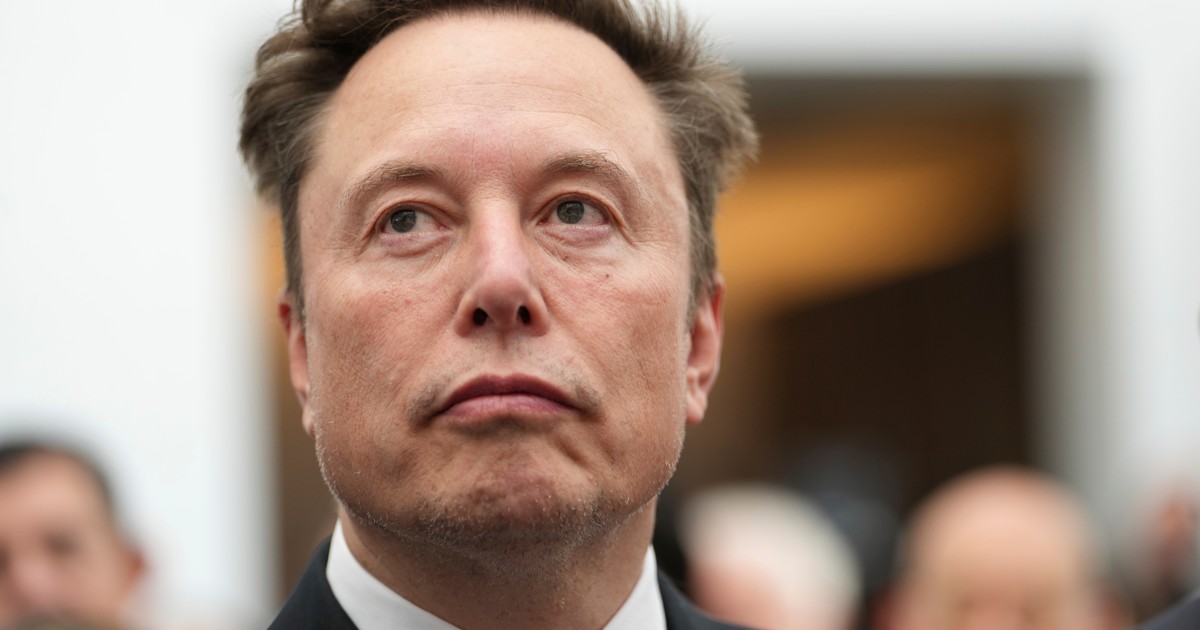
Can Elon Musk's SpaceX Break the Wireless Carrier Oligopoly?
Intra-Party Split Detected
Most Democrats (e.g., Raskin) and some officials push for DOGE/Musk investigations, while Illinois Gov. Pritzker and Texas Gov.-elect Hinojosa signal more cautious or mixed approaches toward confronting Musk, suggesting not all Democrats favor aggressive action against him.
Left says
- •SpaceX's push into wireless raises concerns about Musk consolidating even more critical infrastructure under one person's control, following scrutiny of his influence over satellite communications, government contracts, and now DOGE's handling of sensitive federal data.
- •Regulatory decisions on spectrum transfers and potential mergers deserve heightened scrutiny given Musk's close ties to the Trump administration, since analysts note he may be rushing to lock in deals before political winds shift after the midterms.
- •Local and state officials, including Texas's incoming Democratic governor, argue that deals benefiting Musk's companies, like land sales for SpaceX, must serve public interest and not simply override community and constitutional protections.
- •Democratic lawmakers pushing for investigations into DOGE reflect broader unease about unchecked power Musk has accumulated across government and industry simultaneously.
Right says
- •A new, well-capitalized competitor entering the wireless market could finally challenge the entrenched dominance of Verizon, AT&T, and T-Mobile, potentially driving down prices and improving coverage for consumers who have had little real choice for decades.
- •Rural Americans and underserved communities stand to benefit most from a hybrid satellite-terrestrial network, since legacy carriers have historically underinvested in remote coverage while charging the same rates as in cities.
- •Musk's track record of disrupting the automotive and aerospace industries despite skepticism from entrenched incumbents suggests he shouldn't be counted out in wireless, even though the technical and financial hurdles are substantial.
- •Democratic efforts to investigate DOGE and block Musk-related land and business deals, such as in Texas, look like politically motivated attempts to punish a successful entrepreneur rather than good-faith policy concerns.
Common Take
High Consensus- America's wireless market has been dominated by three major carriers for years with limited new competition.
- SpaceX faces significant technical, financial, and regulatory obstacles in building out a nationwide wireless network.
- Musk's extensive ties to the Trump administration and government contracts will invite continued political and regulatory scrutiny of his business moves.
- Rural and underserved areas have long experienced weaker wireless coverage despite paying comparable rates to urban customers.
The Arguments
Right argues
A well-capitalized new entrant like SpaceX could finally disrupt a three-carrier oligopoly that has had little incentive to lower prices or fix coverage gaps, especially in rural areas where legacy carriers have chronically underinvested.
Left counters
Introducing competition by handing even more critical infrastructure—spectrum, satellites, and potentially terrestrial networks—to a single individual who already controls major space, defense, and government-data assets doesn't diversify power, it concentrates it further under one person with no accountability mechanism distinct from market competition.
Left argues
Musk's unusually close relationship with the Trump administration and his apparent urgency to lock in spectrum deals and mergers before the political landscape shifts after the midterms warrants heightened regulatory scrutiny rather than a rubber stamp.
Right counters
Timing a business deal around a favorable regulatory window is standard corporate strategy practiced by every major company, and treating it as uniquely suspicious when Musk does it—while three entrenched carriers have spent decades shaping friendly regulation to block competitors—is a double standard.
Right argues
Musk has repeatedly proven skeptics wrong in automotive and aerospace, forcing entire industries to modernize, so dismissing his wireless ambitions as unrealistic ignores his actual track record of disruptive execution.
Left counters
Wireless infrastructure is a fundamentally different challenge than rockets or electric cars—it requires decades of accumulated spectrum rights, zoning approvals, and indoor coverage build-out that capital alone can't shortcut, and Musk's approach so far has relied on acquiring existing assets (like Boost Mobile) rather than demonstrated technical breakthroughs unique to him.
Left argues
Elected officials like Texas's incoming governor have legitimate authority and constituent mandates to ensure that public assets—such as state parkland sold to SpaceX—serve the public interest and respect constitutional protections, not just corporate convenience.
Right counters
Blocking land sales and launching DOGE investigations right after a company becomes politically inconvenient to the opposing party looks less like principled oversight and more like selective enforcement aimed at punishing a prominent Trump-aligned entrepreneur rather than a consistent policy standard applied to all companies.
Right argues
A hybrid satellite-terrestrial network specifically benefits underserved rural communities and could equalize service quality between cities and remote areas in a way legacy carriers have never prioritized despite charging comparable rates.
Left counters
Promises of rural benefit shouldn't exempt the deal from scrutiny over consolidation risk—if the same entity controlling satellite communications, government data systems, and now potentially wireless infrastructure fails or behaves unaccountably, rural users could be left more dependent and more exposed than under the current fragmented system.
Challenge Questions
These questions target genuine internal contradictions — meant to provoke honest reflection.
Right asks Left
“If concentration of power is the core concern, why is blocking a new, well-capitalized competitor from entering a market dominated by three entrenched incumbents framed as protecting the public rather than simply preserving the existing concentration of carrier power?”
Left asks Right
“If Musk's rapid, acquisition-driven path into wireless (via Boost Mobile and spectrum deals rather than built-from-scratch infrastructure) is comparable to his 'disruptive' track record in autos and aerospace, what specific technical innovation—beyond capital and regulatory timing—actually mirrors those earlier disruptions?”
Outlier Report
Left Fringe
Figures like Robert Reich, who has called for government 'defunding' or takeover of SpaceX/Starlink, represent a small but vocal fringe (roughly 10-15% of the left) that frames Musk's expansion as an urgent oligarchic threat requiring aggressive state intervention rather than standard antitrust skepticism.
Right Fringe
Some Musk boosters in right-wing media and X commentary (a small sliver, perhaps 10% of the right) treat any regulatory or state-level pushback, like Texas Gov.-elect Gina Hinojosa's land-sale pause, as outright persecution of Musk, dismissing legitimate local land-use or environmental concerns as purely partisan attacks.
Noise Assessment
High amplification relative to actual public attention: most Americans are not closely following SpaceX's wireless ambitions or the DOGE investigation threads, so the loudest voices (Reich on the left, hardcore Musk defenders on the right) disproportionately shape perceived discourse compared to the more pragmatic 'I just want cheaper phone bills' sentiment of the general public.
Sources (4)
<p>Elon Musk is looking to shake up America's wireless industry, potentially bringing the first major <a href="https://www.axios.com/2026/10/09/spacex-elon-musk-spectrum" target="_blank">new competitive threat</a> in years to a business dominated by three companies.</p><p><strong>Why it matters:</strong> The cellular industry has seen enormous technological change but relatively little disruption to its competitive structure. Musk has the money, spectrum and satellite network to attempt something different — though he faces daunting obstacles.</p><hr /><p><strong>Driving the news:</strong> SpaceX is assembling the pieces to become a major U.S. wireless carrier, potentially building its own terrestrial network and buying available spectrum. </p><ul><li>The moves are meant either to build the capability to bypass existing carriers or to bring them to the table for a deal that would allow Musk to strike a deal for wholesale access to their networks.</li><li>Musk may have reason to move quickly while the current administration and its regulatory appointees remain in place, a reason some analysts have cited in the context of proposals for a <a href="https://www.axios.com/2026/10/20/spacex-tesla-merger-talks" target="_blank">merger between Tesla and SpaceX</a>.</li></ul><p><strong>What they're saying:</strong> Blair Levin, a former Federal Communications Commission chief of staff who now heads policy at Optimal Advisory, says Musk's financial resources distinguish him from previous challengers.</p><ul><li>"For the first time, there is an entity capable of scaring investors in the traditional big three," Levin told Axios.</li><li>Unlike Dish, which faced serious financing constraints, SpaceX can draw on capital markets that have rewarded Musk's ambitious plans.</li></ul><p><strong>The latest:</strong> SpaceX has held talks with EchoStar about acquiring Boost Mobile or gaining access to its network arrangements, according to a <a href="https://www.washingtonpost.com/technology/2026/11/02/inside-elon-musks-plan-upend-wireless-phone-industry/?pwapi_token=eyJ0eXAiOiJKV1QiLCJhbGciOiJIUzI1NiJ9.eyJyZWFzb24iOiJnaWZ0IiwibmJmIjoxNzkzNTk1NjAwLCJpc3MiOiJzdWJzY3JpcHRpb25zIiwiZXhwIjoxNzk0OTc3OTk5LCJpYXQiOjE3OTM1OTU2MDAsImp0aSI6ImQ2MjcxMTY2LWY0MDctNDQ0Mi05ZGRiLTUyMjU5NjNlN2IzNyIsInVybCI6Imh0dHBzOi8vd3d3Lndhc2hpbmd0b25wb3N0LmNvbS90ZWNobm9sb2d5LzIwMjYvMTEvMDIvaW5zaWRlLWVsb24tbXVza3MtcGxhbi11cGVuZC13aXJlbGVzcy1waG9uZS1pbmR1c3RyeS8ifQ.rgx7Hnfn4-gDt-e2Pqd4zT3fT-VY2c7Kib96ubdLkFQ" target="_blank">Washington Post report</a> Monday. </p><ul><li>That could provide a quick route to customers and infrastructure, although approval of such a deal is far from a foregone conclusion if Musk's businesses are drawn into a regulator quagmire after the midterm elections.</li><li>The Post reported that Verizon, AT&T and T-Mobile have all rebuffed Musk's efforts to gain access to their networks.</li></ul><p><strong>State of play:</strong> Musk also has a path to maneuver around them.</p><ul><li>SpaceX has agreed to multibillion-dollar <a href="https://www.axios.com/2025/09/08/spacex-elon-musk-echostar-wireless-spectrum" target="_blank">spectrum deals</a>, including a <a href="https://www.axios.com/2026/10/09/spacex-8-billion-spectrum" target="_blank">low-band variety</a> useful for reaching customers indoors and supporting a traditional cellular network.</li><li>The company could build its own network using towers and smaller rooftop antennas, though doing so would require substantial investment and time.</li></ul><p><strong>The big picture:</strong> America's wireless industry has spent much of the past two decades consolidating.</p><ul><li>T-Mobile once played the scrappy challenger, shaking up the industry with aggressive pricing and the elimination of unpopular practices.</li><li>But its 2020 <a href="https://www.axios.com/2020/04/01/t-mobile-closes-sprint-deal" target="_blank">acquisition</a> of Sprint reduced the number of major nationwide carriers from four to three.</li><li>Regulators tried to preserve a fourth competitor by requiring the sale of Boost Mobile to Dish Network, which planned to build a nationwide network.</li><li>That effort never delivered the competitive alternative envisioned, leaving Verizon, AT&T and T-Mobile firmly entrenched.</li></ul><p><strong>The intrigue:</strong> Musk would be moving from a business where SpaceX enjoys enormous technical and economic advantages to one where the established players have spent decades building infrastructure, acquiring customers and learning how to serve them.</p><ul><li>In terrestrial wireless, the big three carriers have invested in towers, spectrum, indoor coverage and the countless small improvements that make their networks reliable.</li><li>Building such a network isn't simply a matter of spending billions on infrastructure, Craig Moffett of MoffettNathanson said in a recent podcast interview. It also means catching up on decades of work filling in coverage gaps in stadiums, airports and other difficult locations.</li></ul><p><strong>The catch:</strong> Even if Musk can assemble the necessary infrastructure, it's far from clear that becoming a nationwide wireless carrier would be a particularly attractive business.</p><ul><li>Moffett questions why SpaceX would want to enter an industry where even the established carriers struggle to earn attractive returns on their investments.</li></ul><p><strong>Between the lines:</strong> Success will depend on fundamentally lowering the cost of providing service or creating something for which consumers are willing to pay extra.</p><ul><li>SpaceX has floated the idea of using Starlink rooftop equipment as small cellular base stations, potentially reducing some of the costs of building a traditional network.</li></ul><p><strong>The political backdrop:</strong> Musk's plans come as Washington faces a potentially significant shift following Tuesday's midterm elections.</p><ul><li>While SpaceX is likely to face significant political and regulatory risks due to Musk's ties with Republicans, analysts aren't sure that will translate into opposing a wireless deal that adds competition to the market.</li></ul><p><strong>The bottom line:</strong> Musk has repeatedly succeeded in industries where established players doubted his ambitions. But this time he's the outsider, trying to overcome the advantages of companies that have spent decades building the networks he wants to challenge.</p>
<img src="https://www.theblaze.com/media-library/elon-musk-s-next-target-america-s-self-entitled-phone-companies.jpg?id=68596581&width=1245&height=700&coordinates=0%2C104%2C0%2C104" /><br /><br /><p>America loves competition, except, apparently, when it comes to your phone bill. For years, the wireless market has been dominated by three Mafia-like fat cats: Verizon, AT&T, and T-Mobile. They compete for customers, of course. But Americans could be forgiven for wondering whether somebody forgot to invite a fourth player to the party. The monthly bills keep coming. The dead zones remain, and escaping one carrier often means signing up for another version of the same expensive headache.</p><p>Now, as the Washington Post recently <a href="https://nam12.safelinks.protection.outlook.com/?url=https%3A%2F%2Fwww.washingtonpost.com%2Ftechnology%2F2026%2F11%2F02%2Finside-elon-musks-plan-upend-wireless-phone-industry%2F&data=05%7C02%7Cjpoulos%40blazemedia.com%7C71589d6490664266fd0308df395422c8%7Ccb6bcf2f9ec84d27b2344b2f00283fde%7C0%7C0%7C639292705673264877%7CUnknown%7CTWFpbGZsb3d8eyJFbXB0eU1hcGkiOnRydWUsIlYiOiIwLjAuMDAwMCIsIlAiOiJXaW4zMiIsIkFOIjoiTWFpbCIsIldUIjoyfQ%3D%3D%7C0%7C%7C%7C&sdata=6Eyh8kYXRrFUX1YBDFMmxgPvFluUylauqpcJ%2B5GfsQY%3D&reserved=0" target="_blank" title="Original URL: https://www.washingtonpost.com/technology/2026/11/02/inside-elon-musks-plan-upend-wireless-phone-industry/. Click or tap if you trust this link.">reported</a>, Elon Musk wants in. Through SpaceX, he's exploring ways to enter the $235 billion wireless market, potentially by acquiring Boost Mobile or using its network. His aim is to combine conventional mobile connectivity with Starlink satellites, challenging the way Americans have traditionally accessed wireless service.</p><p class="pull-quote">Rural America has spent far too long paying full price for half-baked service.</p><p>It's an audacious undertaking, with enormous technical and commercial obstacles. But Musk loves a challenge. And the prospect of a serious new competitor should give America's established players something to sweat about.</p><p>The wireless cartel has operated like a medieval feudal system for two decades. Three lords divided the fiefdom, then charged the peasants $200 a month for four lines and provided customer service reps who sounded like they were reading scripts at gunpoint. You hand over a small fortune every thirty days. Yet the moment you step onto a rural highway or enter a basement grocery store, your $1,200 smartphone turns into a rather luxurious paperweight.</p><h2>Dodging the opposition</h2><p>The corporate titans prefer this arrangement. Musk approached Verizon, AT&T, and T-Mobile to buy wholesale access to their cellular networks. All three slammed the door in his face. Standard corporate paranoia drove the refusal. Nobody invites a sledgehammer into a glass house.</p><p>So Musk pivoted toward EchoStar, the corporate parent of Boost Mobile. Acquiring Boost would <a href="https://techcrunch.com/2026/11/02/spacex-reportedly-wants-to-buy-boost-mobile-to-compete-with-att-t-mobile-and-verizon/" target="_blank">give</a> SpaceX millions of existing subscribers overnight, along with valuable rights to use the airwaves. Boost currently leases network capacity from AT&T and T-Mobile. Buying Boost could give Musk a back door into the market, letting him sidestep the barriers established carriers put in his way.</p><p><strong>RELATED: <a href="https://www.theblaze.com/tech/robert-reich-elon-musk-defund" target="_blank">'Defund Musk': Robert Reich calls for government takeover of SpaceX and Starlink — and Elon responds</a></strong></p><p class="shortcode-media shortcode-media-rebelmouse-image"> <img alt="" class="rm-shortcode" id="6ac2e" src="https://www.theblaze.com/media-library/image.png?id=68529954&width=980" /> <small class="image-media media-photo-credit"> Samuel Corum/Bloomberg/Getty Images </small> </p><p>To be clear, building a competitive nationwide terrestrial network requires years of hard graft and hundreds of billions of dollars. But Musk could skip the shovel work entirely. He already <a href="https://hiwavemakers.com/blog/satellite-internet-ai-starlink-low-earth-orbit-kids-career/" target="_blank">operates</a> over 6,000 active Starlink satellites in low Earth orbit. He builds rockets in Texas, launches them from Florida, and controls the sky.</p><p>Traditional carriers build cell towers. They secure local zoning permits and pray a passing tornado doesn't knock out coverage for three counties. SpaceX hangs its cell towers in space. By bonding low Earth orbit satellites directly to mobile networks, Musk can route a signal anywhere the sun hits the soil.</p><p>The merger of orbital satellites and ground networks fundamentally <a href="https://finance.yahoo.com/technology/articles/spacex-target-rural-america-big-173711877.html" target="_blank">alters</a> the math for everyday Americans. Farmers operating combines in North Dakota could finally maintain high-speed connections across 4,000 acres of wheat. Long-haul truckers crossing remote stretches of Interstate 80 in Wyoming would no longer lose navigation maps mid-route. Emergency services operating in fire-consumed canyons could bypass incinerated ground cables entirely.</p><p>Rural America has spent far too long paying full price for half-baked service. City dwellers enjoy five distinct bands of high-speed coverage while ranching families in Montana pay identical rates for a single, dodgy signal bar. Musk’s hybrid model treats geography as an engineering nuisance, not an excuse for extortion.</p><h2>A revolution in the making</h2><p>National security demands this kind of structural redundancy. The defense establishment already understands this reality. The U.S. military increasingly depends on private space companies to keep communications secure, while traditional defense contractors can take years to deliver even basic equipment. Musk moves faster than federal procurement officers can write meeting agendas.</p><p>If America's first trillionaire's plan comes to fruition, the commercial fallout will hit home fast. The traditional carriers will fight this expansion in courtrooms, regulatory hearings, and corporate PR campaigns. They will claim satellite signals drop during heavy rainstorms. They will insist spectrum transfers threaten consumer safety. The unholy trinity can fight Musk all they want, but they can't easily stop Americans from wanting cheaper bills and better coverage.</p><p>When Tesla entered the automotive market in 2008, Detroit executives laughed off the idea of a Silicon Valley start-up manufacturing family cars. Tesla subsequently forced every major auto manufacturer on Earth to <a href="https://www.reuters.com/business/autos-transportation/build-or-buy-automakers-chasing-tesla-rethink-dependence-suppliers-2022-03-31/" target="_blank">overhaul</a> their entire production lines. When SpaceX launched its first commercial rockets, legacy aerospace contractors <a href="https://www.afmc.af.mil/News/Article-Display/Article/2562506/a-look-backrecoverable-rocket-boosters-a-future-that-never-was/" target="_blank">declared</a> reusable boosters mathematically impossible. SpaceX now <a href="https://www.space.com/space-exploration/launches-spacecraft/launch-monster-spacex-has-lofted-more-satellites-than-everyone-else-in-history-combined" target="_blank">launches</a> more tonnage into orbit than every other country combined.</p><p>The wireless market represents the next logical domino. Musk doesn't need to convert every smartphone user in North America to win this war. Stealing 10% of market share forces Verizon, AT&T, and T-Mobile to slash prices and actually repair dead zones. Healthy competition makes companies work for their money.</p><p>The American consumer wins the second a real fight breaks out. For 20 years, phone bills have acted like a mandatory utility tax administered by a corporate triad. Musk brings capital. He brings orbit-proven hardware and a total disregard for industry decorum. He has been written off many times before and has always come through. Only a fool would bet against him now.</p>
Rep. Jamie Raskin, D-Md., says he feels "pretty certain" at least one committee will investigate DOGE, calling Elon Musk's cost-cutting effort a catastrophe.