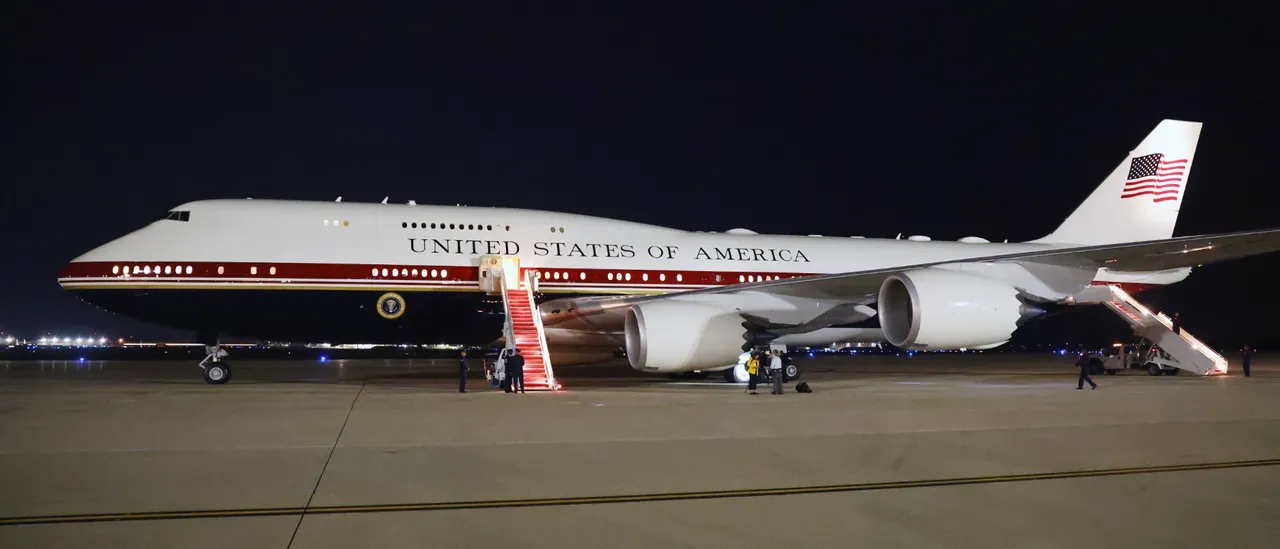
CIA Doubted Israeli Tip Behind Trump's Secret Plane Switch
Left says
- •The secrecy of the plane switch raises questions about transparency, since journalists and even senior aides like Secretary of State Marco Rubio remained on the decoy aircraft without full knowledge of the danger.
- •Keeping the public and press in the dark about a life-threatening incident involving the president invites scrutiny about what else the administration might withhold under the guise of security.
- •The episode highlights the risks of rushing the Qatari-gifted jumbo jet into service without the full protective systems standard to Air Force One, prioritizing speed over safety.
- •Even if the threat was real, the president's clever evasion tactic should not have come at the cost of honesty with the public about what actually happened.
Right says
- •Israeli intelligence, a close and trusted U.S. ally, identified a credible plot to shoot down Air Force One with shoulder-fired missiles, and the Secret Service treated it seriously enough to execute an elaborate evacuation.
- •The Wall Street Journal's reporting corroborates that this was a genuine assassination attempt tied to sensitive timing around Iranian leadership events, not an overreaction.
- •Questions about the CIA's 'low confidence' assessment shouldn't undermine the broader reality that Iran has a documented history of targeting Trump following the Soleimani strike years ago.
- •The successful evasion demonstrates competent security execution under real threat conditions, protecting the president's life without incident.
Common Take
High Consensus- Israel passed intelligence to the U.S. warning of a potential Iranian threat to Trump and Air Force One around the July 8 NATO summit departure from Turkey.
- The Secret Service and military executed a covert plane switch, moving Trump onto a smaller C-32A aircraft while the press and some staff remained on the original plane.
- The CIA's assessment of the Israeli-provided intelligence was described as 'low confidence,' creating some ambiguity about how credible the threat actually was.
- The incident has renewed scrutiny of the protective capabilities of the new Qatari-gifted Air Force One aircraft.
The Arguments
Right argues
A trusted ally, Israel, flagged a credible plot involving shoulder-fired missiles aimed at Air Force One, and given Iran's documented history of targeting Trump since the Soleimani strike, the Secret Service was right to treat it as serious and act decisively rather than gamble on 'low confidence' caveats.
Left counters
Treating every foreign tip as actionable without independent U.S. verification sets a dangerous precedent, especially when the CIA itself rated the intelligence as low confidence and Israeli-derived rather than corroborated by American sources.
Left argues
Keeping journalists and even Secretary of State Rubio in the dark about a supposed life-threatening plot—while deceiving the public about the president's real location—raises legitimate questions about what other risks or deceptions the administration might justify under the banner of 'security.'
Right counters
Operational secrecy during an active, unresolved threat to the president's life is standard protocol, not a transparency scandal; revealing real-time details to reporters or staff not need it could have compromised the evacuation and endangered lives.
Left argues
Rushing the Qatari-gifted jet into service without the full missile-defense suite standard to Air Force One reflects a prioritization of speed and optics over the president's actual safety, and this episode exposes that gap.
Right counters
The successful evasion using layered contingency planning—decoy aircraft, misdirection, backup jets—demonstrates that security protocols worked exactly as intended even with an imperfect new aircraft, proving competence rather than negligence.
Right argues
The Wall Street Journal's independent corroboration of the shoulder-fired missile threat, combined with the sensitive timing around Khamenei's burial, supports the reality of a genuine assassination attempt rather than a bureaucratic overreaction driven by an unreliable tip.
Left counters
Multiple outlets corroborating that Israel *relayed* a threat doesn't resolve the core issue that the CIA's own analysts, using the same information, rated it low confidence—corroboration of the tip's existence is not corroboration of its accuracy.
Left argues
Even if the president's evasion tactics were clever and effective, deceiving the public and even senior aides about something this consequential undermines trust and sets a troubling precedent for withholding information under the guise of protecting the president.
Right counters
Full transparency during an active assassination threat would defeat the entire purpose of the evasion maneuver; the deception was temporary, tactical, and necessary, not an attempt at permanent concealment from the public.
Challenge Questions
These questions target genuine internal contradictions — meant to provoke honest reflection.
Right asks Left
“If the evacuation protocol worked flawlessly and protected the president without incident, what specific harm resulted from the temporary secrecy that would justify demanding real-time disclosure during an active, unresolved threat?”
Left asks Right
“If the CIA itself rated the Israeli-derived intelligence as 'low confidence,' on what basis should the public treat this as a confirmed assassination plot rather than an unverified claim that triggered an extraordinary response?”
Outlier Report
Left Fringe
Some progressive commentators and outlets skeptical of Trump (e.g., certain MSNBC contributors, Democracy Now framing) lean toward suggesting the entire episode may be exaggerated or staged for political theater, representing maybe 15-20% of the left.
Right Fringe
Pro-Trump commentators like Dan Bongino or certain America First media figures may dismiss the CIA's 'low confidence' assessment entirely as deep-state undermining of a real threat, representing roughly 20-25% of the right.
Noise Assessment
Moderate noise; the CIA/WSJ credibility dispute is a genuine substantive disagreement, but much of the amplified discourse (Qatari jet gift criticism, deep-state framing) reflects existing partisan narratives being retrofitted onto this story rather than new public sentiment.
Sources (6)
‘Israeli-derived, not U.S.-generated, and viewed as low confidence’
U.S. intelligence officials were skeptical of an Iranian assassination threat against President Donald Trump that was relayed by Israel and prompted an extraordinary clandestine maneuver that saw him secretly fly out of Turkey in an alternate military aircraft, current and former U.S. officials familiar with the intelligence said.
<em>The Washington Post</em> reported Monday that due to an alleged Iranian threat to assassinate President Trump, he secretly swapped planes before departing the July <span class="caps">NATO</span> summit in Turkey — leaving senior administration officials, staff and members of the press corps on board.</p> <p>“The Israelis passed a tip, a concern, that the plane and potentially the president was under threat,” says Dan Lamothe, one of the <em>Washington Post</em>reporters who broke the story. But it turns out the ”<span class="caps">CIA</span> had low confidence” in the Israeli tip, according to a more recent <em>Post</em> story Lamothe co-authored on Thursday. “I think that kind of leaves the Secret Service in a tough spot of assessing: What do you do in this zero-fail mission to keep the president safe?”
<p>The threat included an attempt to use "shoulder-to-air missiles to target Air Force One."</p> The post <a href="https://legalinsurrection.com/2026/08/wsj-israeli-intel-foiled-iranian-plot-to-assassinate-trump-after-nato-summit/">WSJ: Israeli Intel Foiled Iranian Plot to Assassinate Trump After NATO Summit</a> first appeared on <a href="https://legalinsurrection.com">Le·gal In·sur·rec·tion</a>.
The prospect that Iran might try to kill Trump has hung over the president since he had a top Iranian official assassinated more than six years ago.
The president cleverly evaded a serious threat, but he shouldn’t have kept it a secret.