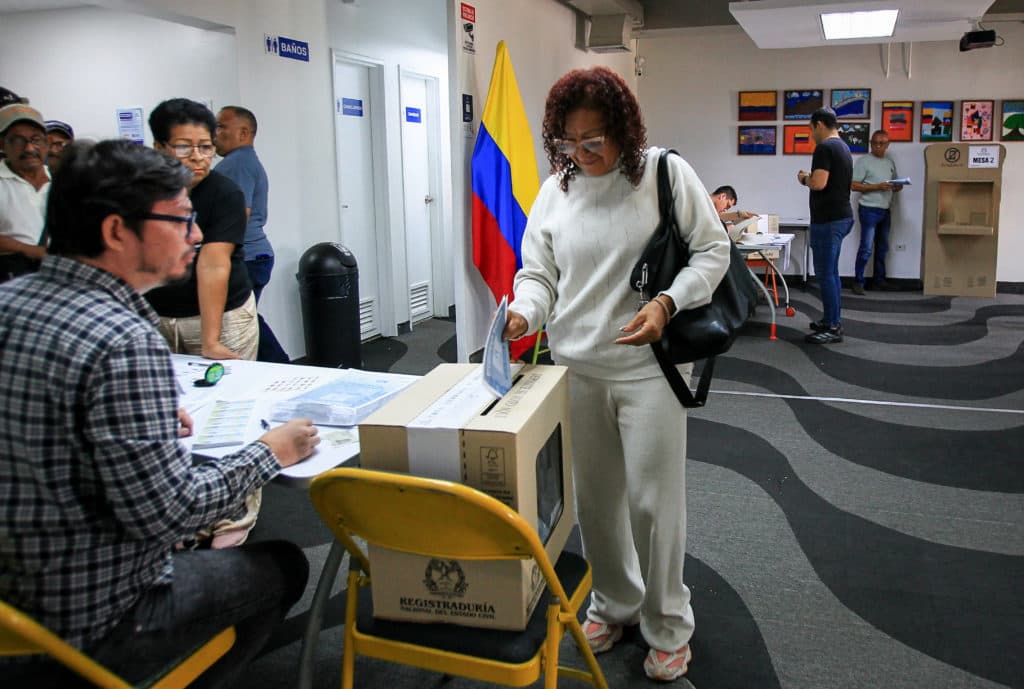
Colombia's ruling party questions election results after pro-Trump candidate leads
Left says
- •Colombia's democratic institutions are under attack as the outgoing president and his ally baselessly claim election fraud without evidence, undermining public trust in the electoral process
- •International observers and human rights organizations have confirmed Colombia's electoral system is independent and trustworthy, with historically high accuracy rates
- •The claims of vote manipulation echo dangerous anti-democratic rhetoric that threatens the peaceful transfer of power in a country already struggling with violence and instability
- •Ecuador's interference in the election by making policy commitments to one candidate represents a flagrant violation of Colombia's sovereignty and electoral integrity
Right says
- •Colombian voters decisively rejected four years of failed leftist policies under Gustavo Petro, choosing a tough-on-crime outsider who promises to restore security and order
- •De la Espriella's surge from underdog to frontrunner demonstrates genuine grassroots support for his hardline approach to cartels and criminal organizations
- •The ruling party's immediate claims of fraud after losing reveal their unwillingness to accept democratic results and their desperation to cling to power
- •Colombians are demanding real solutions to violence and crime, not more failed peace negotiations with terrorists and drug traffickers
Common Take
High Consensus- The election will proceed to a runoff between Abelardo de la Espriella and Iván Cepeda in June after neither candidate reached 50% of the vote
- Colombia faces serious challenges with violence, crime, and drug trafficking that require effective solutions
- The electoral authority reported nearly complete vote counts showing de la Espriella leading with 44% and Cepeda with 41%
- Foreign interference in domestic elections undermines democratic sovereignty and should be condemned
The Arguments
Left argues
Colombia's electoral system has achieved historic accuracy rates of 99.8% and has been validated by international observers and human rights organizations as independent and trustworthy. The immediate claims of fraud without evidence by Petro and Cepeda mirror dangerous anti-democratic rhetoric that undermines institutional legitimacy.
Right counters
The ruling party's refusal to accept preliminary results and their claims of 800,000 manipulated voter IDs reveal their desperation to cling to power after voters decisively rejected their failed policies. Their fraud allegations are baseless attempts to delegitimize a clear electoral defeat.
Right argues
De la Espriella's surge from underdog to frontrunner demonstrates genuine grassroots support for his hardline approach to security, as Colombians have witnessed over 50 massacres this year under Petro's failed 'total peace' negotiations with criminal groups. Voters are demanding real solutions to violence, not more dialogue with terrorists and drug traffickers.
Left counters
The embrace of authoritarian tactics like bombing civilian areas and building megaprisons represents a dangerous escalation that could worsen Colombia's human rights crisis. De la Espriella's rhetoric echoes strongman leaders whose methods have often increased rather than decreased violence.
Left argues
Ecuador's president making policy commitments specifically to one Colombian candidate represents a flagrant violation of Colombia's sovereignty and electoral integrity. Foreign interference in democratic processes undermines the principle of non-intervention and corrupts the electoral outcome.
Right counters
Ecuador's decision to eliminate tariffs was based on legitimate regional trade agreements and security cooperation needs, not electoral interference. The ruling party is desperately trying to find external scapegoats for their domestic electoral failure.
Right argues
Colombian voters have clearly rejected four years of leftist policies that emboldened criminal organizations and failed to deliver security or economic stability. De la Espriella's promise to use overwhelming force against cartels reflects the electorate's demand for decisive action rather than ineffective peace negotiations.
Left counters
The militaristic approach of aerial fumigation and bombing campaigns has historically failed in Colombia and other Latin American countries, often creating more violence while violating human rights. Sustainable peace requires addressing root causes, not just applying more force.
Left argues
The pattern of questioning electoral legitimacy without evidence threatens Colombia's democratic stability in a country already struggling with violence and institutional fragility. This rhetoric could incite political violence and undermine peaceful transitions of power.
Right counters
The left's concerns about democratic norms ring hollow when they're the ones refusing to accept clear electoral results and making unfounded claims about vote manipulation. Their behavior demonstrates exactly the kind of anti-democratic authoritarianism they claim to oppose.
Challenge Questions
These questions target genuine internal contradictions — meant to provoke honest reflection.
Right asks Left
“If Colombia's electoral institutions are truly as trustworthy and accurate as you claim, why are you simultaneously arguing that Ecuador's policy announcement could meaningfully 'corrupt' or interfere with an otherwise sound democratic process?”
Left asks Right
“If de la Espriella's support represents genuine grassroots demand for change, why do you simultaneously argue that his victory required foreign interference from Ecuador to be legitimate?”
Outlier Report
Left Fringe
Progressive activists like Alexandria Ocasio-Cortez or groups like Democratic Socialists of America who might frame this as U.S. imperialism or defend Petro's socialist policies. Represents roughly 15-20% of the left.
Right Fringe
MAGA influencers like Steve Bannon or Laura Loomer who might celebrate any 'Trump-style' candidate regardless of context or democratic norms. Represents roughly 20-25% of the right.
Noise Assessment
Moderate noise level - most Americans aren't closely following Colombian elections, so discourse is driven by political activists and foreign policy wonks rather than broad public engagement.
Sources (9)
Colombia's government rejected a move by Ecuador's president to eliminate tariffs on Colombian imports because of a tariff commitment made to an opposition candidate, calling it "deliberate interference" in the ongoing electoral process.
Far-right candidate Abelardo de la Espriella and far-left Ivan Cepeda are advancing to a runoff in Colombia's Presidential Election.
Colombia’s outgoing president sowed doubt Sunday about his country’s elections, which showed his preferred candidate, Iván Cepeda, headed to a runoff next month against right-wing opponent Abelardo de la Espriella
Tough-on-crime outsider Aberaldo de la Espriella took the lead in Colombia's presidential race in the first round of voting Sunday night, setting up a runoff with Iván Cepeda, an ally of Colombia’s outgoing President Gustavo Petro who questioned the results of the election.
The candidate, Abelardo de la Espriella, will face a senator from the left-wing party of the outgoing president, Gustavo Petro, in a June runoff.
Tough-on-crime outsider Aberaldo de la Espriella took the lead in Colombia's presidential race on Sunday night, setting up a runoff with Iván Cepeda, an ally of outgoing President Gustavo Petro.
Lawyer Abelardo de la Espriella and peace-builder Iván Cepeda were leading the vote counts in the first round of Colombia's presidential elections on Sunday, and are to face off in a presidential runoff in the South American nation later in June.