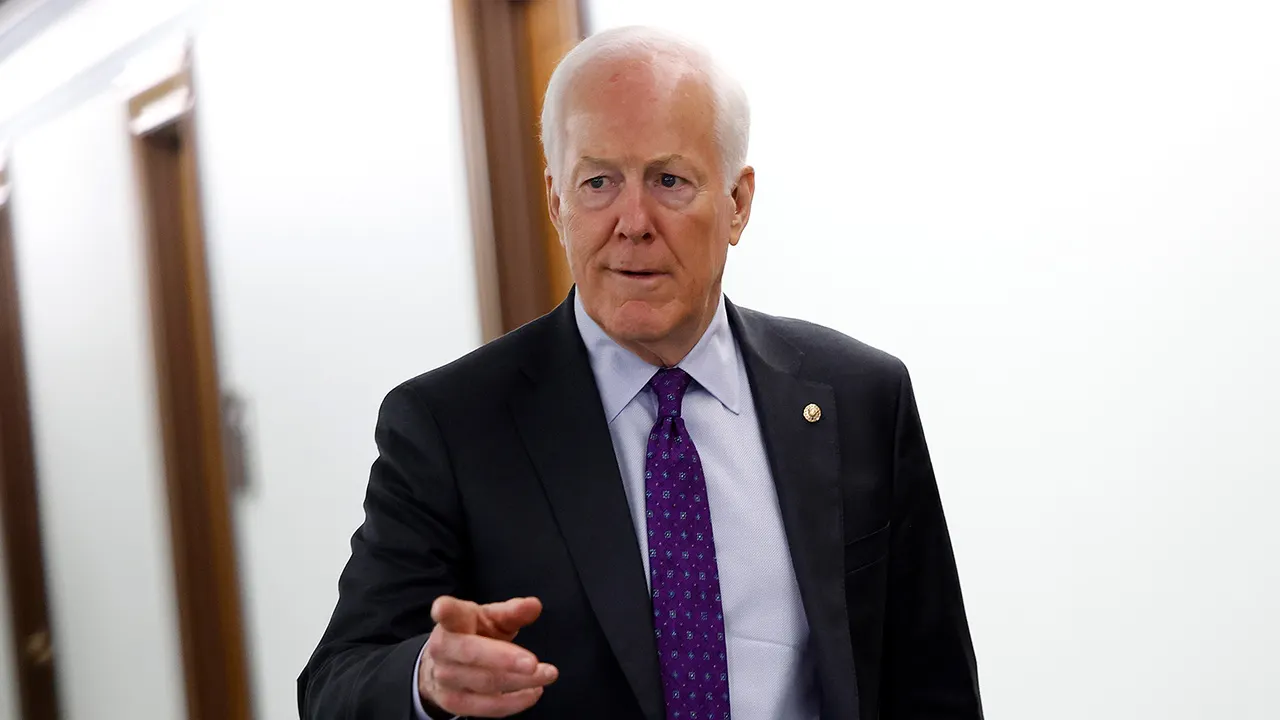
Cornyn Reverses on Filibuster to Push Trump's Voter ID Bill
Intra-Party Split Detected
Cornyn's reversal on filibuster defense represents a break from traditional conservative Senate institutionalists who have long defended the 60-vote threshold
Left says
- •Cornyn's reversal represents dangerous political opportunism that threatens democratic norms to serve partisan interests
- •The filibuster protects minority rights and prevents radical policy swings when control of government changes hands
- •Eliminating the 60-vote threshold would allow future majorities to pass extreme legislation without meaningful debate or compromise
- •Voter ID requirements disproportionately burden low-income Americans and communities of color who face barriers obtaining documentation
Right says
- •Democrats have already signaled their intent to eliminate the filibuster when they regain power, making Republican restraint pointless
- •The SAVE America Act addresses critical election integrity concerns by requiring proof of citizenship and photo ID for voter registration
- •Senate rules should not be used as weapons to obstruct the clear mandate voters gave Trump and Republicans in the election
- •Cornyn's position reflects necessary adaptation to changed political realities rather than abandonment of principle
Common Take
High Consensus- Cornyn is facing a competitive Republican primary runoff against Ken Paxton on May 26
- The SAVE America Act currently lacks the 60 votes needed to overcome a filibuster
- Trump's endorsement could significantly impact the outcome of the Texas Senate race
- Both parties have used the filibuster strategically when in the minority to block opposing legislation
The Arguments
Right argues
Democrats have already signaled their intent to eliminate the filibuster when they regain power, making Republican restraint a form of unilateral disarmament that serves no strategic purpose. Since Democrats tried to eliminate the filibuster in 2022 and have vowed to do so again, Republicans should act on their electoral mandate rather than preserve a rule their opponents will abandon at the first opportunity.
Left counters
This creates a destructive race to the bottom where each party justifies breaking norms by pointing to the other side's intentions, ultimately destroying the institutional guardrails that protect democracy. The filibuster has historically been used by both parties to block legislation they oppose, and eliminating it based on speculation about future Democratic actions sets a dangerous precedent.
Left argues
Cornyn's reversal represents pure political opportunism driven by his primary challenge from Ken Paxton and desire for Trump's endorsement, not principled governance. His decades-long defense of the filibuster as essential protection against 'bad ideas and dangerous policies' reveals this as a calculated abandonment of stated principles for short-term political gain.
Right counters
Political leaders must adapt their positions when circumstances change, and the Democratic Party's repeated attempts to eliminate the filibuster represent a fundamental shift in how Senate rules are being weaponized. Cornyn's evolution reflects necessary strategic thinking rather than opportunism, as maintaining institutional norms only works when both sides respect them.
Left argues
Voter ID requirements disproportionately burden low-income Americans and communities of color who face systemic barriers to obtaining documentation, effectively creating a modern poll tax that undermines voting rights. The SAVE America Act's citizenship documentation requirements would create additional bureaucratic hurdles that could disenfranchise eligible voters without addressing any proven widespread fraud.
Right counters
Requiring proof of citizenship and photo ID for voter registration represents basic election security measures that most Americans support and that are standard in many other democracies. These requirements ensure only eligible citizens participate in elections while providing reasonable accommodations for those who need assistance obtaining documentation.
Right argues
The 2024 election gave Republicans a clear mandate to implement election integrity measures, and using procedural rules to obstruct this mandate undermines democratic accountability. Voters specifically chose Trump and Republican candidates who campaigned on these reforms, making Democratic filibuster threats an attempt to thwart the will of the electorate.
Left counters
Electoral mandates don't justify eliminating institutional protections for minority rights, as the filibuster ensures that major policy changes require broader consensus beyond simple majority rule. The founders designed the Senate specifically to prevent majoritarian tyranny, and eliminating the filibuster would allow future majorities to impose extreme policies without meaningful deliberation or compromise.
Left argues
Eliminating the filibuster would create dangerous precedent allowing future Democratic majorities to pass sweeping progressive legislation on healthcare, climate, and social issues with simple majority votes. This short-sighted move would ultimately harm conservative interests when political control inevitably shifts, as it removes the very tool Republicans have used to block liberal priorities.
Right counters
Democrats have already demonstrated they will eliminate the filibuster when it suits their purposes, having done so for judicial nominations and threatening to do so for legislation, making Republican restraint strategically meaningless. The current moment represents Republicans' best opportunity to advance critical election integrity measures before Democrats regain control and eliminate the rule anyway.
Challenge Questions
These questions target genuine internal contradictions — meant to provoke honest reflection.
Right asks Left
“If Democrats are genuinely committed to preserving democratic norms and minority rights through the filibuster, why did they attempt to eliminate it in 2022 and repeatedly threaten to do so when it blocks their priorities, suggesting they only support it when it serves their immediate political interests?”
Left asks Right
“How can Cornyn credibly argue this represents principled adaptation to changed circumstances rather than political opportunism, given that his reversal coincides precisely with his competitive primary race and need for Trump's endorsement, after decades of arguing the exact opposite position?”
Outlier Report
Left Fringe
Progressive activists like those from Indivisible or MoveOn who may call for preemptive filibuster elimination by Democrats represent roughly 20% of the left, taking a more aggressive stance than mainstream Democratic leadership.
Right Fringe
Traditional institutionalist Republicans like Sen. Susan Collins or former senators who still defend the filibuster as essential to Senate function represent approximately 25% of the right, opposing Cornyn's reversal despite Trump backing.
Noise Assessment
High performative element given this occurs during Cornyn's heated primary runoff against Ken Paxton, with both candidates positioning for Trump's endorsement, amplifying tactical political positioning over genuine procedural philosophy.
Sources (4)
Sen. John Cornyn urged Republicans Wednesday to consider filibuster reform to advance Trump's voter ID bill, reversing his past stance as White House urges passage.
Sen. John Cornyn (R-Texas), who is in the middle of a heated GOP runoff race, is now backing changing the Senate filibuster rule to advance the Safeguard American Voter Eligibility (SAVE America) Act. Cornyn announced the shift amid a high-profile primary against Texas Attorney General Ken Paxton. “After careful consideration, I support whatever changes to…
For decades, Sen. John Cornyn was one of the upper chamber's staunchest defenders of the legislative filibuster. Now, he is officially walking away from it.