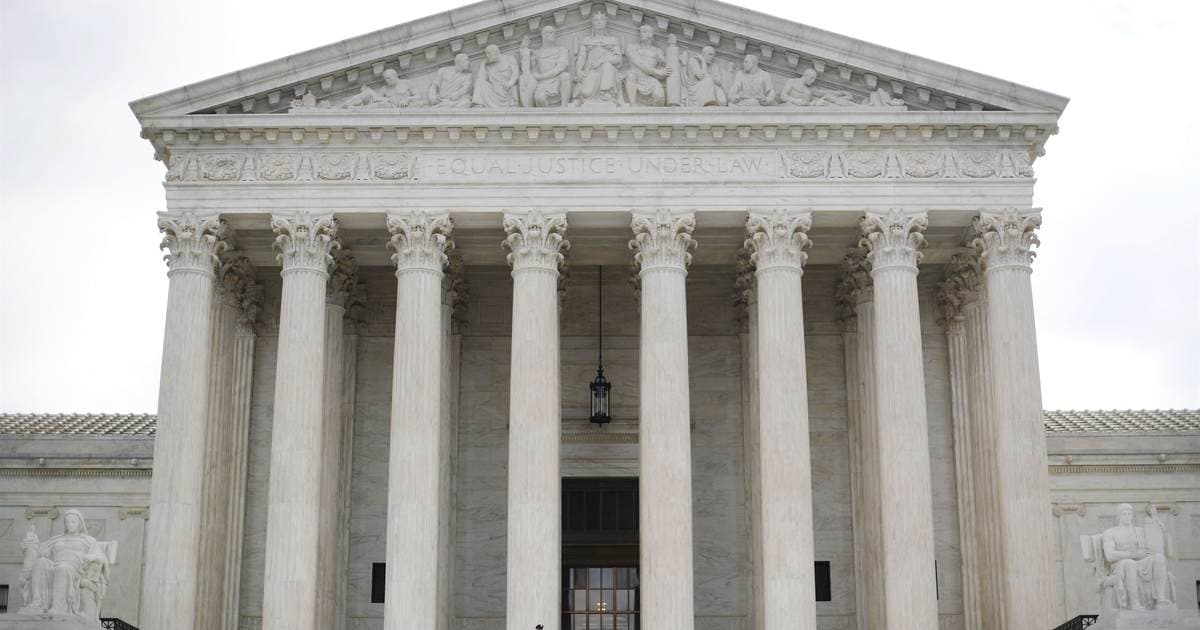
 The U.S. Supreme Court building, central to the deportation appeals ruling.
Court Limits, But Preserves, Trump's Third-Country Deportations
Left says
- •Migrants deported under this policy were sent to countries like the Central African Republic, Ghana, Liberia, and Sierra Leone with little or no warning, sometimes learning their destination only hours into the flight.
- •The ruling affirms that due process rights mean little without advance notice and a real chance to raise fears of persecution or torture before being sent somewhere unfamiliar and potentially dangerous.
- •The administration has spent roughly $50 million securing deportation agreements with 35 countries, raising concerns about sending vulnerable people to nations run by autocratic or unstable governments.
- •Advocacy groups like Human Rights First and the National Immigration Litigation Alliance see the decision as a critical check preventing the government from evading legal obligations to protect deportees from harm.
Right says
- •The court's ruling still allows third-country deportations to continue, preserving a tool the administration considers essential when migrants' home countries refuse to accept them back.
- •More than 25,000 people have already been removed to at least 29 third countries under this policy, showing it functions as a significant and workable part of immigration enforcement.
- •The Trump administration has twice successfully gone to the Supreme Court in this same case and has signaled it may appeal again, reflecting confidence that the broader policy will ultimately be upheld.
- •The ruling simply requires added procedural notice and an opportunity to raise fear-based claims, not a wholesale rejection of the government's authority to remove illegal aliens to third countries.
Common Take
High Consensus- The First Circuit's unanimous three-judge panel ruled that migrants must receive meaningful notice and an opportunity to contest removal to a third country.
- The decision upholds most of Judge Brian Murphy's earlier ruling that the DHS policy lacked adequate due process protections.
- The case is expected to potentially return to the Supreme Court given the administration's history of appealing prior rulings in this litigation.
- Both sides recognize that third-country deportations have become a major and growing part of U.S. immigration enforcement, with tens of thousands already deported under the policy.
The Arguments
Left argues
Deporting people to unfamiliar and potentially dangerous countries with little or no notice denies them any real chance to raise fears of persecution or torture, rendering their legal right to contest removal meaningless in practice.
Right counters
The court's ruling doesn't eliminate third-country deportations—it simply requires added procedural notice, confirming the administration's core authority to remove people to third countries remains intact and workable.
Right argues
Third-country removals are an essential enforcement tool given that more than 25,000 people have already been sent to at least 29 countries, especially since many migrants' home countries refuse to accept them back.
Left counters
A policy's scale and administrative convenience don't excuse violating due process; sending vulnerable people to nations run by autocratic or unstable governments without meaningful notice causes real, irreversible harm regardless of how many people it processes.
Left argues
Spending nearly $50 million to secure deals with 35 countries—including some of the most dangerous and autocratic nations in the world—suggests the administration prioritized speed and deal-making over migrants' safety and legal protections.
Right counters
Those diplomatic agreements, including assurances against persecution or torture, are precisely the kind of good-faith arrangements that make removals to third countries feasible when a migrant's home country won't cooperate.
Right argues
The administration has twice already won at the Supreme Court in this same litigation and may appeal again, showing sustained legal confidence that its broader third-country deportation framework will ultimately survive judicial scrutiny.
Left counters
Prior Supreme Court interventions addressed procedural questions like emergency stays, not the substantive due process violations that the First Circuit unanimously found in this ruling—winning procedural rounds doesn't guarantee winning on the merits.
Left argues
The case of migrants like Aristides Fernandez Garcia, who learned of his deportation to the Central African Republic only hours into the flight, illustrates the human cost of a policy that treated removal destinations as an afterthought.
Right counters
Individual anecdotes, however troubling, don't undermine the legitimacy of a policy that has processed tens of thousands of removals; the court's remedy is added notice, not abolition of the practice.
Challenge Questions
These questions target genuine internal contradictions — meant to provoke honest reflection.
Right asks Left
“If the court's ruling explicitly preserves the government's authority to conduct third-country deportations and only adds procedural notice requirements, why do left-leaning advocacy groups characterize this as a fundamental check on the policy rather than a narrow, technical fix?”
Left asks Right
“If third-country deportations are meant to be a well-functioning enforcement tool, why did the administration need to rely on rapid, low-notice removals and blanket diplomatic assurances rather than building in the fear-based screening procedures that existing law already required?”
Outlier Report
Left Fringe
Groups like Human Rights First and immigration attorneys sometimes frame all deportation enforcement as inherently abusive; this more absolutist anti-deportation stance represents roughly 15-20% of the left, with most Democrats supporting enforcement of immigration law but wanting due process safeguards.
Right Fringe
Commentators like Stephen Miller-aligned voices and some at outlets like PJ Media/Breitbart argue courts should have zero say in blocking any deportation logistics, viewing procedural due process requirements themselves as illegitimate obstruction; this represents roughly 20-25% of the right, with most conservatives comfortable with baseline due process while wanting deportations to proceed.
Noise Assessment
Moderate-to-high; much of the loudest discourse comes from immigration advocacy organizations and hardline enforcement voices, while most Americans hold a nuanced middle position supporting both enforcement and basic procedural fairness, which gets underrepresented in polarized coverage.
Sources (4)
The unanimous decision by a three-judge panel strikes down a DHS policy.
A federal appeals court ruled Friday that U.S. immigration officials must offer detainees "a meaningful opportunity to contest" any deportation to countries where they have no ties.
The case is a key test of what due process protections the government must provide migrants before removing them to countries they have no connection to.