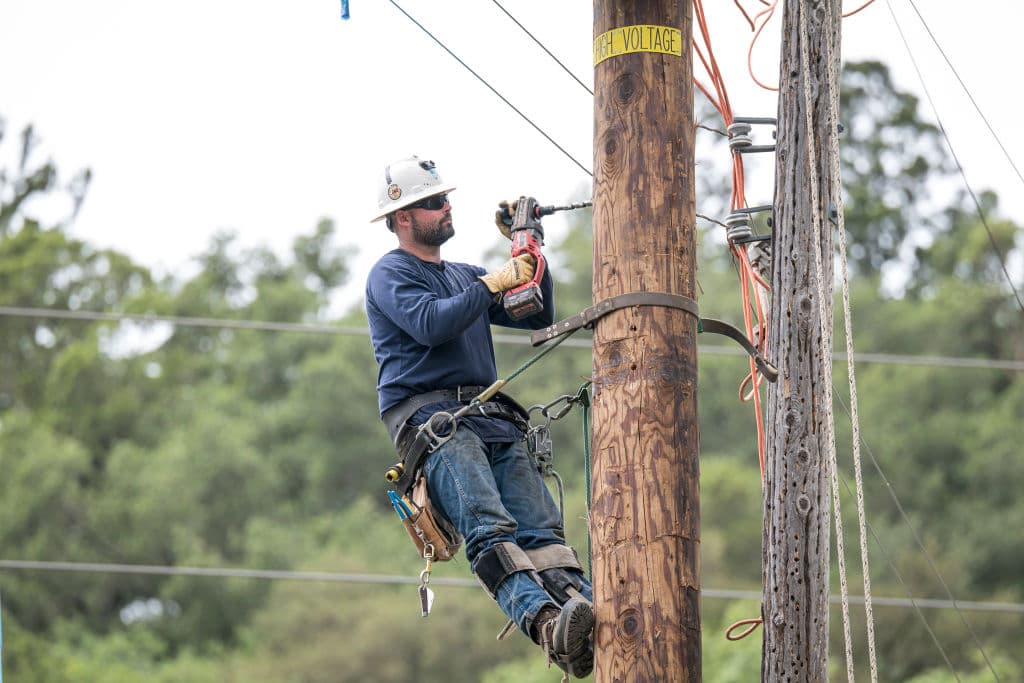
 Utility lineman works on power infrastructure connected to data center energy demands.
Data Centers Spark Bipartisan Backlash Amid Rising Electricity Bills
Intra-Party Split Detected
Most Democratic officials (Spanberger, Moore, Haaland) are pushing data center restrictions or moratoriums over environmental and cost concerns, while some Democrats like Sherrod Brown campaign against data centers despite accepting industry PAC money, and Sen. Heinrich blocked a bill aimed at lowering related electricity costs, revealing inconsistency in the party's approach.
Left says
- •Rising electricity bills stem primarily from deregulated electricity markets that were never designed to absorb rapid load growth, not simply from data centers existing.
- •Elected officials like Spanberger, Moore, and Haaland are pushing for moratoriums, accountability frameworks, and clean energy mandates to protect residents from higher utility costs and environmental harms like water use and noise pollution.
- •Communities deserve rigorous, science-based health impact studies before data centers and related power infrastructure are approved, ensuring public health concerns are taken seriously rather than dismissed.
- •Corporate influence, including tech company lobbying and campaign contributions, should not be allowed to shield data center expansion from scrutiny even when Democratic politicians have accepted that same industry's money.
Right says
- •Democratic politicians who attack data centers for raising electric bills while simultaneously accepting campaign contributions from the same companies expose a hypocrisy that voters deserve to know about.
- •Sherrod Brown's acceptance of $20,000 from Google's PAC and additional donations from Google-linked lobbyists undercuts the credibility of his attack ads against a Husted-backed Google data center.
- •Government-imposed moratoriums and heavy-handed regulatory frameworks risk driving away investment, jobs, and technological growth tied to the AI and data center boom.
- •Blaming data centers alone for higher electricity bills oversimplifies a complex issue rooted in broader energy market and regulatory structures.
Common Take
High Consensus- Electricity bills are rising and data centers are a significant driver of new energy demand across the country.
- The data center boom has become a major bipartisan political flashpoint heading into upcoming elections.
- Policymakers on both sides agree that grid capacity, energy affordability, and reliability need to be addressed as AI infrastructure expands.
- There is shared recognition that public trust requires transparency, whether through health impact studies or accountability frameworks governing data center development.
The Arguments
Left argues
Rising electricity bills are fundamentally a product of deregulated markets that were never designed to absorb the rapid, concentrated load growth data centers bring, so the real fix lies in market and regulatory reform rather than just targeting data centers themselves.
Right counters
Even if deregulation is part of the structural problem, that doesn't erase the fact that specific data center projects are driving concrete, localized rate increases and infrastructure strain that residents are experiencing right now, and moratoriums address an urgent symptom while structural reform takes years.
Right argues
Democratic officials who run ads blasting data centers for raising electric bills while personally accepting tens of thousands of dollars from the very companies building those facilities, like Google, expose a credibility gap that voters have a right to scrutinize.
Left counters
Accepting industry donations doesn't preclude holding that industry accountable through policy, and focusing on campaign finance optics is a distraction from the substantive question of whether data centers are actually contributing to higher bills and environmental harm.
Left argues
Communities have a legitimate right to demand rigorous, science-based health impact studies before data centers and associated power infrastructure are approved, since noise, water use, and air quality effects have real, measurable consequences for public health.
Right counters
Layering extensive study requirements and approval delays onto every project risks driving investment, jobs, and technological development to other states or countries, ultimately harming the same communities these studies are meant to protect.
Right argues
Blanket moratoriums and heavy-handed regulatory frameworks on data centers risk chasing away the investment, tax revenue, and jobs tied to the AI boom, punishing an entire industry for a bill-pricing problem that has multiple contributing causes.
Left counters
A moratorium is a precautionary pause, not a permanent ban, and given the scale of water use, noise, and grid strain already documented, temporarily halting new approvals until accountability frameworks are in place is a reasonable trade-off against unchecked corporate expansion.
Right argues
Blaming data centers alone for higher electricity bills oversimplifies a complex problem rooted in broader energy market structures, transmission constraints, and fuel costs that predate the current data center boom.
Left counters
Acknowledging that market structure matters doesn't mean data centers are blameless bystanders; their concentrated, rapidly growing demand is the proximate trigger straining these already fragile deregulated systems, which is why they deserve targeted scrutiny even as broader reform is pursued.
Challenge Questions
These questions target genuine internal contradictions — meant to provoke honest reflection.
Right asks Left
“If the core problem is deregulated market structure rather than data centers themselves, why are Democratic officials pursuing data-center-specific moratoriums and restrictions instead of prioritizing systemic market reform?”
Left asks Right
“If concerns about data centers' effects on electricity bills and communities are dismissed as oversimplified or economically harmful to raise, what standard of evidence would conservatives accept before supporting any regulatory response to documented rate increases and resource strain?”
Outlier Report
Left Fringe
Groups like Jacobin and some degrowth-oriented environmental activists who frame the issue as fundamentally about capitalism and deregulation rather than data centers themselves represent a more ideological ~10-15% of the left, pushing systemic critiques that go beyond mainstream Democratic officials' more moderate accountability-framework approach.
Right Fringe
Figures like some Fox News commentators and GOP strategists (e.g., Mehek Cooke) who frame this purely as Democratic hypocrisy without engaging substantively on grid capacity or consumer cost concerns represent a smaller sliver (~15-20%) of the right; most Republicans, including pro-business figures, still express some concern about the AI boom's toll on ratepayers.
Noise Assessment
Moderate-to-high: the Sherrod Brown hypocrisy story is heavily amplified by conservative media for electoral advantage in a specific Senate race, while the broader public conversation about bills and data centers reflects genuine, less partisan anxiety over rising costs and local environmental impacts.
Sources (10)
Capping months of sometimes contentious discussion over how to best approach the project, Lackawanna County commissioners awarded a contract Wednesday for a data center health impact study and could have the final report in hand by Christmas. The pending assessment by Massachusetts-based EmPower Analytics Group will attempt to quantify the potential cumulative impacts of controversial data centers, power plants and related infrastructure proposed in the county on air quality and public health. The firm is behind a similar but more limited scope study of the proposed Wildcat Ridge Data Center Campus in Archbald.
Former Democratic Sen. Sherrod Brown accepted $20,000 from Google's PAC while running ads attacking a Google data center in Lancaster, Ohio.
Electricity bills are rising, and data centers are getting the blame. But for 50 years, the American grid absorbed loads this large while real prices fell. The difference between then and now? Deregulated markets.
Growing hatred of the facilities is reshaping the midterm elections
Virginia Gov. Abigail Spanberger (D) on Friday announced a new proposal to tighten restrictions on data center developments in the Old Dominion.  The governor’s “Data Center Accountability Framework” outlines several objectives for the commonwealth’s approach to these projects, including cutting down on noise pollution and water use tied to these projects and promoting clean energy…
Editor’s note: This report has been updated to correct the name of the journalist who questioned Maryland Gov. Wes Moore. Maryland Gov. Wes Moore (D) said Thursday he would “absolutely sign” a statewide data center moratorium if brought to his desk, joining other governors and elected officials calling for a freeze on developing new data…
New Mexico gubernatorial candidate Deb Haaland (D) on Thursday backed a moratorium on the construction of data centers in her state, citing environmental and workforce-related concerns. In a policy framework on her website, Haaland backed “open, transparent, and meaningful” conversations within communities about the impacts of AI data centers. She also called for requiring data…
Spanberger acts to restrict new data centers in Virginia but leaves some details for the future.
Sen. Martin Heinrich (D-New Mexico) halted passage of a proposal that had passed the House by an overwhelming margin.