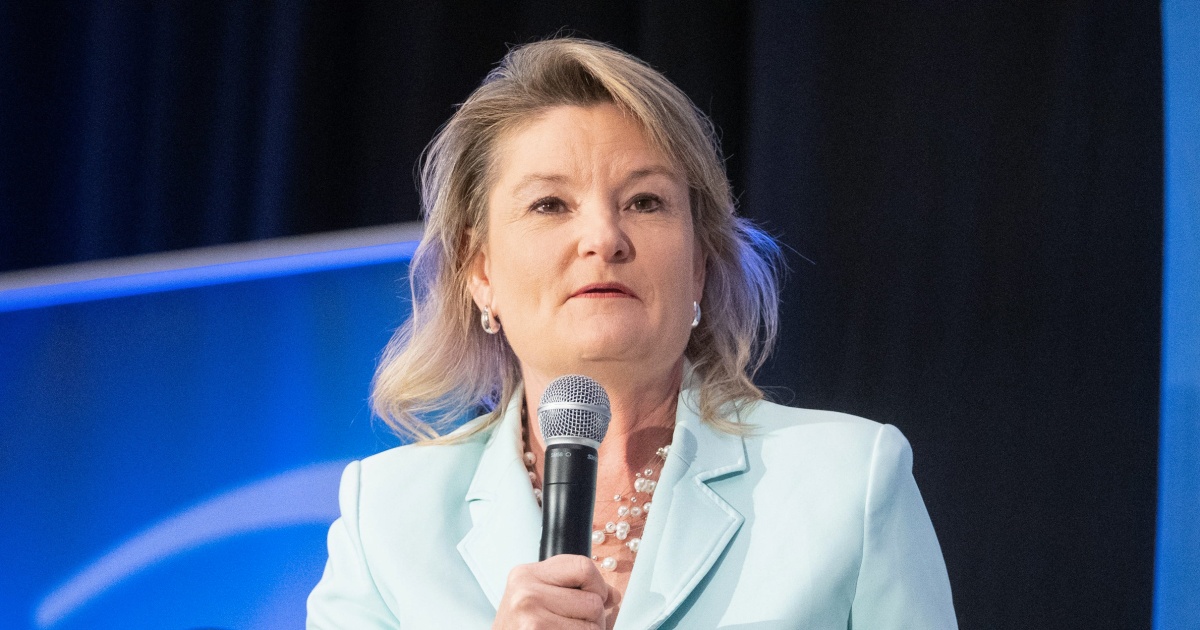
Democrat Flips Deep-Red Kansas as Trump-Backed GOP Falls
Left says
- •Holscher's win extends a historic Democratic wave that has given the party a majority of U.S. governorships for the first time in two decades.
- •A candidate who promised to halt new data centers and work across the aisle on issues like tariffs and beef imports overcame a nearly 3-to-1 Republican ad spending disadvantage, showing voters prioritized pocketbook concerns over party loyalty.
- •Voter frustration with Trump's handling of the economy, including tariffs hurting farmers and ranchers, cut into Republican support even in a state Trump carried by double digits in three straight elections.
- •The victory continues a 60-year Kansas pattern of the opposing party winning after a governor is term-limited, alongside Democratic wins for U.S. Senate and attorney general in the same cycle.
Right says
- •Masterson lost narrowly despite a nearly 3-to-1 ad spending advantage and the Republican Governors Association investing $19 million, showing the race was closer than the final result suggests.
- •Masterson remains the top Republican leader in the Kansas Senate and plans to continue pushing for property tax cuts, safer communities, and better schools regardless of the governor's race outcome.
- •Trump's endorsement and a campaign visit were not enough to overcome local dynamics, but Kansas remains a reliably red state in presidential elections, having voted Republican in every presidential race since 1968.
- •Holscher faced legitimate scrutiny during the campaign over past comments suggesting Jesus Christ could have been transgender, raising questions about her judgment on cultural issues important to many Kansas voters.
Common Take
High Consensus- Cindy Holscher defeated Ty Masterson to win the Kansas governor's race, as projected by the Associated Press, NBC News, and Decision Desk HQ.
- This marks the third consecutive Kansas gubernatorial election won by a Democrat, following Laura Kelly's two terms.
- Masterson conceded gracefully, calling Holscher to congratulate her and affirming the importance of the issues he campaigned on.
- Republicans significantly outspent Democrats on advertising in this race, with the GOP enjoying close to a 3-to-1 spending advantage.
The Arguments
Left argues
Holscher's victory despite being outspent nearly 3-to-1 demonstrates that message and local issues like opposition to data centers and economic frustration outweighed money in politics, signaling genuine voter sentiment rather than a bought outcome.
Right counters
A narrow win despite a massive spending disadvantage also shows just how competitive the underlying electorate was, meaning the result reflects a razor-thin margin rather than a decisive repudiation of Republican policies.
Right argues
Kansas has voted Republican in every presidential election since 1968, and Trump carried it by double digits three times running, so a single down-ballot loss in a historically swing-prone gubernatorial race doesn't signal a fundamental shift in the state's political identity.
Left counters
This is the third consecutive Kansas gubernatorial election won by a Democrat, plus the same cycle flipped a U.S. Senate seat held by the GOP since 1932 and ousted the sitting Attorney General, suggesting a pattern that goes well beyond a single fluke race.
Left argues
Voter frustration with Trump's tariffs and their impact on farmers and ranchers cut into Republican support even in deep-red Kansas, showing that economic pocketbook concerns can override partisan loyalty when policies directly harm a state's core industries.
Right counters
Masterson actively tried to distance himself from Trump's economic policies during the campaign, so the loss reflects the specific political liability of one candidate's ties to the administration rather than a broad indictment of Trump's economic agenda by Kansas voters generally.
Right argues
Holscher faced legitimate scrutiny over past comments suggesting Jesus Christ could have been transgender, and the closeness of the race suggests many Kansas voters had real reservations about her judgment on cultural issues even as they voted for her.
Left counters
Despite this scrutiny being raised during the campaign, Holscher still won, indicating that voters ultimately prioritized her positions on data centers, tariffs, and property taxes over attacks on a years-old comment made during an unrelated legislative debate.
Right argues
Masterson remains the powerful top Republican leader in the Kansas Senate and will continue pushing his agenda on property taxes and public safety regardless of the governor's race, meaning Republican policy influence in Kansas is far from eliminated.
Left counters
A Republican-controlled legislature facing a Democratic governor for a third straight term means Masterson's agenda will likely face a veto check that didn't exist before, limiting how much unilateral power Republicans actually retain.
Challenge Questions
These questions target genuine internal contradictions — meant to provoke honest reflection.
Right asks Left
“If this win is framed as part of a historic Democratic wave driven by economic discontent, how do you reconcile that narrative with the fact that the race was still extremely narrow despite a nearly 3-to-1 fundraising disadvantage for Republicans?”
Left asks Right
“If Kansas's deep-red presidential voting history is cited as proof the state remains fundamentally conservative, how do you explain three consecutive Democratic gubernatorial wins plus a flipped Senate seat and Attorney General office in the same cycle?”
Outlier Report
Left Fringe
Figures like David Hogg or progressive commentators pushing narratives of a full Democratic realignment in deep-red states based on one race represent maybe 10-15% of the left, overstating the significance of a narrow win.
Right Fringe
Commentators like Charlie Kirk or Benny Johnson who might dismiss the loss entirely as fraud or anomaly rather than engaging with economic discontent represent roughly 15-20% of the right, avoiding accountability for Trump's economic approval issues.
Noise Assessment
Moderate noise; social media amplifies this as either a 'Trump repudiation' or a 'fluke' far more than the actual vote margin (likely low single digits) warrants, with both sides overstating national implications from a single state race.
Sources (7)
Democrat Cindy Holscher has been elected Kansas' next governor, fending off Republican Ty Masterson to keep the office in her party's hands and extend a massive wave of Democratic victories across the country.
Holscher, a state senator, promised to halt new data centers and overcame a flood of money that Republicans poured behind Ty Masterson, the president of the GOP-controlled state Senate.
President Donald Trump said Thursday he wants to "get Cuba done" before his term ends and would "certainly consider" a short military campaign against the communist-ruled island if needed.
Democratic state Sen. Cindy Holscher wins the Kansas governor's race over Trump-backed Republican Ty Masterson, keeping the governor's mansion in Democratic hands.
She will succeed outgoing Gov. Laura Kelly, a Democrat who was term-limited.
Democratic state Sen. Cindy Holscher has narrowly won Kansas’ race for governor, NBC News projected Thursday, extending the party’s hold on the office in the red state.
Kansas state Sen. Cindy Holscher (D) was projected to win the state’s gubernatorial race, according to Decision Desk HQ (DDHQ), keeping the office in Democratic hands and denying Republicans one of their best pickup opportunities this year. Holscher defeated Republican Kansas Senate President Ty Masterson, who had President Trump’s endorsement, to succeed term-limited Gov. Laura…