Democrats Suddenly Fear AI; Republicans Split With Trump Too
Intra-Party Split Detected
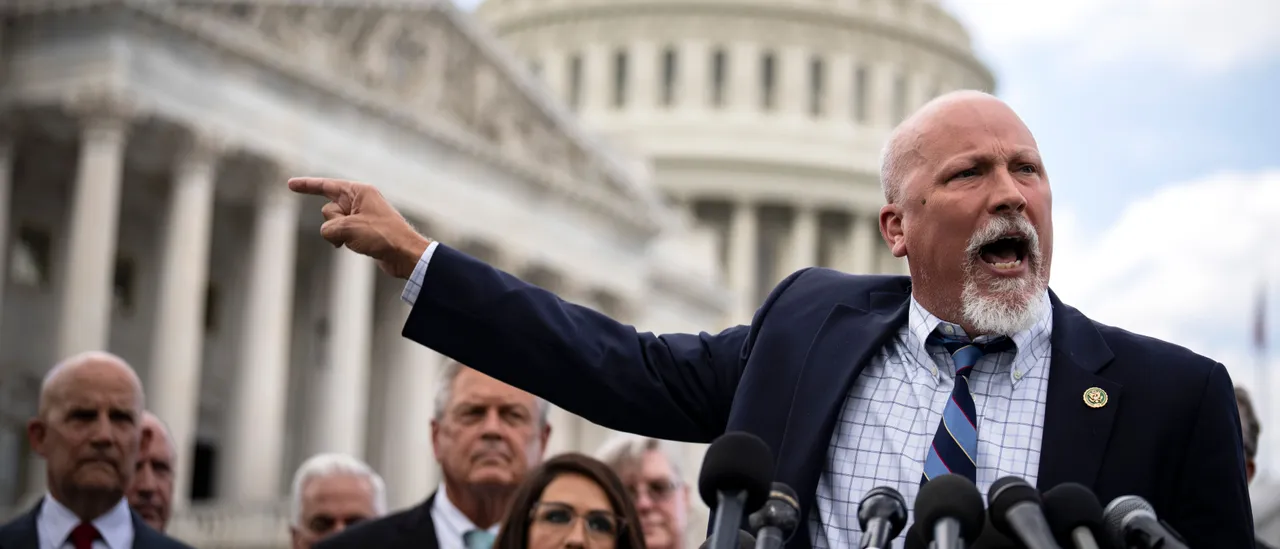
Republican Chip Roy breaks with Trump's dismissive stance on AI risk, calling for regulatory 'guardrails,' while most GOP voices (Fox, Federalist, Legal Insurrection) accuse Democrats of manufacturing AI panic for political/regulatory-capture reasons. Meanwhile Democrats, after years of touting AI's economic promise, are largely uniting around new calls for regulation, though critics note this marks a shift from earlier party consensus favoring innovation.
Left says
- •AI's rapid, largely unregulated development poses real risks to jobs, children's safety, and national security that warrant proactive government action before catastrophic harm occurs.
- •Leading AI researchers and industry insiders themselves are sounding alarms about racing toward self-improving superintelligence without adequate safeguards, which lends credibility to calls for oversight.
- •Democrats argue their focus on AI reflects a genuine and evolving response to accelerating technological risk, not a coordinated political strategy timed to the midterms.
- •Establishing a federal regulatory framework or agency is framed as necessary to ensure AI's benefits are broadly shared rather than concentrated among a few powerful companies.
Right says
- •Trump and allies view AI dominance as a strategic race against China, arguing that heavy-handed regulation could cede critical technological ground to a geopolitical rival.
- •Many Republicans suspect the sudden, uniform messaging from top Democrats reflects coordinated political strategy ahead of the midterms rather than a spontaneous shared realization.
- •Some conservative voices argue that AI companies pushing for regulation are seeking 'regulatory capture' to entrench their market position and lock out smaller competitors.
- •Not all Republicans agree with Trump's dismissal of AI risk — figures like Chip Roy argue the public's concerns about jobs, energy demands, and child safety are legitimate and deserve serious congressional debate.
Common Take
High Consensus- Prominent voices across both parties, including some Republicans like Chip Roy, agree that AI poses real and serious risks that deserve public discussion.
- Both sides recognize that a handful of powerful tech companies and executives hold outsized influence over how AI is developed and regulated.
- There is shared acknowledgment that AI's rapid advancement is reshaping the political conversation in Washington regardless of party.
- Both sides agree that competition with China is a relevant factor in shaping U.S. AI policy, even if they disagree on the right response.
The Arguments
Left argues
AI researchers and industry insiders themselves are warning that companies are racing toward self-improving superintelligence without adequate safeguards, and this insider alarm lends real credibility to calls for proactive regulation before catastrophic harm occurs.
Right counters
The very insiders sounding alarms run companies that would benefit from regulation locking in their market position, so their warnings may reflect self-interested regulatory capture rather than disinterested concern for public safety.
Right argues
Trump and many Republicans argue that AI dominance is a strategic race against China, and that heavy-handed regulation now could hand critical technological and military advantage to an authoritarian rival.
Left counters
Framing all regulation as a threat to the 'China race' is a false choice, since even AI industry leaders like Dario Amodei who worry about competitiveness are simultaneously calling for guardrails, suggesting safety and competitiveness aren't mutually exclusive.
Right argues
The near-simultaneous pivot by Obama, Harris, Buttigieg, Jeffries, and Khanna toward identical AI-alarm messaging just months before the midterms is suspicious timing that suggests coordinated political strategy rather than independent, spontaneous realization.
Left counters
Shared concern isn't proof of coordination — the same underlying trigger, such as the viral warnings from an ex-Anthropic employee and mounting industry alarm, could plausibly cause multiple leaders to reach similar conclusions around the same time without a coordinated script.
Left argues
Establishing a federal regulatory framework or agency is necessary to ensure AI's benefits are broadly distributed rather than concentrated among a handful of powerful companies, protecting jobs, children, and national security in the process.
Right counters
Government is rarely the best answer to technological disruption — innovation and robust competition, not a new bureaucracy, are more likely to keep AI serving people rather than entrenching whichever companies get to write the rules first.
Right argues
Chip Roy's break with Trump shows genuine conservative concern that public worries about AI's effects on jobs, energy and water demands, children's safety, and national security are legitimate and deserve serious congressional debate, not dismissal as a hoax.
Left counters
If a leading conservative voice already agrees the risks are real and warrant government-led debate, that undercuts the broader right-wing argument that Democratic concern is purely a political op rather than a genuine, cross-partisan response to real risk.
Challenge Questions
These questions target genuine internal contradictions — meant to provoke honest reflection.
Right asks Left
“If Democratic leaders have voiced AI enthusiasm and concern for years, as the Obama administration did in 2016, what specific new evidence — rather than political timing — explains why the rhetoric shifted so uniformly and urgently right before a midterm election?”
Left asks Right
“If AI companies pushing for regulation are suspected of seeking self-serving 'regulatory capture,' how does that suspicion square with Republicans like Chip Roy who argue that the public's own concerns about jobs, safety, and security are legitimate and warrant government action independent of what any company wants?”
Outlier Report
Left Fringe
Effective altruism-aligned AI safety activists and figures like Ro Khanna calling for outright bans on 'self-improving AI' represent a more extreme regulatory stance than most Democratic voters, likely under 15% of the left.
Right Fringe
Trump's dismissal of AI risk as a 'HOAX' and accelerationist voices like David Sacks represent a fringe minimal-regulation stance not shared by all Republicans, roughly 25-30% of the right, given figures like Chip Roy breaking ranks.
Noise Assessment
High noise ratio: much of the political framing (accusations of coordinated Democratic messaging, 'regulatory capture' claims from Mollie Hemingway) is elite-level partisan spin, while actual public sentiment on AI risk is more uniformly anxious and less polarized than the political discourse suggests.
Sources (6)
It’s about the only thing that unites them
Whether it will act is another matter
Barack Obama is urging Washington to slow AI development. But, in 2016, his White House praised the technology as the cutting edge of innovation.
<img alt="AI" class="webfeedsFeaturedVisual wp-post-image" src="https://thefederalist.com/wp-content/uploads/2026/09/AI_Artificial_Intelligence_concept_52917075159-e1789525967436-1200x675.jpg" style="display: block; margin: auto; margin-bottom: 5px;" />The sudden fixation on AI by Democrats — and their coincidental same approach — seems to do more with political power calculations than a general concern about AI.
<p>"They want to make sure they have control for a post-Trump environment, so they can engage in ongoing censorship and control, and keep anybody else out for decades to come."</p> The post <a href="https://legalinsurrection.com/2026/09/mollie-hemingway-ai-hysteria-is-about-regulatory-capture-and-control/">Mollie Hemingway: AI Hysteria is About ‘Regulatory Capture’ and Control</a> first appeared on <a href="https://legalinsurrection.com">Le·gal In·sur·rec·tion</a>.