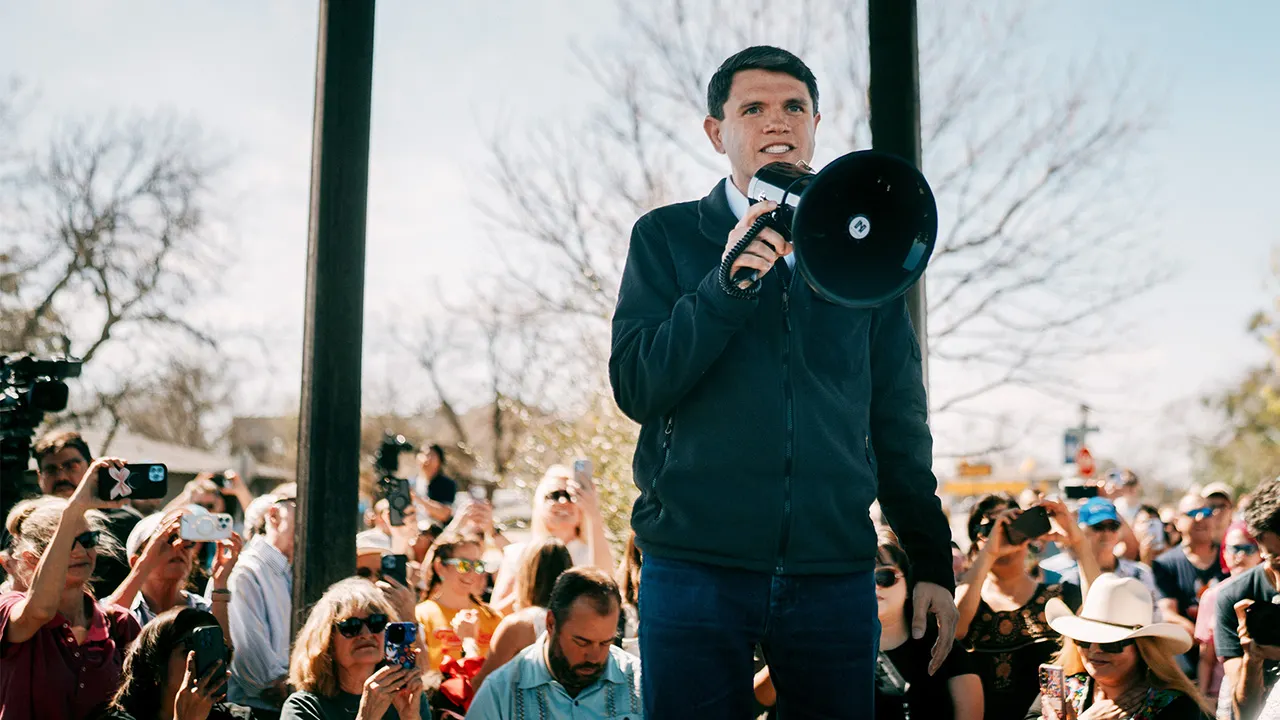
Did Talarico's Camp Wait Too Long to Debunk Ohio Rumor?
Intra-Party Split Detected
Some conservative commentators criticized fellow right-wing figures for spreading unverified claims without adequate sourcing, calling it embarrassing 'shit work.' Meanwhile, some Democratic strategists broke from party messaging to criticize Talarico's campaign for a slow, inadequate response rather than dismissing all criticism as right-wing conspiracy.
Left says
- •The rumor originated from a conservative influencer's unverified claim that amassed millions of views before any fact-checking occurred, illustrating how right-wing media ecosystems can manufacture viral conspiracy theories with little evidentiary basis.
- •The hospital itself denied Talarico was ever a patient, and Talarico provided a direct, on-the-record denial along with his doctor's diagnosis of the flu, which should have been sufficient to end the story.
- •Prominent conservative commentators and even rival campaign staff amplified the baseless claim, forcing Talarico to spend precious campaign time debunking a falsehood instead of discussing policy with voters.
- •Some right-wing figures themselves criticized the shoddy reporting behind the rumor, acknowledging it collapsed under basic scrutiny and embarrassed its promoters.
Right says
- •Talarico's nine-day disappearance during a critical stretch of a hundred-million-dollar Senate race, combined with shifting and inconsistent accounts of which doctor he saw and when, created legitimate grounds for voters and journalists to ask questions.
- •The campaign held time-stamped security footage that could have definitively disproven the Ohio rumor but chose to share it privately with the New York Times rather than release it publicly when speculation was at its peak, raising questions about transparency.
- •A Democratic strategist publicly criticized the campaign's slow and unconvincing response, suggesting the lack of aggressive, immediate pushback made the situation look worse than it needed to be.
- •Even without the Ohio specifics, the broader pattern of a candidate vanishing from the trail for nearly two weeks with inconsistent explanations is a fair subject for scrutiny in a high-stakes race.
Common Take
High Consensus- Talarico was absent from the campaign trail for an extended period in early October, which both sides agree fueled public speculation.
- The specific claim that he was treated at the Lindner Center of Hope in Ohio was denied by both the hospital and the campaign and has been debunked by independent evidence, including time-stamped security footage reviewed by the New York Times.
- Both sides recognize that campaigns face real strategic risks when they are slow or unclear in responding to viral claims, regardless of the claims' truth.
- Critics across the political spectrum, including some conservative commentators and a Democratic strategist, agreed the reporting behind the rumor was poorly sourced and the campaign's initial response was inadequate.
The Arguments
Left argues
The Ohio hospital rumor was baseless from the start, amplified by a single influencer's unverified claim, and both the hospital and Talarico issued clear denials that should have ended the story immediately.
Right counters
A clear denial doesn't resolve underlying questions when the campaign possessed definitive proof—security footage—and chose not to release it publicly, which naturally extended skepticism beyond what a simple denial could quash.
Right argues
The campaign had time-stamped security footage that could have immediately killed the rumor, yet it only shared that evidence privately with the New York Times well after the speculation peaked, raising fair questions about why it wasn't used earlier.
Left counters
Campaigns are not obligated to release security footage of a candidate's home on demand, and the decision to share it on condition of non-publication reflects legitimate security concerns rather than evasiveness.
Right argues
A nine-day absence during a pivotal stretch of a high-stakes, hundred-million-dollar Senate race, paired with inconsistent accounts of which doctor he saw, is a legitimate basis for scrutiny independent of the Ohio-specific rumor.
Left counters
Minor inconsistencies in recounting a flu diagnosis across different interviews are normal human imprecision, not evidence of a cover-up, and shouldn't be conflated with the far more serious and false mental-hospital claim.
Left argues
The episode shows how right-wing media figures can manufacture a viral conspiracy theory from thin evidence, forcing a candidate to burn campaign time refuting falsehoods instead of discussing policy—a cost borne entirely because of irresponsible amplification.
Right counters
The rumor gained traction precisely because the campaign's own silence and delayed, inconsistent explanations created an information vacuum that invited speculation, so responsibility isn't solely on those who amplified it.
Left argues
Even some conservative commentators admitted the reporting behind the rumor was shoddy and collapsed under scrutiny, underscoring that this was a self-inflicted embarrassment for the right rather than a legitimate line of inquiry.
Right counters
Internal criticism of sloppy reporting on the Ohio specifics doesn't erase the separate, Democrat-sourced criticism that Talarico's campaign handled the broader absence poorly and invited doubt through its own slow response.
Challenge Questions
These questions target genuine internal contradictions — meant to provoke honest reflection.
Right asks Left
“If the rumor was so baseless that a simple denial should have ended it, why does the left simultaneously credit the New York Times' security-footage report as adding meaningful, necessary confirmation?”
Left asks Right
“If the campaign's sharing of security footage under a non-publication condition is treated as evidence of evasiveness, what specific earlier action, short of publicly broadcasting footage of the candidate's home, would have satisfied critics without raising its own security concerns?”
Outlier Report
Left Fringe
Figures like Jared Holt (Open Measures) who frame this primarily as evidence of systemic right-wing media dysfunction represent maybe 15-20% of the left, pushing a broader narrative point beyond the specific Talarico incident.
Right Fringe
Nick Sortor and other MAGA-aligned influencers who originated and refused to retract the Ohio hospital claim represent a vocal but discredited 10-15% of the right; most conservative commentators, including Tony Ortiz and outlets like PJ Media, distanced themselves from the specific hospital claim while still raising process questions.
Noise Assessment
High noise ratio — this is largely a social-media-driven controversy with viral amplification (6.8 million views) far outpacing genuine public engagement with the underlying facts; most ordinary voters likely have only vague awareness of the specifics.
Sources (10)
Democratic U.S. Senate candidate James Talarico rejected social media claims that he received treatment at an Ohio mental health facility, saying he has never visited the state and pointing to a statement from the hospital that said he was never a patient there. The allegations circulated on X following Talarico's absence from the campaign trail, which his campaign has attributed to a bout of the flu. The rumors spread widely after conservative influencer Nick Sortor claimed on X that Talarico had received treatment at the Lindner Center of Hope. The post received more than 6.8 million views within a day.
In an interview with NBC, Talarico said he had a "nasty case of the flu" and avoided going out and campaigning because he "didn't want to get anyone else sick." Talarico's absence had triggered speculation about his condition and some prominent right wing accounts made unsubstantiated claims that he was taking a break due to mental health reasons.
James Talarico's Senate campaign is officially denying rumors that his two-week absence from the public eye was the result of a mental health crisis. "This is a lie designed to promote a pathetic conspiracy theory. Last week James Talarico was home in Austin, Texas, recovering from the flu," campaign spokesman JT Ennis said in a statement Sunday afternoon.
James Talarico's campaign provided security footage to debunk the Ohio rehab rumor, but critics ask why the evidence wasn't released sooner.
Experts argue the debunked claims still used up critical preelection airtime.
The Democratic candidate for the U.S. Senate in Texas gave his GOP foe a snarky butt kickin’.
A New York Times investigation has found that Democrat U.S. Senate candidate James Talarico may be boosted by paid influencers, giving him more attention as early voting nears. The report released last week reveals that there has been a staggering amount of TikTok activity focusing on the Texas Senate race, with most of the attention...
<img alt="Texas Senate candidate James Talarico discusses his lengthy absence from the campaign trail." class="webfeedsFeaturedVisual wp-post-image" src="https://thefederalist.com/wp-content/uploads/2026/10/Screenshot-2026-10-12-at-10.37.09-PM-1200x675.png" style="display: block; margin: auto; margin-bottom: 5px;" />His strange departure from a very important and very expensive Senate race is a lot like his relationship status: It’s complicated.