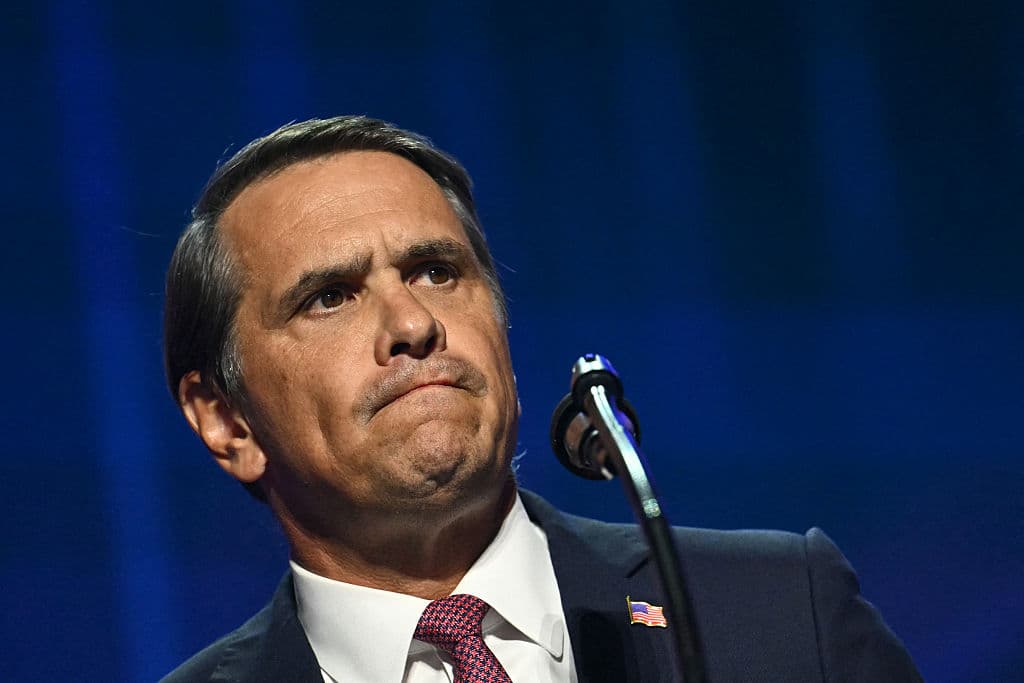
 Senator Dan Sullivan at a podium, candid editorial photo with no branding.
DOJ Sues to Block Alaska Election Results If Sullivan Loses
Left says
- •The lawsuit demands certification be blocked only if Peltola wins, revealing it as a one-sided mechanism to preserve a Republican seat rather than a neutral concern about voter confusion.
- •Trump's own admission that he directed the lawsuit undercuts DOJ's claim that this is an independent legal judgment rather than a political directive.
- •Alaska's own courts already reviewed and rejected challenges to the second Sullivan's candidacy, and federal officials are now trying to override a state's authority to run its own elections.
- •The DOJ's inability to articulate what crime occurred, paired with the pressure to intervene preemptively before results are even known, raises alarm about using federal power to contest future election outcomes the administration dislikes.
Right says
- •The head of Alaska's own Election Commission has raised concerns that the second Dan Sullivan's candidacy exists solely to confuse voters and siphon votes from the sitting senator.
- •DOJ officials argue they are not trying to take over Alaska's election system but are asking a federal court to apply existing federal law where the state supreme court chose not to act.
- •This concern has reportedly been building for months, not a sudden partisan reaction, and reflects a legitimate effort to protect the integrity of voter intent.
- •Framing this purely as an attempt to overturn an election ignores that the lawsuit is about preventing voter confusion from distorting the outcome in the first place.
Common Take
High Consensus- Two candidates named Dan Sullivan are on the same Alaska ballot, one the Republican incumbent and one a separate candidate with the same first and last name.
- The Justice Department filed a lawsuit seeking to influence certification of the Alaska Senate race before the election results are finalized.
- President Trump publicly confirmed he told officials to pursue the legal action.
- Alaska courts previously declined to remove the second Sullivan from the ballot.
The Arguments
Left argues
The lawsuit's structure—demanding certification be blocked only if Peltola wins—exposes it as a one-sided mechanism to preserve a Republican seat rather than a neutral remedy for voter confusion that could theoretically hurt either candidate.
Right counters
The lawsuit targets the specific scenario where confusion could flip the outcome; since the second Sullivan was allegedly recruited to siphon votes from the incumbent specifically, the asymmetric relief simply matches the asymmetric harm being alleged.
Right argues
The head of Alaska's own Election Commission has raised concerns that the second Dan Sullivan's candidacy exists solely to confuse voters and pull votes from the sitting senator, meaning this isn't purely a Trump administration invention.
Left counters
Even if an election official raised concerns, Alaska's courts already reviewed and rejected challenges to the second Sullivan's candidacy, meaning the state's own legal process addressed the issue and federal intervention now overrides that determination.
Left argues
Trump's own admission that 'I'm the one that said do it' undercuts DOJ's claim that this lawsuit reflects independent legal judgment built over months rather than a direct political directive from the president.
Right counters
A president directing DOJ to act on a concern doesn't make the underlying legal argument invalid; presidents regularly direct the Justice Department's priorities, and the substance of the voter-confusion claim stands or falls on its own merits.
Left argues
When pressed, DOJ officials could not clearly articulate what crime had occurred, suggesting the lawsuit is a preemptive attempt to contest an election outcome the administration dislikes rather than a response to actual illegality.
Right counters
Not every federal election lawsuit requires an underlying crime; DOJ argues it is invoking federal law to protect voter intent from distortion, which is a civil remedy question, not necessarily a criminal one.
Right argues
DOJ insists it is not trying to seize control of Alaska's election system but merely asking a federal court to apply existing federal law in an area where the state supreme court declined to act, which is a narrower ask than 'overturning' an election.
Left counters
Asking a federal court to block certification of a state election result is functionally an attempt to override the state's authority over its own elections, regardless of how narrowly DOJ frames the request.
Challenge Questions
These questions target genuine internal contradictions — meant to provoke honest reflection.
Right asks Left
“If Alaska election officials themselves have voiced concerns about the second Sullivan candidacy being designed to confuse voters, why should federal courts be barred from examining that concern just because a state court previously declined to act?”
Left asks Right
“If this lawsuit is truly a neutral application of federal law to protect voter intent, why does the requested relief block certification only in the scenario where the Republican incumbent loses, rather than in any scenario where confusion might have altered the outcome?”
Outlier Report
Left Fringe
Figures like some MSNBC commentators and activists who frame this as definitive proof of an imminent authoritarian takeover akin to January 6th represent a vocal but narrow slice (~15-20%) of the left; most Democrats and liberals object on rule-of-law grounds without invoking full coup framing.
Right Fringe
Pro-Trump commentators and accounts (e.g., some in the MAGA media ecosystem, Charlie Kirk-style commentary) who fully endorse the DOJ's voter-confusion rationale as self-evidently legitimate represent perhaps 25-30% of the right; many other Republicans, especially those favoring states' rights and skeptical of federal intervention in elections, are more ambivalent or quietly uncomfortable.
Noise Assessment
Substantial amplification from partisan media and social media combat clips inflates the apparent intensity of the debate; most of the public forms a quick impression ('this sounds like election interference' or 'this sounds like a legitimate voter-confusion concern') rather than following the legal details closely.
Sources (5)
<p>Sunday on CBS’s “Face the Nation,” Attorney General Todd Blanche said “the head of the Alaska Election Commission, not President Trump, not me, has said that the second Dan Sullivan is running solely to confuse voters.” Partial transcript as follows:</p> <p>The post <a href="https://www.breitbart.com/clips/2026/10/25/ag-blanche-head-of-alaska-election-commission-concerned-over-voter-confusion/" rel="nofollow">AG Blanche: Head of Alaska Election Commission Concerned Over Voter Confusion</a> appeared first on <a href="https://www.breitbart.com" rel="nofollow">Breitbart</a>.</p>
The Justice Department's lawsuit over potential confusion in the Alaska Senate race continues to stir controversy days ahead of the midterm elections. CBS News' Kaia Hubbard reports.
Attorney General Todd Blanche sparred with "Face the Nation" moderator Margaret Brennan over the Justice Department's preemptive lawsuit in the Alaska Senate race. CBS News' Caitlin Huey-Burns reports.
The Democrats' motion, filed on behalf of Peltola's campaign and the Democratic Senatorial Campaign Committee (DSCC), said that the Trump administration's case "is part of a nationwide attack on free elections by the federal government, which the DSCC has fought at every turn."
Blanche accuses CNN host of asking "gotcha questions" as she presses him on Trump's election interference in Alaska