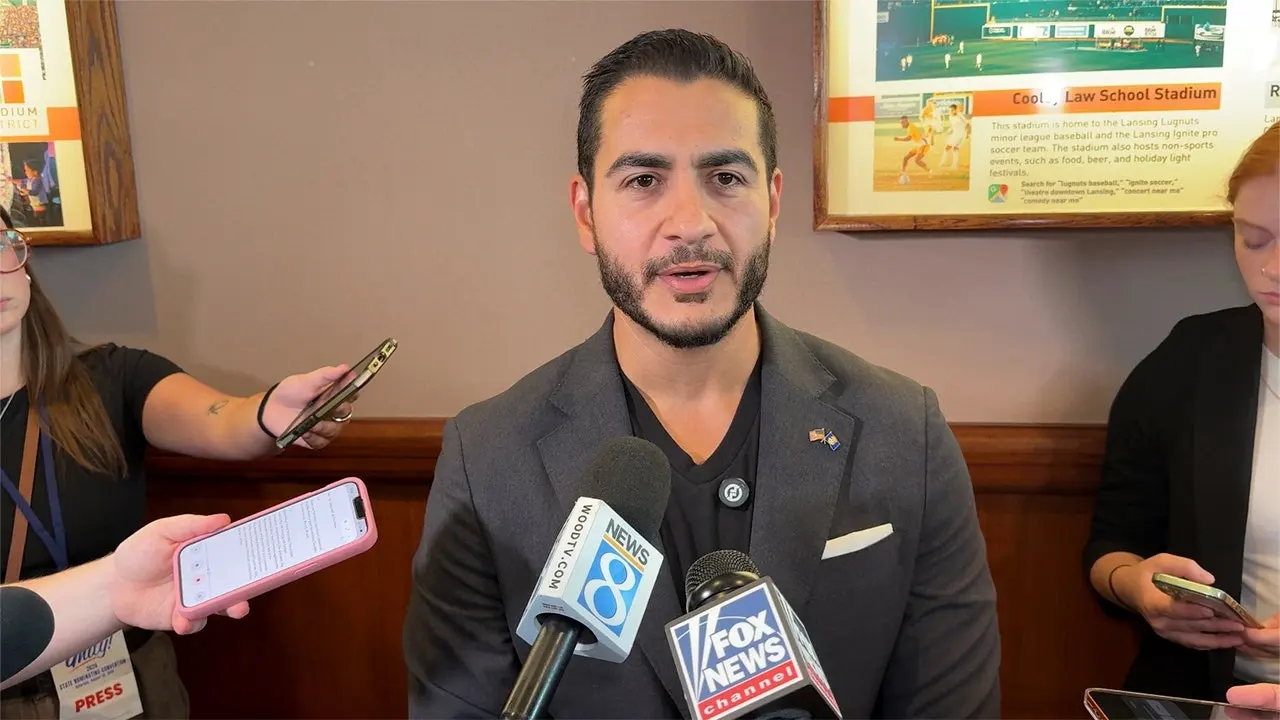
El-Sayed's Piker Ties Split Michigan Democrats, Jewish Voters
Intra-Party Split Detected
Some Democrats and Jewish Democratic-leaning voters (e.g., Rabbi Lopatin, Hakeem Jeffries' rebuke of Piker) are breaking from El-Sayed and distancing themselves from his association with Hasan Piker, while El-Sayed and other progressives downplay the controversy.
Left says
- •El-Sayed has repeatedly condemned antisemitism and apologized directly for remarks about the Temple Israel attack that many Jewish Michiganders found hurtful, acknowledging he made a mistake and that his earlier statement should have simply condemned the violence without added context.
- •His campaign argues that voters should judge him on substantive issues like affordability and health care access rather than his social ties to a streamer whose views he does not control or necessarily share.
- •Criticism of Israeli military conduct in Gaza, which El-Sayed has described in strong terms, is a policy position shared by many progressives and should not automatically be equated with antisemitism.
- •Attacks tying him to Sharia law and casting his personal religious practices as a threat to American governance are seen as Islamophobic fearmongering designed to disqualify a Muslim candidate rather than engage with his actual platform.
Right says
- •El-Sayed's monthslong refusal to clearly denounce Hasan Piker, even after Piker suggested American Jews invite violence against themselves by focusing on Israel, raises doubts about his judgment and priorities.
- •His apology for the 'hurt people hurt people' comments about the Temple Israel attack came only after the primary was won, suggesting political timing rather than genuine reflection, since Jewish voters became more electorally important in the general election.
- •Prominent Jewish Democratic-leaning voters, including Rabbi Asher Lopatin, say El-Sayed's associations and rhetoric around Israel have crossed a line that cannot be excused by partisan loyalty or fear of a Republican Senate.
- •Past comments and reporting on his adherence to Sharia-compliant financial practices raise legitimate questions for some voters about how his personal religious commitments might inform his approach to public office, particularly judicial recommendations.
Common Take
High Consensus- Abdul El-Sayed and Mike Rogers are competing for an open Michigan Senate seat that could help determine control of the chamber.
- El-Sayed campaigned alongside Hasan Piker during the Democratic primary, and Piker's comments about American Jews have become a flashpoint in the general election.
- El-Sayed publicly apologized at the Lansing convention for his earlier remarks about the Temple Israel attack, acknowledging they caused pain.
- Both sides recognize that antisemitism is a serious concern that deserves to be addressed directly rather than dismissed.
The Arguments
Right argues
El-Sayed's monthslong refusal to clearly denounce Hasan Piker, even after Piker suggested American Jews invite violence against themselves by focusing on Israel, raises legitimate doubts about his judgment, since he continued deflecting questions about the relationship rather than directly repudiating the comments.
Left counters
El-Sayed does not control or necessarily share the views of a streamer he associated with during a campaign, and voters should judge him on his own statements and platform rather than guilt by association with someone else's remarks.
Right argues
El-Sayed's apology for his 'hurt people hurt people' comments about the Temple Israel attack came nearly six months later, only after the primary was won and Jewish voters became more electorally important, suggesting the timing was strategic rather than a genuine change of heart.
Left counters
El-Sayed has repeatedly and directly apologized, explicitly acknowledging he made a mistake and that his statement should have simply condemned the violence without added context, and taking someone's apology at face value rather than assuming bad faith is fair to any candidate willing to admit error.
Left argues
Criticism of Israeli military conduct in Gaza, which El-Sayed has described in strong terms like 'genocide,' is a policy position shared by many progressives across the Democratic Party and should not automatically be equated with antisemitism.
Right counters
The concern raised by voices like Rabbi Lopatin isn't disagreement over Israeli policy itself, but the specific rhetoric and associations—like tolerating claims that Jews invite violence against themselves—that cross from policy criticism into language that scares Jewish constituents.
Right argues
Prominent Jewish Democratic-leaning voters, including Rabbi Asher Lopatin, say El-Sayed's associations and rhetoric around Israel have crossed a line that cannot be excused by partisan loyalty or fear of a Republican Senate, and are willing to cross party lines over it.
Left counters
A small number of individual voters or commentators switching allegiance does not represent the broader Jewish or Democratic electorate, and amplifying such defections can be used to manufacture a narrative of party fracture for partisan gain.
Left argues
Attacks tying El-Sayed to Sharia law and casting his personal religious financing practices as a threat to American governance are Islamophobic fearmongering designed to disqualify a Muslim candidate rather than engage with his actual platform on affordability and health care.
Right counters
Raising questions about how a candidate's stated religious commitments might inform decisions as consequential as federal judicial recommendations is a legitimate line of inquiry for voters, not an attack on his faith itself, especially since El-Sayed's own past statements invited the comparison.
Challenge Questions
These questions target genuine internal contradictions — meant to provoke honest reflection.
Right asks Left
“If El-Sayed's associations with a controversial figure shouldn't reflect on his judgment because he doesn't control others' views, why did his campaign ultimately find it necessary to distance itself from Piker's comments at all rather than staying consistently silent?”
Left asks Right
“If the concern about El-Sayed is genuinely about protecting Jewish constituents from harmful rhetoric rather than partisan advantage, why does so much of the coverage and criticism focus on his religious practices and Sharia-compliant financing, which have nothing to do with Israel or antisemitism?”
Outlier Report
Left Fringe
Figures like Hasan Piker himself and some DSA-aligned activists who view any criticism of Piker as bad-faith Zionist pressure represent a small but vocal fringe, likely under 10% of the left.
Right Fringe
Pastor Lorenzo Sewell's Sharia law warnings and similar rhetoric from figures like JD Vance represent an aggressive framing that likely appeals to a vocal minority (~20-25%) of the right, while most conservatives focus more on the Piker/antisemitism angle than the Sharia law angle.
Noise Assessment
High noise ratio: much of the intensity comes from online streamer culture (Piker's massive following) and campaign-driven opposition research rather than organic grassroots concern, though the underlying antisemitism/political timing concerns reflect genuine public sentiment beyond the noise.
Sources (7)
Abdul El-Sayed dodged four reporter questions about Hasan Piker at Michigan's Democratic convention, dismissing the streamer as irrelevant to his race.
Pastor Lorenzo Sewell warns that Abdul El-Sayed could recommend federal judges aligned with Sharia law if elected to the Michigan Senate seat.
Rabbi Asher Lopatin, a Michigan Democrat-leaning voter, told Newsmax he is backing Republican Mike Rogers in the state's U.S. Senate race, citing concerns about Democrat Abdul El-Sayed's associations and rhetoric surrounding Israel and Jewish Americans.
The progressive streamer’s comments suggesting people may “take action” against Jews in the U.S. drew a rebuke from other Michigan Democrats.
Democratic nominees, especially in Michigan, are trying desperately to distance themselves from streamer Hasan Piker.
Hasan Piker, two weeks ago, delivered this message: “Democrats, listen to me, I know we don’t always see eye to eye on a lot of stuff, but you have to literally, at some point—I know you don’t want to do this—defend me. Not because you love what I have to say, not because I’m part...