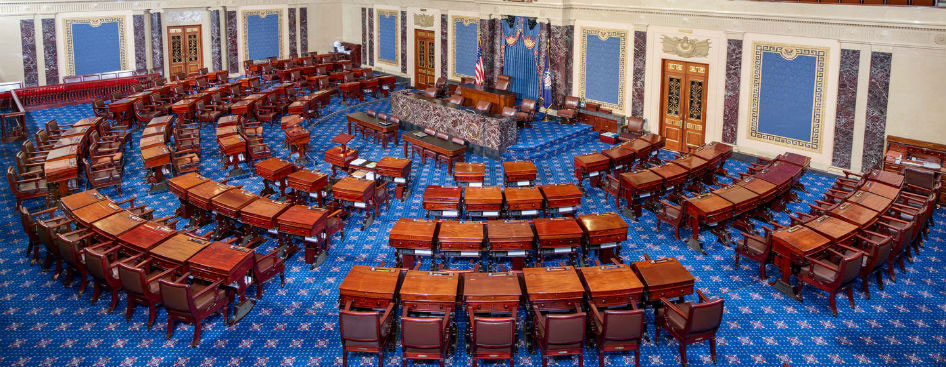
Photo: United States Senate, Public domain, via Wikimedia Commons
El-Sayed's Win: Progressive Breakthrough or Dangerous Radicalism?
Intra-Party Split Detected
Democratic establishment figures (Haley Stevens, AIPAC-aligned groups, Schumer-aligned primary backers) opposed El-Sayed in favor of moderate Stevens, with Stevens ultimately endorsing the Republican candidate Rogers days before the election, causing staff resignations and intra-party backlash. This reflects a broader rift between progressive and establishment/moderate wings of the Democratic Party over electability, Israel policy, and party direction.
Left says
- •El-Sayed's victory proves a progressive candidate can win in a battleground state by focusing on affordability, Medicare for All, and curbing corporate influence in politics rather than moderating to the center.
- •The campaign against him relied on Islamophobic rhetoric, including Trump and Ted Cruz baselessly linking him to terrorism and the Muslim Brotherhood, and he overcame it by mobilizing young and infrequent voters.
- •His win happened despite millions of dollars spent by pro-Israel groups like AIPAC trying to defeat him in both the primary and general election, showing grassroots support can outmatch big-money opposition.
- •Haley Stevens' last-minute defection to endorse Rogers was seen as a betrayal of party unity, and the backlash it sparked reflects how many Democrats feel energized by El-Sayed's unapologetic progressive message.
Right says
- •El-Sayed represents a far-left agenda, including Medicare for All, abolishing ICE, and cutting off military aid to Israel, that many view as too extreme for a swing state like Michigan.
- •His past associations, including campaigning with controversial streamer Hasan Piker and past comments regarding the Muslim Brotherhood, raised legitimate questions about his judgment and allegiances that voters deserved to scrutinize.
- •His win was part of a broader Democratic wave rather than a personal mandate for his specific policies, since Republicans lost seats across multiple states that night.
- •Even a fellow Democrat, Haley Stevens, found his rhetoric and positions concerning enough to break ranks and endorse his Republican opponent in the race's final days.
Common Take
High Consensus- El-Sayed defeated Mike Rogers in a closely contested, high-spending Michigan Senate race to become the first Muslim elected to the U.S. Senate.
- The race was marked by unusually bitter rhetoric, including attacks on El-Sayed's faith and background.
- Haley Stevens' endorsement of Rogers days before the election was a significant and unexpected development that caused turmoil within the Democratic Party.
- Affordability and the cost of living were central issues in the campaign for both candidates.
The Arguments
Left argues
El-Sayed's victory demonstrates that an unapologetically progressive candidate can win in a battleground state by centering affordability, Medicare for All, and anti-corporate messaging rather than moderating toward the center.
Right counters
His win occurred amid a broader national Democratic wave that flipped seats in Texas, Iowa, Kansas, and South Carolina, making it difficult to isolate his specific progressive platform as the decisive factor rather than generic anti-incumbent or anti-GOP sentiment.
Right argues
El-Sayed's past campaigning with controversial streamer Hasan Piker, his shifting statements on the Muslim Brotherhood, and his call to cut military aid to Israel raised legitimate questions about his judgment that voters were entitled to scrutinize, separate from his religion.
Left counters
Much of the attack went well beyond policy scrutiny into baseless accusations of terrorism and disloyalty — including Trump's and Cruz's claims that he was a 'jihadist' tied to the Muslim Brotherhood whose election could get Americans killed — rhetoric El-Sayed directly and credibly denied.
Left argues
El-Sayed overcame more than $30 million in spending by AIPAC-aligned groups in the primary and renewed spending in the general election, showing that grassroots mobilization of young and infrequent voters can outmatch big-money opposition.
Right counters
Outspending a candidate doesn't automatically delegitimize the concerns that money was raised to highlight; Jewish and Black voters' documented unease with his rhetoric on Israel, including comments after the synagogue preschool attack, reflected genuine constituency concerns rather than manufactured opposition.
Right argues
Haley Stevens, a fellow Democrat and his primary rival, found El-Sayed's positions and rhetoric troubling enough to break party ranks and endorse his Republican opponent days before the election, lending credibility to concerns raised by Republicans.
Left counters
Stevens' defection sparked furious backlash within her own party and mass staff resignations, suggesting it was widely viewed by Democrats as an act of personal betrayal and establishment backlash rather than a principled, broadly shared judgment about El-Sayed's fitness for office.
Left argues
El-Sayed's win gives progressives a powerful, replicable template and a new national figure as the party debates how to win back voters ahead of 2028, proving swing-state viability without abandoning core progressive commitments.
Right counters
A single Senate race in one state, won during a favorable national environment for Democrats, is a thin evidentiary base for claiming a durable national mandate for Medicare for All or sharply reducing Israel aid, both of which face steep political obstacles even within his own party's Senate caucus.
Challenge Questions
These questions target genuine internal contradictions — meant to provoke honest reflection.
Right asks Left
“If El-Sayed's win is cited as proof that progressive policies like Medicare for All and cutting Israel aid are electorally viable, how do you account for the same night producing Democratic wins with much more moderate candidates and messages in other states — doesn't that suggest the wave, not the platform, drove the outcome?”
Left asks Right
“If scrutiny of El-Sayed's associations and past statements was legitimate and separate from his religion, why did prominent Republican figures like Trump and Cruz frame their objections explicitly around his faith and unsubstantiated terrorism claims rather than sticking to policy critiques?”
Outlier Report
Left Fringe
Figures like Hasan Piker and some DSA-aligned activists represent an extreme left flank (~10-15% of the left) that fully embraces anti-Israel rhetoric and sees any criticism of El-Sayed as inherently bad-faith; mainstream Democrats like Gary Peters and Gretchen Whitmer were notably more cautious and initially backed Stevens.
Right Fringe
Figures like Ted Cruz and some Trump-aligned commentators who called El-Sayed a 'jihadist' or implied violent threat represent a fringe (~15-20% of the right) that most mainstream conservatives and independents would see as excessive or counterproductive fearmongering, even if they share policy concerns about his platform.
Noise Assessment
High noise ratio — much of the loudest discourse (AOC/Sanders boosting vs. Cruz/Trump attacking) is performative tribal signaling disconnected from how most moderate voters actually weigh affordability and electability concerns, which polling suggests was the dominant factor for persuadable voters rather than ideology or identity.
Sources (15)
<p>Democrat Abdul El-Sayed defeated Republican Mike Rogers in Michigan's <a href="https://www.axios.com/local/detroit/2026/10/07/senate-race-1-minute-voter-guide-2026" target="_blank">closely watched</a> U.S. Senate race, the Associated Press projected. He will become the nation's first Muslim senator.</p><p><strong>Why it matters: </strong>El-Sayed's win shows how an unapologetically progressive candidate can win in a battleground state President <a href="https://www.axios.com/politics-policy/donald-trump" target="_blank">Trump</a> carried just two years ago.</p><hr /><ul><li>The two candidates competed for the seat vacated by retiring Democratic Sen. Gary Peters, with Republicans hoping to flip a seat Democrats have held for decades. But the GOP failed in its endeavor — and already lost its Senate majority.</li><li>The race took a stunning turn in its final days, when Democratic U.S. Rep. Haley Stevens, who narrowly lost the August primary to El-Sayed, <a href="https://www.axios.com/2026/11/01/haley-stevens-mike-rogers-church-michigan-senate" target="_blank">endorsed Rogers</a>.</li><li>The move sparked <a href="https://www.axios.com/2026/11/01/haley-stevens-democrats-reaction-rogers-el-sayed" target="_blank">furious backlash</a> from Democrats and prompted several of Stevens' staffers, including her chief of staff, to resign.</li></ul><p><strong>The big picture: </strong>El-Sayed, a former Detroit health director, ran on a progressive platform centered on Medicare for All, taxing billionaires, and reducing corporate influence in politics.</p><ul><li>His victory comes after a contentious Democratic primary and a bitter general election campaign that featured personal attacks over his background, <a href="https://politifact.com/article/2026/oct/14/abdul-el-sayed-doctor-physician-michigan-senate/" target="_blank">medical credentials</a> and Muslim faith.</li><li>Rogers, a former congressman and FBI agent who narrowly lost a 2024 Senate bid, sought to portray El-Sayed as <a href="https://politifact.com/article/2026/oct/08/michigan-senate-debate-fact-check-el-sayed-rogers/" target="_blank">too extreme for Michigan</a>. El-Sayed cast Rogers as a Washington insider aligned with Trump.</li><li>Trump himself <a href="https://apnews.com/article/trump-michigan-elsayed-rogers-senate-midterms-162330c3d193ecb94538f8dd8083f916" target="_blank">escalated the attacks</a> in the final stretch of the race, questioning El-Sayed's loyalty to the U.S., and making unsubstantiated allegations of extremist ties. El-Sayed rejected the accusations.</li></ul><p><strong>Between the lines: </strong>El-Sayed's win offers progressives a powerful new argument in the Democratic Party's debate over how to win back voters.</p><p><strong>Zoom out:</strong> Both candidates put affordability at the center of their campaigns, but offered sharply different solutions.</p><ul><li>El-Sayed called for universal health care, tackling medical debt and higher taxes on billionaire wealth.</li><li>Rogers emphasized tax cuts, expanding domestic manufacturing and more transparent health care prices. He also campaigned on stronger border security and immigration enforcement. </li></ul><p><strong>What's next: </strong>El-Sayed will arrive in Washington with an ambitious progressive agenda — but turning campaign promises into legislation will be a different challenge.</p><ul><li>His signature Medicare for All proposal faces steep political obstacles, even if Democrats win control of the Senate.</li><li>His victory also gives progressives a new national figure as Democrats begin looking toward the 2028 presidential election.</li></ul>
<p>Abdul El-Sayed will be a United States Senator, the first Muslim man elected to the world’s most exclusive club.</p> <p>The post <a href="https://www.breitbart.com/politics/2026/11/03/abdul-el-sayed-projected-to-win-michigan-race-will-become-first-muslim-elected-to-u-s-senate/" rel="nofollow">Abdul El-Sayed Projected to Win Michigan Race, Will Become First Muslim Elected to U.S. Senate</a> appeared first on <a href="https://www.breitbart.com" rel="nofollow">Breitbart</a>.</p>
Democrat Abdul El-Sayed defeated former GOP Rep. Mike Rogers in Michigan, CBS News projects, after one of the most contentious contests of the midterm elections.
Abdul El-Sayed toppled Mike Rogers to become the first Muslim U.S. senator, overcoming Trump's attacks on his faith and alleged foreign ties.
El-Sayed was winning by a margin of about 52-46 over Republican Mike Rogers.
Democrat Abdul El-Sayed has been elected to the Senate from Michigan, defeating Trump-endorsed Republican candidate Mike Rogers with a progressive platform in a race frequently consumed by drama: Islamophobia, criticisms of Israel and criticisms of those criticisms, millions of dollars in contributions from pro-Israel groups to his opponents, attacks from Republicans, attacks from fellow Democrats, […]
Abdul El-Sayed, an epidemiologist and former public health official aligned with the Democratic Party’s left flank, has won Michigan’s highly hostile Senate race, defeating his Republican rival, former Rep.
Abdul El-Sayed triumphed in a bitter Michigan contest where Israel stayed at the center of the race.
Abdul El-Sayed had emerged politically bruised from a grueling primary in August against Rep. Haley Stevens.
El-Sayed's campaign tested how an antiestablishment candidate on the left would fare in a perennial Midwest battleground. With the win, he'll become the first Muslim American to serve in the Senate.
Democrat Abdul El-Sayed will defeat Republican Mike Rogers in Michigan’s closely watched U.S. Senate race Tuesday, projects Decision Desk. The candidates competed for an open seat after Democrat Sen. Gary Peters announced last year he would not run for reelection. El-Sayed, a Michigan native who will become the first Muslim member of the U.S. Senate,...
<p>Democrat defeats Mike Rogers in race marked by Islamophobic attacks from Trump and Republican allies</p><p>Abdul El-Sayed, the doctor and progressive insurgent, has made history in winning the closely watched US Senate race in Michigan, defeating the Republican Mike Rogers and becoming the country’s first Muslim senator.</p><p>El-Sayed’s victory adds to a decisive Democratic majority in the Senate after the party wrested control of the upper chamber on Tuesday.</p> <a href="https://www.theguardian.com/us-news/2026/nov/03/abdul-el-sayed-mike-rogers-michigan-senate">Continue reading...</a>
Democrat Abdul El-Sayed is projected to win the Michigan Senate race, with El-Sayed defeating Republican Mike Rogers and becoming the first Muslim American elected to the upper chamber, according to Decision Desk HQ.  El-Sayed, a doctor and former head of health departments in Detroit and Wayne County, prevailed against Rogers, a former congressman backed by…
Abdul El-Sayed claimed victory in Michigan's Democratic Senate seat early Wednesday, fending off a hard-charging challenge from Republican Mike Rogers and overcoming concerns about his views on Israel and his support among Black voters.