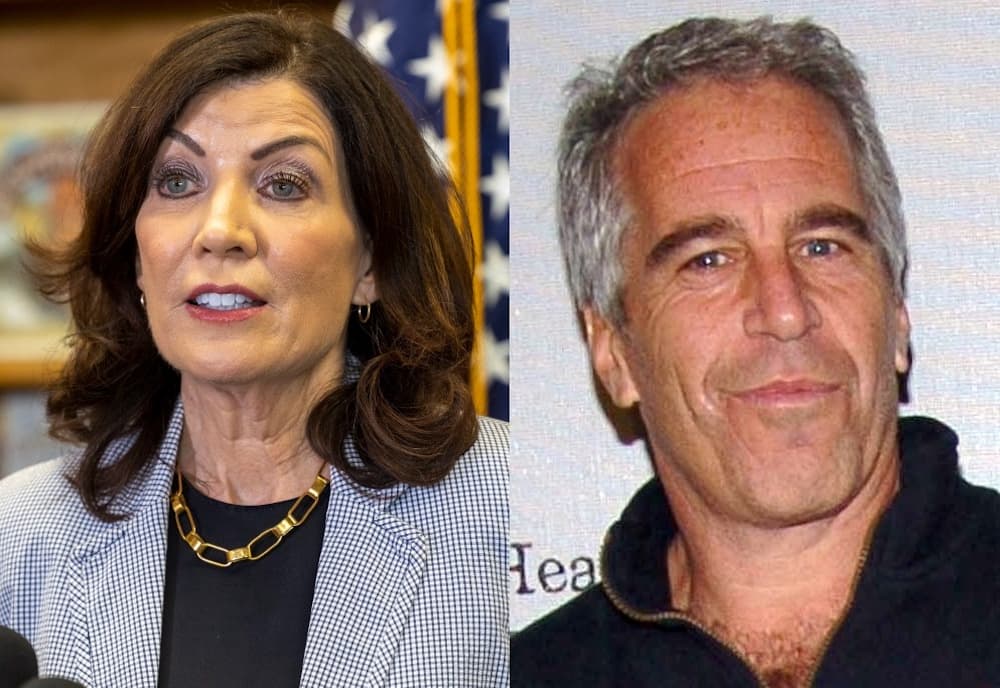
 Jeffrey Epstein (right) whose accountant and lawyer testified to House panel
Epstein's Inner Circle Never Interviewed by Federal Investigators
Left says
- •The Justice Department's failure to interview key Epstein associates reveals a systematic pattern of protecting wealthy elites from accountability across multiple administrations
- •Political donors connected to Epstein, including those who contributed to Governor Hochul's campaigns, highlight how money insulates the powerful from consequences
- •The incomplete federal investigation demonstrates institutional corruption that prioritizes the interests of billionaires over justice for victims
Right says
- •Federal investigators may have had valid reasons for not interviewing certain associates if they lacked evidence of wrongdoing or criminal involvement
- •The accountant and lawyer both testified they witnessed no illegal activity, suggesting their interviews may not have been necessary for the investigation
- •Congressional investigations can serve as important oversight when federal agencies may have missed opportunities to gather evidence
Common Take
High Consensus- Jeffrey Epstein's accountant and lawyer were never formally interviewed by federal investigators despite their close professional relationships with him
- Both associates testified to Congress that they witnessed no wrongdoing during their work for Epstein
- The House Oversight Committee is conducting its own investigation to examine potential gaps in federal law enforcement efforts
- Victims of Epstein's crimes deserve thorough investigations that leave no stone unturned
The Arguments
Left argues
The Justice Department's failure to interview Epstein's closest associates—his lawyer and accountant who handled his finances and legal affairs—reveals a systematic pattern of protecting wealthy elites from accountability across multiple administrations. This represents institutional corruption that prioritizes the interests of billionaires over justice for victims.
Right counters
Federal investigators may have had valid prosecutorial reasons for not interviewing certain associates if they lacked evidence of criminal involvement or if these individuals were unlikely to provide useful testimony. The accountant and lawyer both testified they witnessed no illegal activity, suggesting their interviews may not have advanced the investigation.
Right argues
Congressional investigations can serve as important oversight when federal agencies may have missed opportunities to gather evidence, and the fact that both associates claim they witnessed no wrongdoing suggests they may not have been central to the criminal conspiracy. Investigators must prioritize resources on witnesses most likely to provide evidence of crimes.
Left counters
The lawyer and accountant were Epstein's most trusted inner circle who would have had intimate knowledge of his operations, finances, and activities—making their non-interview a glaring omission regardless of what they claim to have witnessed. Their proximity to Epstein's operations made them essential witnesses who should have been questioned to ensure thoroughness.
Left argues
The connection between Epstein associates and political donors like those who contributed to Governor Hochul's campaigns demonstrates how money insulates the powerful from consequences and creates conflicts of interest that undermine justice. These financial relationships reveal the systemic nature of elite protection.
Right counters
Political donations from wealthy individuals who may have had social connections to Epstein do not necessarily indicate criminal wrongdoing or corruption, and many prominent figures had social or business interactions with Epstein before his crimes became widely known. Guilt by association is not evidence of criminal conspiracy.
Right argues
The Trump Justice Department's decision to no longer release additional Epstein case files suggests that federal investigators may have concluded their investigation was complete or that further releases could compromise ongoing related investigations. Prosecutorial discretion requires protecting the integrity of investigations.
Left counters
The refusal to release additional files and the failure to interview key associates suggests a deliberate effort to limit the scope of accountability rather than protect investigation integrity. The enormous gaps in the federal investigation across multiple administrations indicate systemic failure rather than prosecutorial prudence.
Challenge Questions
These questions target genuine internal contradictions — meant to provoke honest reflection.
Right asks Left
“If the Justice Department's failure to interview these associates truly represents systematic corruption to protect elites, why would Congress—also populated by wealthy politicians with potential elite connections—be more trustworthy to conduct this investigation, and how do you reconcile calling for elite accountability while simultaneously arguing that political donations create inherent corruption?”
Left asks Right
“If federal investigators had valid reasons for not interviewing Epstein's lawyer and accountant based on lack of evidence, how do you explain the fact that these individuals had the most intimate access to Epstein's operations and finances, and doesn't prosecutorial thoroughness require interviewing those closest to a criminal enterprise regardless of what they might claim about their knowledge?”
Outlier Report
Left Fringe
Progressive activists like Alexandria Ocasio-Cortez and groups demanding complete wealth redistribution who frame this as proof capitalism itself is corrupt represent about 15% of the left coalition.
Right Fringe
QAnon-adjacent figures like Marjorie Taylor Greene who weave Epstein into broader deep state conspiracy theories represent roughly 20% of the right, while some establishment Republicans who completely defend DOJ procedures represent about 10%.
Noise Assessment
Moderate noise level - while partisan figures amplify their preferred angles, genuine public outrage about elite accountability drives most discourse rather than performative positioning.
Sources (3)
An accountant and an attorney for Jeffrey Epstein told the House Oversight Committee that government investigators never interviewed them about the late sex offender and the work they did for him, according to videos of their depositions released Tuesday. The panel questioned Richard Kahn, Epstein's accountant, and Darren Indyke, Epstein's lawyer, behind closed doors this month as part of its investigation into Epstein. Both maintained they did not witness any wrongdoing, and authorities have accused neither of misdeeds...
Jeffrey Epstein's lawyer Darren Indyke and accountant Richard Kahn told House lawmakers they were never interviewed as part of formal federal investigations into their late client's sex crimes, according to videos of their depositions released Tuesday. Their claims underscore the enormous gaps in the Justice Department's efforts to hold Epstein and his inner circle accountable over multiple administrations of both parties. It also could raise the stakes for the ongoing Epstein investigation being led by the House Oversight and Government Reform Committee, which is already being relied upon to gather new evidence after the Trump Justice Department signaled it would no longer be releasing additional Epstein case files in compliance with the law Congress passed last fall...
<p>For nearly a year, New York Governor Kathy Hochul has been calling on the Donald Trump administration to release the Jeffrey Epstein files. Well, they’ve been released — and it turns out some of Hochul’s wealthiest donors from recent campaigns are in them. The release of the files, and the fact that some of the […]</p>