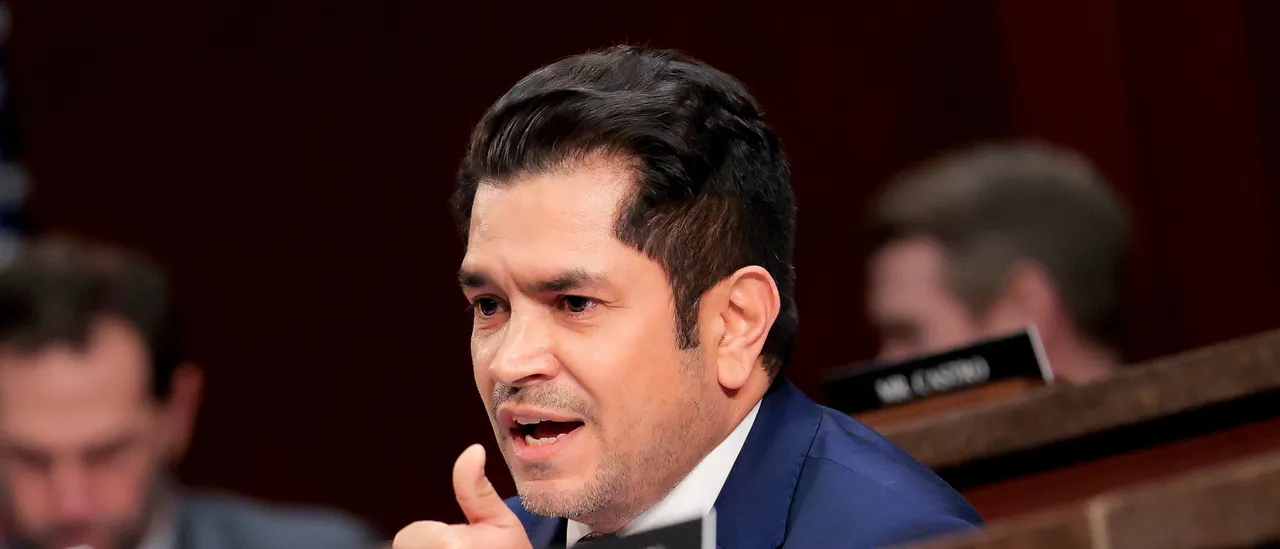
Ethics Committee Probes Rep. Gomez Over Sexual Misconduct Allegations
Intra-Party Split Detected
Most Democratic coverage focuses neutrally on the ethics process, but Gomez's own primary challenger, fellow Democrat Angela Gonzales-Torres, has publicly criticized him and a broader 'culture' in Congress, creating some intra-party friction.
Left says
- •Gomez's opponent, fellow Democrat Angela Gonzales-Torres, has publicly called attention to a broader pattern of men abusing women in Congress, framing the case as part of a systemic problem rather than an isolated incident.
- •The Ethics Committee explicitly cautioned that opening an investigation does not itself indicate wrongdoing occurred, a nuance emphasized to avoid prejudging Gomez before the facts are established.
- •Gomez has taken personal responsibility for infidelity, expressed remorse to his wife and family, and sought professional help, which some see as a sign of accountability separate from the question of ethics violations.
- •The focus remains on whether official House conduct rules were broken, not simply on the personal moral failing of an extramarital affair.
Right says
- •Gomez publicly built a reputation around family values, including founding the Congressional Dads Caucus in 2023, making the allegations of infidelity and misconduct with a staffer particularly notable given that image.
- •The New York Post's original reporting in April was initially denied by Gomez's spokesperson as 'not true,' before Gomez later admitted to personal mistakes, raising questions about the initial denial.
- •This case fits into a broader pattern of congressional sexual misconduct scandals, following other recent resignations and investigations involving members of both parties.
- •Gomez insists his conduct, while personally damaging to his family, was consensual and did not cross into violations of law or House ethics rules.
Common Take
High Consensus- The House Ethics Committee formally opened an investigation into Rep. Jimmy Gomez on Monday over sexual misconduct allegations, including inappropriate sexual contact with a House staffer.
- Gomez has admitted to personal mistakes outside his marriage but maintains that his actions were consensual and did not violate the law or House ethics rules.
- The allegations trace back to a 2023 incident in which Gomez was reportedly seen kissing a younger congressional staffer who worked for another member's office, first reported by the New York Post in April.
- Gomez has committed to cooperating fully with the Ethics Committee's investigation.
The Arguments
Right argues
Gomez built his public persona around family values, founding the Congressional Dads Caucus in 2023, which makes the gap between that image and the alleged conduct with a staffer especially newsworthy and relevant to voters.
Left counters
A personal image built around family values, however hypocritical it may look in hindsight, is not itself an ethics violation, and the investigation should turn on whether House conduct rules were actually broken, not on public perception of Gomez's branding.
Right argues
Gomez's spokesperson initially and flatly denied the New York Post's reporting as 'not true,' only for Gomez to later admit to personal mistakes, a reversal that raises legitimate questions about his credibility and initial transparency.
Left counters
Denying a story and later admitting to a private, consensual affair are consistent with someone protecting his family from public embarrassment before ultimately taking responsibility, and the eventual admission and apology should count as evidence of accountability, not proof of deception.
Left argues
The Ethics Committee itself explicitly cautioned that the mere existence of an investigation does not indicate wrongdoing occurred, a standard of due process that should be respected before drawing conclusions about Gomez's guilt.
Right counters
That standard caution from the committee is boilerplate language attached to nearly every investigation and doesn't erase the fact that the committee found the underlying allegations serious enough to formally open a probe under a specific conduct rule.
Left argues
Gomez's opponent Angela Gonzales-Torres is right to frame this as part of a systemic pattern of men abusing positions of power over women in Congress, rather than treating each case as an isolated scandal disconnected from broader institutional failures.
Right counters
Framing an individual ethics case as part of a 'systemic pattern' risks prejudging Gomez based on the actions of unrelated lawmakers and can look like political opportunism from a primary challenger rather than a genuine call for accountability.
Left argues
Gomez has taken personal responsibility, apologized directly to his wife and family, and sought professional help, which is a meaningfully different posture than lawmakers who deny wrongdoing outright or resign under a cloud of unresolved allegations.
Right counters
Personal contrition for infidelity is a separate matter from whether he violated House ethics rules by engaging in unwelcome sexual conduct toward a staffer, and his apology doesn't resolve the specific question the committee is now investigating.
Challenge Questions
These questions target genuine internal contradictions — meant to provoke honest reflection.
Right asks Left
“If the existence of an investigation truly doesn't indicate wrongdoing, why did Gonzales-Torres and other commentators invoke this case as evidence of a 'systemic pattern' of abuse before the committee has reached any findings?”
Left asks Right
“If Gomez's personal apology and initial denial through a spokesperson are treated as evidence of dishonesty or hypocrisy, how should that standard be applied consistently to lawmakers of other parties who have offered similar initial denials before admitting wrongdoing?”
Outlier Report
Left Fringe
Figures like Rep. Gonzales-Torres and some progressive commentators (e.g., writers at Jezebel or The Nation) who frame this explicitly as part of systemic misogyny in Congress represent maybe 15-20% of the left, with most Democrats viewing it as an individual ethics matter rather than a broader gender-power narrative.
Right Fringe
Commentators like those at the Daily Caller and Washington Times who emphasize the 'family values hypocrisy' angle heavily, alongside figures who used this to attack Democrats broadly on morality, represent about 20-25% of the right; most conservatives likely view it as a garden-variety political scandal rather than a defining moral crusade.
Noise Assessment
High noise ratio - cable news and partisan outlets amplify this beyond its actual salience to most Americans, who are largely fatigued by congressional sex scandals and view them with generalized cynicism rather than strong partisan reaction.
Sources (7)
The congressman is being investigated for sexual misconduct
He previously admitted to having made "personal mistakes outside [his] marriage," but insisted he had not violated any House ethics guidelines or broken the law.
The California Democrat said he’d “made personal mistakes outside my marriage” but said he hadn’t violated the law or House Ethics rules.
The California Democrat has admitted to "personal mistakes" outside his marriage but also says his actions were consensual in nature and did not violate House ethics rules.
The House Ethics Committee said Monday that it is investigating allegations of sexual misconduct against Rep. Jimmy Gomez (D-Calif.).  The panel said in a statement that it is “reviewing allegations” that Gomez “may have engaged in sexual misconduct in violation of the Code of Official Conduct or any other applicable standard of conduct, including engaging…
The California Democrat said that he had “made personal mistakes outside my marriage” and that he will cooperate with the investigation.
The House Ethics Committee announced Monday that it is investigating Rep. Jimmy Gomez over allegations that the California Democrat engaged in inappropriate sexual conduct with a House staffer.