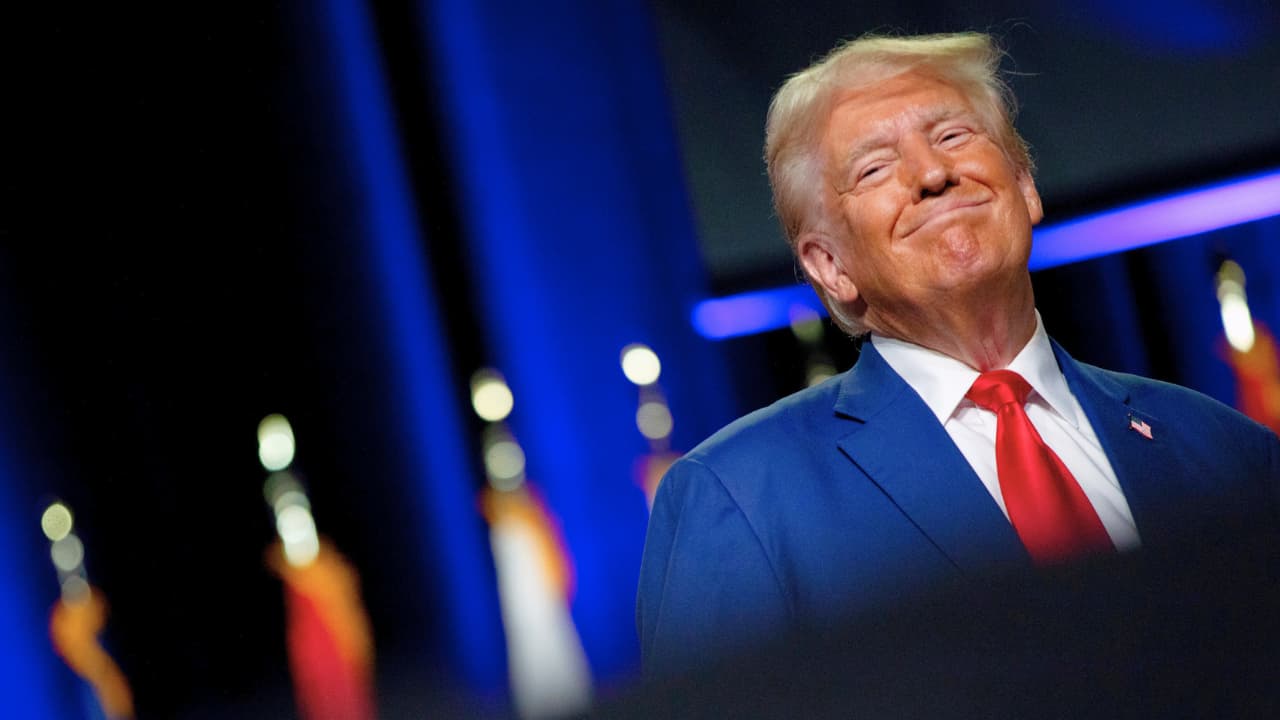
 President Donald Trump, whose renaming of Lake Ontario sparked the story.
Even Republicans Reject Trump's 'Lake America' Renaming
Intra-Party Split Detected
Polling shows more Republicans oppose (43%) than support (33%) Trump's Lake Ontario renaming order, and a majority of 2024 Trump voters (43-68% depending on poll) also disapprove, breaking from the administration's position.
Left says
- •Renaming Lake Ontario to 'Lake America' by executive fiat is widely seen as a symbolic distraction from more pressing economic concerns, since polling shows just 4% of Americans think the trade war with Canada will improve their finances.
- •The name change reflects a pattern of unilateral rebranding of geographic features, following the Gulf of Mexico and Denali renamings, raising concerns about executive overreach and disregard for longstanding shared history with an ally.
- •Democrats are moving to counter the order legislatively, arguing that a longtime ally like Canada shouldn't be treated as an adversary over trade disputes.
- •More Americans blame the U.S. for the escalating trade war than blame Canada, undercutting the administration's framing of Canada as the aggressor.
Right says
- •The White House frames the renaming and tariffs as part of a broader effort to stop Canada from 'ripping off' American industries and workers after trade talks collapsed.
- •Supporters see the lake renaming as consistent with a larger pattern of asserting American identity on geographic names, following similar moves with the Gulf of America.
- •Some Republicans support the tougher tariff stance even if they're skeptical of the name change itself, showing the party isn't monolithic on how to handle Canada.
- •Trump's personal outreach to Apple to secure the map change reflects his hands-on approach to ensuring his policies are implemented across major platforms.
Common Take
High Consensus- Reuters-Ipsos and Economist-YouGov polling both found a majority of Americans, including a plurality or majority of Republicans, oppose renaming Lake Ontario to 'Lake America.'
- Google changed its U.S. maps to reflect the new name while keeping 'Lake Ontario' for Canadian users, while MapQuest refused to make any change.
- The tariff dispute and renaming order followed the collapse of U.S.-Canada trade talks and the imposition of steep new tariffs.
- Both sides acknowledge tech companies like Apple and Google faced pressure to decide how to handle the naming dispute across different countries.
The Arguments
Left argues
The renaming is a symbolic distraction from economic anxieties, as polling shows only 4% of Americans think the trade war with Canada will actually improve their finances, suggesting the administration is prioritizing spectacle over substance.
Right counters
The White House frames the tariffs and renaming as part of a coherent strategy to stop Canada from 'ripping off' American industries, arguing that short-term public skepticism doesn't invalidate the need for tougher trade enforcement.
Right argues
Renaming geographic features like the Gulf of Mexico and now Lake Ontario reflects a consistent effort to assert American identity and sovereignty over shared or contested names, which supporters see as a legitimate exercise of executive authority.
Left counters
This pattern of unilateral rebranding disregards centuries of shared history with a longtime ally and sets a precedent for executive overreach that even a majority of Republicans oppose, per polling showing only 33% support among GOP voters.
Left argues
More Americans blame the U.S. (46%) than Canada (12%) for the escalating trade war, undermining the administration's core narrative that Canada is the aggressor deserving of punitive tariffs and symbolic retaliation.
Right counters
Public opinion on responsibility doesn't erase the underlying trade imbalances the administration says it's addressing; policymakers often make necessary but initially unpopular decisions that voters later credit once economic benefits materialize.
Right argues
Some Republicans support the tougher tariff stance even while remaining skeptical of the lake renaming itself, showing the party can back substantive trade policy without endorsing every symbolic gesture — the two issues aren't identical.
Left counters
If Republicans can separate the tariffs from the renaming and still find both politically costly, it suggests the entire approach — symbolic and substantive alike — is failing to build the broad coalition needed for a sustained trade confrontation.
Left argues
Democrats are pursuing legislation to counter the executive order, arguing that treating a longtime ally like Canada as a trade adversary threatens a mutually beneficial relationship built over generations of cooperation.
Right counters
Legislative pushback doesn't change the fact that trade negotiations collapsed, and supporters argue that allies should still be held accountable for practices perceived as unfair rather than being given a pass due to historical friendship.
Challenge Questions
These questions target genuine internal contradictions — meant to provoke honest reflection.
Right asks Left
“If Democrats believe economic distraction is the real problem, why focus legislative energy on reversing a symbolic map label rather than proposing an alternative trade policy toward Canada?”
Left asks Right
“If even a plurality of Republicans and 43% of Trump's own 2024 voters oppose the renaming, does continuing to defend it as 'asserting American identity' reflect public will, or does it reveal the policy is driven more by executive preference than voter demand?”
Outlier Report
Left Fringe
Figures like Rep. Alexandria Ocasio-Cortez or progressive commentators who frame this as part of authoritarian overreach represent maybe 15-20% of the left, pushing beyond 'distraction' framing into more alarmist territory about executive power.
Right Fringe
Trump loyalists and pundits like Pete Hegseth (referenced in the story posting supportive social media content) who fully embrace the renaming as patriotic assertion represent roughly 30-35% of the right, given that even many Republicans (43% oppose per polling) reject the move despite supporting tariffs.
Noise Assessment
High noise ratio: the renaming controversy generates disproportionate social media and cable news attention relative to actual public concern, as evidenced by the poll finding only 4% of Americans think the trade war will help their finances — suggesting the symbolic fight is largely elite/media-driven discourse rather than a genuine grassroots priority.
Sources (5)
<p>President <a href="https://www.axios.com/politics-policy/donald-trump" target="_blank">Trump's</a> order <a href="https://www.axios.com/2026/08/27/trump-lake-ontario-lake-america" target="_blank">renaming Lake Ontario</a> to "Lake America" isn't floating with Americans, with a majority opposing the name change and his new tariffs on Washington's northern neighbor, per recent polling.</p><p><strong>The big picture: </strong>After trade talks between the longtime allies <a href="https://www.axios.com/2026/08/22/us-canada-tariffs-trade-trump-carney" target="_blank">collapsed last month</a> and triggered steep new tariffs, the Trump administration has escalated its feud with Canada. </p><hr /><ul><li>With the midterm elections creeping closer, polling suggests Americans aren't sold on the fight.</li></ul><p><strong>Driving the news:</strong> Reuters-Ipsos <a href="https://www.ipsos.com/sites/default/files/ct/news/documents/2026-09/Ipsos%20Poll%20on%20U.S.%20Canada%20Tariffs%20Topline%20September%202026_0.pdf" target="_blank">polling</a> from late August found that more than 6 in 10 (63%) of Americans oppose Trump's executive order directing Interior Secretary Doug Burgum to rename the lake, which straddles the U.S.–Canada border.</p><ul><li>Even among Republicans, more opposed (43%) than supported (33%) the order.</li><li>A vast majority of Democrats (84%) and independents and other parties (65%) opposed the name change. </li></ul><p><strong>The other side: </strong>In response to the polling, the White House lambasted Canada in a statement to Axios.</p><ul><li>"Canada has been a bad neighbor by ripping off our country for years," wrote spokesperson Taylor Rogers. "President Trump promised voters that he would not allow our country to be taken advantage of anymore, which is why he is fighting so hard to protect American industries and workers."</li></ul><p><strong>Zoom out:</strong> An Economist–YouGov <a href="https://d3nkl3psvxxpe9.cloudfront.net/documents/econTabReport_yVe1kKt.pdf" target="_blank">survey</a> of 1,592 U.S. citizens similarly found that 68% oppose changing the lake's name — a sentiment shared by 43% of 2024 Trump voters. </p><ul><li>Just 36% of Trump voters approve.</li></ul><p><strong>Friction point:</strong> Despite the opposition, Apple and Google both changed their map labels on the body of water — for U.S. users, at least. </p><ul><li>Google said it did so to match updates from the U.S. <a href="https://www.usgs.gov/tools/geographic-names-information-system-gnis" target="_blank">Geographic Names Information System</a>. The company's statement said those in Canada will continue to see "Lake Ontario," while the rest of the world will see both names.</li><li>Apple made the switch after Trump personally appealed to the tech giant, Burgum told Fox Business earlier this week.</li></ul><p><strong>Zoom out: </strong>Trump's new tariffs on Canada are also unpopular: 57% oppose them, while just 20% support them, and 21% aren't sure. </p><ul><li>Canada is set to retaliate against the new 50% U.S. tariff on some $20 billion of Canadian goods.</li><li>Democrats (82%) and independents (59%) oppose the levies. More Republicans support the tariffs than oppose them (44% v. 33%), but 22% say they don't know how they feel.</li></ul><p><strong>The bottom line: </strong>On <a href="https://truthsocial.com/%40realDonaldTrump/posts/117198856483138040" target="_blank">social</a> <a href="https://x.com/PeteHegseth/status/2094593108755562927" target="_blank">media</a> and in trade policy, the Trump administration isn't showing signs of backing off of its quarrel with Canada.</p><ul><li>But if you ask Americans, more say it's America who's responsible for the trade war (46%) than Canada (12%). Plus, just 4% say it will have a positive impact on their personal finances.</li></ul><p><strong>The fine print:</strong><em> </em>Ipsos surveyed a nationally representative sample of 1,023 adults between Aug. 28-30, 2026. The margin of error is plus or minus 3.5 percentage points at the 95% confidence level.</p><p><strong>Go deeper: </strong><a href="https://www.axios.com/2026/08/27/trump-lake-ontario-america-democrats-bill" target="_blank">Scoop: Dems plan bill to counter Trump's "Lake America" order</a></p>
<p>President <a href="https://www.axios.com/politics-policy/donald-trump" target="_blank">Trump</a> has personally asked Apple to rename Lake Ontario "<a href="https://www.axios.com/2026/08/27/trump-lake-ontario-lake-america" target="_blank">Lake America</a>" on Apple Maps, Interior Secretary Doug Burgum said in an interview Monday. </p><p><strong>Why it matters: </strong>The request comes after Google <a href="https://www.axios.com/2026/08/30/lake-america-lake-ontario-maps-trump" target="_blank">changed</a> the lake's name on mobile and desktop for U.S. users on Saturday.</p><hr /><ul><li>Google said in a <a href="https://blog.google/products-and-platforms/products/maps/gnis-lake-ontario-lake-america-name-change/" target="_blank">statement</a> that the changes complied with updates from the U.S. <a href="https://www.usgs.gov/tools/geographic-names-information-system-gnis" target="_blank">Geographic Names Information System</a> (GNIS), which made the switch after Trump signed an executive order on Aug. 27. </li></ul><p><strong>Driving the news:</strong> Apple Maps was slower than Google to make a similar change when Trump renamed the Gulf of Mexico <a href="https://www.axios.com/2025/01/24/trump-gulf-of-mexico-america-name-change" target="_blank">Gulf of America</a> and <a href="https://apnews.com/article/google-gulf-of-mexico-trump-96861212a9ee292966f19498338da6be" target="_blank">Mount Denali</a> to Mount McKinley this year. </p><ul><li>Google took eight days to make the switch, while Apple took <a href="https://apnews.com/article/apple-maps-gulf-of-mexico-gulf-of-america-ea9f17241ad5c42880708f27ffe18baf" target="_blank">over three weeks</a>. </li><li>Apple did not immediately respond to Axios' request for comment about its plans. </li></ul><p><strong>What they're saying: </strong>"It's a little bit of inside baseball," Burgum <a href="https://www.foxbusiness.com/video/6404363128112" target="_blank">said</a> in an interview Monday on FOX Business' "Mornings with Maria."</p><ul><li>He said that when the GNIS enters a name change, it is plugged into U.S. mapping software that "cascades down to all the map providers."</li><li>"I know that the president reached out to Apple directly, so I'm sure that we may be seeing that change coming up soon to Lake America," Burgum added. </li></ul><p><strong>Zoom out:</strong> The change hasn't been smooth sailing for Google. </p><ul><li>The company said Saturday that people in Canada would still see Lake Ontario on maps, while U.S. addresses would show "Lake America," but some Ontario government agency websites displayed "Lake America" on Sunday. </li><li>Google said the discrepancy was due to selections made by website developers in Ontario who "can select a region to localize the map, which determines how place names are displayed. 'Lake Ontario' will show when developers have <a href="https://urldefense.com/v3/__https%3A//developers.google.com/maps/documentation/javascript/localization%2ARegion__;Iw!!Al82Z4c!yt8PrUwFK9Ar09eR7mzJKQCFDjKGy-NskfOcHA6y9pjMnh91T5bCq6RTE7N6MIKqO682EFsibEYYvqQ$" target="_blank">set</a> their region to Canada."</li></ul><p><strong>Zoom in: </strong>MapQuest, which provided internet mapping nearly a decade before Google, isn't changing its maps to reflect Trump's order.</p><ul><li>"We're not changing the name of Lake Ontario. Name it whatever you want at your leisure," the company wrote in a <a href="https://x.com/MapQuest/status/2093069649713733725" target="_blank">tweet</a> that has since gone viral.</li></ul><p><em>Editor's note: This story has been updated with additional information.</em></p>
<p>President <a href="https://www.axios.com/politics-policy/donald-trump" target="_blank">Trump</a>'s order to <a href="https://www.axios.com/2026/08/27/trump-lake-ontario-lake-america" target="_blank">rename</a> Lake Ontario to "Lake America" is stirring up more controversy, as tech companies decide whether to comply or not. </p><p><strong>The big picture:</strong> Google and other digital map providers — like MapQuest and Apple — have split on whether to accept the name change or keep <a href="https://www.axios.com/2026/08/25/trump-french-language-canada-lake-ontario" target="_blank">Lake Ontario</a> on their maps. </p><hr /><p><strong>Driving the news: </strong>An Axios review of Google and Apple Maps on Sunday showed Google now says "Lake America" on mobile and desktop, while Apple Maps says Lake Ontario. </p><ul><li>Google said Saturday that it had changed the maps in accordance with updates from the U.S. <a href="https://www.usgs.gov/tools/geographic-names-information-system-gnis" target="_blank">Geographic Names Information System</a> (GNIS) and updated Google Maps "to reflect name changes in official government sources."</li><li>However, "Lake America" was appearing on some Ontario government agency websites that pull data from Google Maps on Sunday, despite Google saying users in Canada would continue to see Lake Ontario.</li><li>A Google spokesperson said in a Sunday night email, "Website developers who embed Google Maps on their site can select a region to localize the map, which determines how place names are displayed. 'Lake Ontario' will show when developers have <a href="https://urldefense.com/v3/__https%3A//developers.google.com/maps/documentation/javascript/localization%2ARegion__;Iw!!Al82Z4c!yt8PrUwFK9Ar09eR7mzJKQCFDjKGy-NskfOcHA6y9pjMnh91T5bCq6RTE7N6MIKqO682EFsibEYYvqQ$" target="_blank">set</a> their region to Canada."</li></ul><img src="https://images.axios.com/6525zz_Joss8M5bUgsquCoJw1RM=/2026/08/30/1788133504365.jpeg" /> <div>Screenshot: Ontario Premier <a href="https://www.axios.com/2025/10/24/trump-us-canada-trade-tariffs-carney-reagan" target="_blank">Doug Ford</a>/Ontario Minister of Public and Business Service Delivery and Procurement Stephen <a href="https://x.com/fordnation/status/2094197902218264735" target="_blank">Crawford</a>/X</div><p><strong>Zoom out: </strong>Google had said users in the U.S. will see Lake America, while users in Canada will see Lake Ontario, and users in other countries will see Lake Ontario (Lake America), according to the company's <a href="https://blog.google/products-and-platforms/products/maps/gnis-lake-ontario-lake-america-name-change/" target="_blank">statement</a>. </p><ul><li>"These updates follow our long-standing policy for bodies of water with names that vary from country to country, and are starting to roll out now."</li><li>Google has taken a similar stance before, as when it changed the Gulf of Mexico to <a href="https://www.axios.com/2025/01/24/trump-gulf-of-mexico-america-name-change" target="_blank">Gulf of America</a> following a separate Trump executive order. Mexico <a href="https://www.axios.com/2025/02/18/mexico-google-maps-lawsuit-gulf-of-america-trump" target="_blank">threatened to sue</a> over the change. </li><li>Apple spokespeople were not immediately available to comment Sunday morning on the company's position. </li></ul><p><strong>What they're saying:</strong> Backlash against the name change was swift after Trump signed the Aug. 27 executive order. </p><ul><li>Ontario Premier <a href="https://www.axios.com/2025/10/27/ford-trump-canada-ontario-reagan-tariffs" target="_blank">Doug Ford</a> compared the move to a "Saturday Night Live" skit during a Sunday appearance on ABC's "This Week," saying: "No one's going to call it Lake of America. It's been Lake Ontario for hundreds of years. It's going to continue being Lake Ontario. It's just so disappointing."</li></ul><p><strong>Between the lines: </strong>Not everyone is changing their maps. </p><ul><li>Mapquest, which provided internet mapping nearly a decade before Google, said Saturday that it will not change its maps to reflect Trump's order. </li><li>"We're not changing the name of Lake Ontario. Name it whatever you want at your leisure," the company wrote in a <a href="https://x.com/MapQuest/status/2093069649713733725" target="_blank">tweet</a> that has since gone viral. </li></ul><p><strong>Go deeper:</strong> <a href="https://www.axios.com/2026/08/27/trump-lake-ontario-america-democrats-bill" target="_blank">Scoop: Dems plan bill to counter Trump's "Lake America" order</a></p><p><em>Editor's note: This story has been updated with "Lake America" appearing on Ontario government agency websites using Google Maps data and with Google comment.</em></p>
The change will only take place for users in the U.S., while Canadians will still see the lake labeled “Lake Ontario.”
The White House reposted Trump's Truth Social image showing New Mexico crossed out and rebranded as "America" days after the Lake America order.