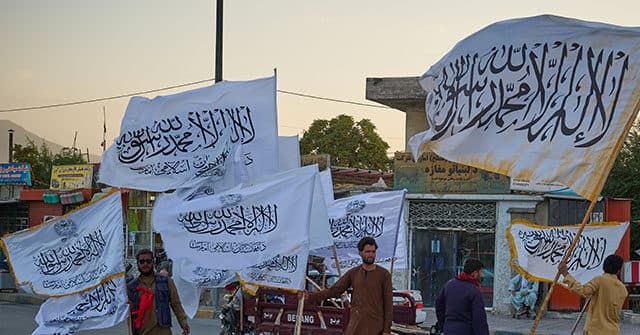
 Taliban flags fly over an Afghan street, symbolizing the movement's five-year rule.
Five Years On: Should the West Engage or Isolate the Taliban?
Left says
- •The near-total erasure of women from public life, education, and work is a humanitarian catastrophe that demands sustained global attention, not resignation or indifference.
- •Isolation alone has failed to change Taliban behavior over five years, so continued engagement, dialogue, and targeted pressure may offer more leverage than cutting off contact entirely.
- •Afghan women themselves, like entrepreneurs running rare workshops, are calling for the world to find new, more effective ways to engage rather than abandon them.
- •The humanitarian crisis, worsened by aid cuts and sanctions, harms ordinary Afghans, including boys whose education has also been degraded, suggesting policy must weigh the costs to civilians alongside pressure on the regime.
Right says
- •The Taliban remains a terrorist organization whose brutal, repressive rule and continued ties to jihadist groups like ISIS-Khorasan undercut any claims of legitimacy or reform.
- •The Taliban's expanding diplomatic network of over 40 embassies reflects a troubling normalization that rewards a regime responsible for oppression and instability rather than holding it accountable.
- •The circumstances of the 2021 withdrawal, including the abandonment of a negotiated deadline and the deadly Abbey Gate bombing, show the consequences of policy failures that empowered the Taliban in the first place.
- •Internal Taliban infighting and assassinations of its own officials expose the regime's fragility and lack of genuine control, arguing against treating it as a stable partner worthy of engagement.
Common Take
High Consensus- Afghan girls and women have been severely restricted from education and public life under Taliban rule.
- Five years of Taliban governance have failed to produce meaningful improvement in human rights or stability.
- The humanitarian and educational toll extends beyond women, affecting boys' schooling and the broader population's wellbeing.
- Current international approaches, whether engagement or isolation, have not achieved their intended results so far.
The Arguments
Left argues
Isolation has been tried for five years and has not reversed the erosion of women's rights, so continued engagement and dialogue may offer more real leverage than severing contact entirely, as Afghan women themselves are requesting.
Right counters
Engagement has already been tried in various forms — including diplomatic outreach that helped the Taliban build over 40 embassies — without producing any meaningful concessions, suggesting the regime treats dialogue as a tool for legitimacy rather than reform.
Right argues
The Taliban remains a jihadist organization with continued links to groups like ISIS-Khorasan, and its expanding diplomatic network rewards a regime that rules through terror rather than holding it accountable.
Left counters
Refusing all engagement does not weaken the Taliban's grip on power; it primarily deprives ordinary Afghans, including women running small businesses and boys losing access to real education, of any support or leverage that might improve their daily lives.
Left argues
The humanitarian crisis, worsened by aid cuts and sanctions, is punishing ordinary Afghans — including boys whose education has been hollowed out — showing that isolationist pressure campaigns often harm civilians more than the regime itself.
Right counters
Sympathy for civilian suffering cannot be used to justify normalizing a regime that enforces that suffering through policy choices like banning girls from school; the Taliban, not sanctions, is the author of Afghanistan's humanitarian collapse.
Right argues
Internal Taliban infighting, assassinations of its own officials, and open rebellion by dissident commanders reveal a fragile, fractured regime that is not a stable or trustworthy partner for engagement.
Left counters
A fractured, unstable Taliban may actually be more responsive to sustained diplomatic pressure and incentives than a monolithic one, making continued engagement more strategically valuable, not less.
Right argues
The chaotic 2021 withdrawal, including the abandoned negotiated deadline and the deadly Abbey Gate bombing, demonstrates how policy failures directly empowered the Taliban and should caution against further concessions now.
Left counters
Relitigating the withdrawal does not offer a workable policy for the present crisis facing millions of Afghan women and children today, who need decisions based on current leverage rather than past blame.
Challenge Questions
These questions target genuine internal contradictions — meant to provoke honest reflection.
Right asks Left
“If five years of engagement and dialogue have coincided with the near-total erasure of women from public life, what specific evidence suggests more engagement — rather than different engagement — would change Taliban behavior?”
Left asks Right
“If the Taliban's diplomatic expansion and terrorist ties make it illegitimate and unfit for engagement, what alternative strategy actually improves conditions for Afghan women and children, rather than simply withholding contact while the humanitarian crisis deepens?”
Outlier Report
Left Fringe
Progressive humanitarian advocates and some Democratic foreign policy voices (e.g., aligned with groups like the Feminist Majority Foundation) who argue for near-unconditional engagement and aid regardless of Taliban human rights abuses, representing roughly 15-20% of the left.
Right Fringe
Hardline commentators like Steve Bannon and some America First isolationists who argue the U.S. should have zero involvement or diplomatic contact with Afghanistan at all, even for humanitarian monitoring, representing roughly 15-20% of the right.
Noise Assessment
Moderate; the story is heavily driven by foreign policy elites, journalists, and NGO voices rather than grassroots public sentiment, with most ordinary Americans holding low-salience, generally disapproving views of the Taliban without strong engagement-vs-isolation preferences.
Sources (5)
Five years after the Taliban swept to power, many are asking whether the West has any bargaining chips left
<p>Taliban "foreign minister" Amir Khan Muttaqi boasted in an interview with the BBC this week that the terrorist organization, which will mark five years since seizing power in Afghanistan on Saturday, has expanded its diplomatic outreach to include over 40 embassies and consulates around the world.</p> <p>The post <a href="https://www.breitbart.com/asia/2026/08/14/taliban-boasts-it-operates-40-embassies-and-consulates-five-years-after-takeover/" rel="nofollow">Taliban Boasts It Operates 40 Embassies and Consulates Five Years After Takeover</a> appeared first on <a href="https://www.breitbart.com" rel="nofollow">Breitbart</a>.</p>
<p>A senior Taliban official named Habibur Rahman Mansur was killed on Thursday during a battle between Taliban forces and a “dissident commander” in northern Afghanistan.</p> <p>The post <a href="https://www.breitbart.com/asia/2026/08/14/taliban-official-killed-during-factional-battle-in-northern-afghanistan/" rel="nofollow">Taliban Official Killed During Factional Battle in Northern Afghanistan</a> appeared first on <a href="https://www.breitbart.com" rel="nofollow">Breitbart</a>.</p>
The Taliban have Afghanistan in a chokehold that spares no one. But threats are starting to crack their veneer of stability and control.
Saturday marks the 5th anniversary of the current Taliban rule in Aghanistan. They've had a devastating impact on girls' education. A lesser told story is their impact on the education of boys.