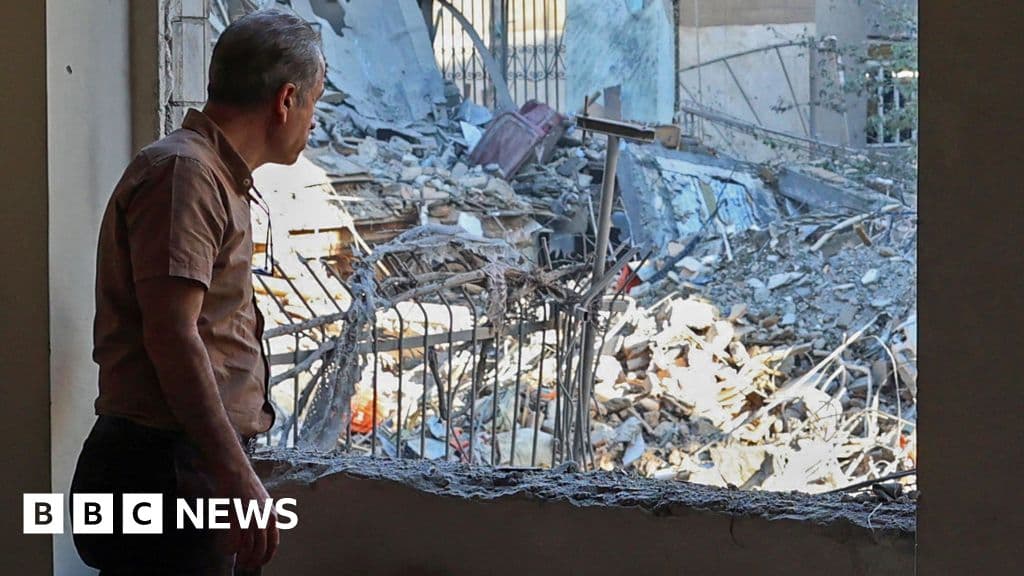
Fragile Iran ceasefire threatened as Israel strikes Lebanon
Left says
- •The ceasefire provides crucial respite for civilians who have endured weeks of devastating attacks across the Middle East
- •Israel's continued bombing of Lebanon violates the spirit of the agreement and threatens to derail peace negotiations
- •Iran's closure of the Strait of Hormuz represents a defensive response to Israeli aggression rather than unprovoked escalation
- •The fragile nature of this truce highlights the urgent need for comprehensive diplomatic engagement to prevent further civilian casualties
Right says
- •The ceasefire demonstrates American military strength forcing Iran to negotiate from a position of weakness
- •Israel's strikes on Hezbollah in Lebanon are justified self-defense operations separate from the Iran agreement
- •Iran's immediate closure of the Strait of Hormuz proves the regime cannot be trusted to honor international agreements
- •Trump's decisive negotiating tactics and threats of overwhelming force brought Iran to the table
Common Take
High Consensus- The ceasefire between the U.S. and Iran is extremely fragile and could collapse at any moment
- Israel has launched major strikes against Hezbollah in Lebanon following the ceasefire announcement
- Iran has closed the Strait of Hormuz again in response to Israeli actions in Lebanon
- Vice President J.D. Vance is traveling to Pakistan for negotiations with Iranian representatives
The Arguments
Left argues
The ceasefire provides desperately needed relief for civilians who have endured weeks of devastating attacks, and Israel's immediate bombing of Lebanon without warning violates the spirit of peace negotiations by escalating violence just hours after the agreement.
Right counters
Israel's strikes on Hezbollah in Lebanon are legitimate self-defense operations that were explicitly excluded from the Iran ceasefire agreement, as confirmed by President Trump who stated Lebanon 'was not included in the deal' due to Hezbollah's terrorist activities.
Right argues
Iran's immediate closure of the Strait of Hormuz after agreeing to the ceasefire demonstrates the regime's fundamental untrustworthiness and proves they cannot be relied upon to honor international agreements even for 24 hours.
Left counters
Iran's closure of the strait represents a defensive response to Israeli escalation in Lebanon, which Iran reasonably views as connected to the broader regional conflict, especially given Hezbollah's role as an Iranian proxy.
Right argues
Trump's decisive negotiating tactics, including threats of overwhelming force against Iranian civilization, successfully brought Iran to the negotiating table from a position of weakness after proving 'utterly incapable of defending itself' against American military power.
Left counters
The fragile nature of this agreement, with both sides claiming victory and immediate violations occurring, suggests the negotiations were rushed and superficial rather than addressing underlying regional tensions that require comprehensive diplomatic engagement.
Left argues
The confusion over whether Lebanon is included in the ceasefire highlights the urgent need for clear, comprehensive diplomatic frameworks rather than piecemeal military solutions that leave critical regional conflicts unresolved.
Right counters
The separation of the Iran ceasefire from Israeli operations against Hezbollah reflects strategic clarity that prevents terrorist organizations from using broader diplomatic agreements as shields for their continued attacks on Israeli civilians.
Challenge Questions
These questions target genuine internal contradictions — meant to provoke honest reflection.
Right asks Left
“If Iran's closure of the Strait of Hormuz is truly a 'defensive response' to Israeli actions in Lebanon, how can you simultaneously argue that this ceasefire provides meaningful relief for civilians when Iran is willing to disrupt global oil supplies and escalate tensions within hours of signing the agreement?”
Left asks Right
“If Trump's threats and military pressure were so effective at bringing Iran to negotiate, why did the resulting agreement immediately begin falling apart with both sides claiming victory and Iran resuming hostile actions - doesn't this suggest the 'decisive' approach actually produced an unstable and superficial deal?”
Outlier Report
Left Fringe
Progressive Squad members like Alexandria Ocasio-Cortez and Rashida Tlaib, along with anti-war activists like CodePink's Medea Benjamin, who frame any Israeli military action as unjustified aggression regardless of context. They represent roughly 15-20% of the left coalition.
Right Fringe
Hardline figures like Senator Tom Cotton and commentators like Mark Levin who advocate for immediate massive military escalation against Iran and complete destruction of Iranian military capabilities. They represent about 25-30% of the right coalition.
Noise Assessment
Moderate noise level - while partisan media amplifies extreme positions, the core disagreement about trusting Iran and supporting Israel reflects genuine public opinion divisions rather than manufactured controversy.
Sources (7)
Whether or not a lasting peace deal can be reached, the war and its consequences are reshaping the Middle East, writes international editor Jeremy Bowen.
With a fragile ceasefire between the U.S. and Iran in place, Israel launched its biggest attacks yet against Iran-backed Hezbollah in Lebanon. Iran says Lebanon is part of the ceasefire, while the U.S. and Israel say it is not. The White House announced Vice President J.D. Vance will travel to Pakistan for negotiations with Iran. NBC News’ Gabe Gutierrez reports.
For the first time in more than five weeks, the U.S. did not launch widespread attacks on Iran, and Iran did not strike American targets. Even as the ceasefire between the two nations largely holds, it's being tested by what appears to be Iran's ongoing chokehold of the Strait of Hormuz, as well as Israel's war in Lebanon. Nick Schifrin reports.
White House Correspondent Liz Landers spoke with President Trump on the phone Wednesday morning. She asked him about Israel's ongoing strikes on Lebanon and how that impacts the ceasefire between the U.S. and Iran.
Confusion and tension are growing around the fragile ceasefire between the U.S. and Iran amid Israel's ongoing strikes in Lebanon. Geoff Bennett discussed more with special correspondents Reza Sayah in Tehran and Simona Foltyn in Beirut.
For additional perspective on the ceasefire in Iran and the latest developments, Geoff Bennett spoke with Barbara Leaf and Michael Doran. Leaf was assistant secretary of state for Near Eastern Affairs during the Biden administration. Doran was senior director for the Middle East on the National Security Council during the George W. Bush administration.
A ceasefire deal to pause the war in Iran appears to be hanging by a thread after the Islamic Republic closed the Strait of Hormuz again in response to Israeli attacks in Lebanon.