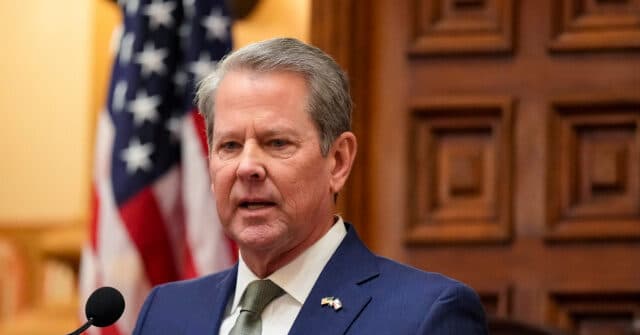
Georgia GOP Calls Special Session to Redraw Maps After Voting Rights Ruling
Left says
- •The Supreme Court's Louisiana v. Callais decision effectively dismantles key protections of the Voting Rights Act, diluting Black and minority voting power across the South
- •Republicans are rushing to redraw maps while they still control state governments, potentially eliminating representation for communities of color who have historically been disenfranchised
- •The timing ensures new gerrymandered maps will be locked in under Republican control before potential Democratic victories in upcoming elections
- •This represents part of a broader extreme movement to strip representation away from millions of Americans to maintain political power
Right says
- •The Supreme Court correctly ruled that race-based redistricting violates the Constitution, as the Voting Rights Act was designed to enforce constitutional principles, not contradict them
- •Georgia is following proper legal procedures by calling a special session to comply with the Supreme Court's decision and create constitutionally compliant districts
- •The redistricting will end racial gerrymandering and provide Georgians with fair electoral maps that don't illegally prioritize race over other factors
- •Republicans are acting responsibly by addressing this issue now rather than creating confusion closer to the 2028 elections
Common Take
High Consensus- Governor Brian Kemp has called a special legislative session for June 17, 2026 to redraw Georgia's congressional and legislative districts
- The redistricting is in response to the Supreme Court's April 2026 decision in Louisiana v. Callais
- The new maps will take effect for the 2028 election cycle, not the current 2026 elections
- The special session will address both redistricting and technical issues with Georgia's election code that have a July 1 deadline
The Arguments
Right argues
The Supreme Court correctly ruled that race-based redistricting violates the Constitution's Equal Protection Clause, and Georgia is simply following proper legal procedures to comply with this decision by creating constitutionally compliant districts.
Left counters
The Court's decision effectively dismantles core protections of the Voting Rights Act that were specifically designed to prevent the disenfranchisement of Black voters who faced centuries of systematic exclusion from political representation.
Left argues
Republicans are rushing to lock in gerrymandered maps while they still control state government, potentially eliminating representation for communities of color before potential Democratic victories in upcoming elections.
Right counters
Acting now provides legal certainty and avoids electoral confusion closer to 2028, while ensuring that any new maps are drawn according to constitutional principles rather than partisan considerations that might arise under different leadership.
Right argues
The new redistricting will end illegal racial gerrymandering and provide Georgians with fair electoral maps that don't unconstitutionally prioritize race over other legitimate redistricting factors like geography and communities of interest.
Left counters
Without race-conscious redistricting protections, minority communities that have been historically disenfranchised will see their voting power systematically diluted through maps that appear neutral but effectively exclude their voices from representation.
Left argues
This represents part of a broader movement to strip representation away from millions of Americans, with Republicans across the South simultaneously moving to redraw maps in ways that will reduce minority political power.
Right counters
Multiple states are responding to the same Supreme Court ruling requiring constitutional compliance, and characterizing legal adherence to constitutional principles as a coordinated attack misrepresents legitimate efforts to follow the law.
Challenge Questions
These questions target genuine internal contradictions — meant to provoke honest reflection.
Right asks Left
“If the Voting Rights Act was designed to enforce constitutional principles as you claim it should, how do you reconcile supporting race-conscious redistricting when the Supreme Court has determined that such practices violate the Equal Protection Clause of the Constitution itself?”
Left asks Right
“If this redistricting effort is truly about constitutional compliance rather than partisan advantage, why is the timing specifically designed to ensure Republican control over the process rather than allowing the democratically elected government after 2026 to handle redistricting?”
Outlier Report
Left Fringe
Progressive activists like Stacey Abrams and organizations like Fair Fight who frame this as part of a broader 'Jim Crow 2.0' narrative, representing about 15-20% of the left with the most inflammatory rhetoric about voter suppression and white supremacy.
Right Fringe
Constitutional hardliners like some members of the House Freedom Caucus who celebrate this as completely eliminating race as any factor in redistricting, representing about 10-15% of the right with the most aggressive anti-VRA positions.
Noise Assessment
Moderate noise level - this is a genuine policy debate with real electoral consequences, though both sides amplify the stakes beyond what most voters experience day-to-day.
Sources (7)
<p>Georgia Gov. Brian Kemp (R) called for lawmakers in the state to gather for a special session in June in order to redraw the state's congressional map ahead of the 2028 election.</p> <p>The post <a href="https://www.breitbart.com/politics/2026/05/13/brian-kemp-calls-for-special-session-to-redraw-georgia-congressional-map/" rel="nofollow">Brian Kemp Calls for Special Session to Redraw Georgia Congressional Map</a> appeared first on <a href="https://www.breitbart.com" rel="nofollow">Breitbart</a>.</p>
Georgia Republican Gov. Brian Kemp on Wednesday called a special session to redraw the state’s congressional and legislative districts before the 2028 elections. Kemp signed a proclamation convening the General Assembly on June 17 to address redistricting after a recent U.S. Supreme Court ruling ended race-based gerrymandering. The news, first reported by The Atlanta Journal-Constitution, ...
Kemp signed a proclamation that calls a special session of the Georgia General Assembly for June 17 to address the Supreme Court's historic ruling that is expected to require changes to the state's electoral maps before the 2028 elections.
Gov. Brian Kemp, a Republican, also asked lawmakers to delay changes to the state’s election system that could cause disarray in the midterms.
<p>Brian Kemp’s move makes Georgia latest southern state to initiate map-making after dismantling of Voting Rights Act</p><p>The Republican governor of Georgia called a special session for next month to redraw electoral maps, the latest southern state to initiate new map-making after the US supreme court’s <a href="https://www.theguardian.com/us-news/2026/apr/29/supreme-court-louisiana-congressional-map-case-ruling">dismantling of the Voting Rights Act</a>.</p><p>Brian Kemp <a href="https://acrobat.adobe.com/id/urn:aaid:sc:US:4df9c04d-a145-4869-8386-1e86eb543dd5?viewer%21megaVerb=group-discover">announced</a> the special session, which will start on 17 June, on Wednesday. It will focus on “enacting, revising, repealing, or amending” district lines for the state legislature and congressional district, in light of the supreme court’s decision in Louisiana v Callais.</p> <a href="https://www.theguardian.com/us-news/2026/may/13/georgia-brian-kemp-electoral-maps-session">Continue reading...</a>
Georgia Gov. Brian Kemp (R) on Wednesday called for a special legislative session for lawmakers to redraw the state’s maps ahead of the 2028 elections. Kemp’s proclamation called on lawmakers to reconvene on June 17 to “consider enacting, revising, repealing, or amending general law for the division of the State into appropriate districts” following the…