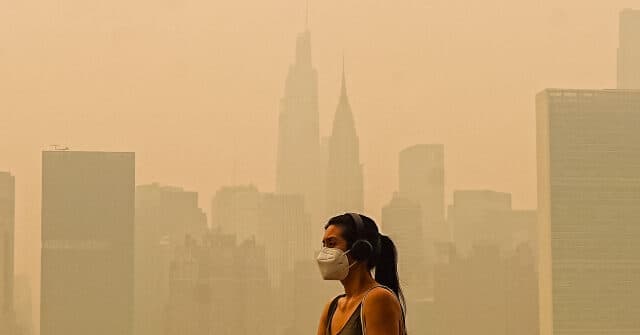
GOP Blames Canada's 'Climate Policy' as Wildfire Smoke Chokes US Cities
Left says
- •Wildfires intensifying across Canada reflect broader climate change patterns of hotter, drier conditions that fuel larger and more frequent blazes, a global phenomenon not unique to Canadian policy.
- •Blaming Canada's climate policy oversimplifies a complex crisis involving drought, heat, and forest ecology, and distracts from addressing the root causes of a warming planet.
- •Threatening sanctions or diplomatic penalties against a close ally over a natural disaster risks damaging U.S.-Canada relations and ignores the First Nations communities suffering the most direct harm from these fires.
- •Carney's call for shared responsibility on climate change reflects the reality that emissions from all countries, including the U.S., contribute to the conditions worsening wildfire seasons.
Right says
- •Canada's shift away from active forest management, including reduced controlled burns and clearing of dead timber, has allowed fuel loads to build up and made wildfires larger and more destructive.
- •Millions of Americans across the Midwest and Northeast are suffering serious health and economic consequences from smoke that originates entirely outside U.S. borders and U.S. control.
- •Canadian officials deflecting blame onto abstract 'climate change' rather than addressing forest management failures and lack of a national fire response agency is an inadequate response to a recurring, worsening crisis.
- •Concrete accountability measures, such as sanctions legislation, are a legitimate response when a foreign government's policy choices repeatedly harm American citizens' health and livelihoods.
Common Take
High Consensus- Wildfire smoke from Canada has caused hazardous, in some cases record-setting, air quality across major U.S. cities including Chicago, Detroit, Cleveland, and Washington, D.C.
- The smoke has caused real economic harm, particularly to tourism-dependent regions like northern Michigan during peak summer season.
- First Nations and other Canadian communities near the fires have suffered direct losses, including homes and property destroyed.
- This is a recurring, multi-year problem that both sides agree needs a more effective response than has been provided so far.
The Arguments
Right argues
Canada's retreat from active forest management—fewer controlled burns, less clearing of dead timber and fuel loads—has allowed wildfires to grow larger and more destructive than they would be under proper stewardship, a policy failure distinct from global climate trends.
Left counters
Forest management practices haven't changed fast enough to explain the sudden intensification of fire seasons; the underlying driver is record heat and drought linked to climate change, which is transforming forests into tinderboxes regardless of management regime.
Left argues
Blaming a single country's domestic policy for what is fundamentally a global, multi-causal phenomenon—drought, heat, forest ecology, and emissions from every industrialized nation including the U.S.—oversimplifies the crisis and distracts from the shared work of reducing emissions.
Right counters
Acknowledging climate change as a background condition doesn't excuse Canada from the concrete, controllable choices it has made—like abandoning prescribed burns and lacking any national fire response agency—that determine whether a fire stays small or becomes a smoke-generating megafire.
Right argues
Tens of millions of Americans have suffered genuine, measurable harm—hazardous air quality, canceled travel, economic losses, and health emergencies—from smoke that originated entirely outside U.S. borders, giving American lawmakers legitimate standing to demand accountability from a foreign government.
Left counters
Threatening sanctions or stripping diplomatic privileges from officials of a close ally over a natural disaster is a disproportionate and diplomatically reckless response that risks real damage to U.S.-Canada relations while doing nothing to actually fight the fires.
Left argues
The First Nations communities losing homes and entire towns to these fires are the ones suffering the most direct and severe harm, yet they're largely absent from a U.S. political debate focused on smoke inconveniencing American cities rather than on the people actually losing everything.
Right counters
Highlighting Indigenous suffering actually strengthens the case against Ottawa's inaction—if the Canadian government won't adequately protect its own most vulnerable citizens through better forest management, that's further evidence of policy failure, not an argument for absolving it.
Right argues
Carney's response—framing the crisis purely as 'everyone's responsibility' on climate change—dodges direct questions about why Canada has no national fire management agency and has cut back on proven prevention methods used even by Indigenous peoples for centuries.
Left counters
Carney's point that emissions from all nations, including the U.S., contribute to worsening fire conditions isn't deflection—it's an accurate description of a transboundary problem that no amount of forest thinning alone can fully solve if the underlying climate keeps getting hotter and drier.
Challenge Questions
These questions target genuine internal contradictions — meant to provoke honest reflection.
Right asks Left
“If forest management practices are irrelevant and climate change is the sole driver, why have wildfire scientists and even some Canadian officials historically pointed to reduced prescribed burning and fuel buildup as specific, correctable factors in fire severity?”
Left asks Right
“If Republicans acknowledge that Canada's wildfires are worsened by hotter, drier conditions, how do sanctions targeting Canadian officials—rather than any U.S. investment in shared prevention or emissions reduction—actually address a problem the GOP itself frames as partly climatic?”
Outlier Report
Left Fringe
Some climate activists and figures like Bill McKibben might downplay any role of forest management entirely, framing it solely as climate change; this represents maybe 15-20% of the left.
Right Fringe
Commentators like Inez Stepman and outlets like RedState/Daily Signal pushing for tariffs or sanctions and dismissing climate change's role entirely represent a more aggressive faction, perhaps 25-30% of the right, with figures like Bernie Moreno pushing concrete legislative sanctions being a smaller, more activist subset.
Noise Assessment
High noise ratio - much of the sanctions rhetoric and diplomatic threats are performative political theater aimed at scoring points against Canada's Liberal government rather than reflecting broad public demand for sanctions, though the underlying frustration over air quality and health impacts is genuine and widely shared.
Sources (9)
<p>Canadian Prime Minister Mark Carney dismissed the possibility that his government could be doing more to contain the out-of-control wildfires ravaging Ontario this week and sending toxic smoke down to flood much of the American Midwest and Northeast, demanding the United States do more to fight alleged "climate change."</p> <p>The post <a href="https://www.breitbart.com/environment/2026/07/17/mark-carney-deflects-blame-on-canada-wildfire-failures-climate-change-is-everyones-responsibility/" rel="nofollow">Mark Carney Deflects Blame on Canada Wildfire Failures: ‘Climate Change Is Everyone’s Responsibility’</a> appeared first on <a href="https://www.breitbart.com" rel="nofollow">Breitbart</a>.</p>
<p>A U.S. Senator from Ohio has joined with Republican House members in neighboring Michigan in calling out Canada’s alleged forest mismanagement that has led to dozens of wildfires now blanketing the American Midwest and Northeast with toxic smoke.</p> <p>The post <a href="https://www.breitbart.com/environment/2026/07/17/gop-lawmakers-threaten-canada-with-sanctions-for-failing-to-prevent-wildfires-and-smoke-choking-the-u-s/" rel="nofollow">GOP Lawmakers Threaten Canada with Sanctions for Failing to Prevent Wildfires and Smoke Choking the U.S.</a> appeared first on <a href="https://www.breitbart.com" rel="nofollow">Breitbart</a>.</p>
Conditions are expected to last at least through Saturday, when a forecasted thunderstorm could clear the smoke from the skies.
<p>Recurring wildfire smoke raises questions about Canadian forest management.</p> The post <a href="https://legalinsurrection.com/2026/07/canadian-wildfire-smoke-spreads-across-u-s-triggering-air-quality-alerts/">Canadian Wildfire Smoke Spreads Across U.S., Triggering Air Quality Alerts</a> first appeared on <a href="https://legalinsurrection.com">Le·gal In·sur·rec·tion</a>.
Ohio Republican Sen. Bernie Moreno plans to introduce legislation to sanction Canada following wildfire smoke that has blanketed the Midwest and East Coast. Moreno's proposal comes as millions of Americans...
Canadian wildfire smoke pushed three U.S. cities atop a global worst air-quality ranking. Here’s how they compare.
Summer after summer is being marred by noxious fumes descending from Canada, and I have had enough. Sorry, I’m a little grumpy, but I can’t help it. The sky is yellow, my headache won’t go away, I haven’t been outside in days, and the reason is that our snooty, supposedly climate-conscious neighbor up north can’t...
Sen. Bernie Moreno (R-Ohio), a close Trump ally, announced Thursday that he will introduce legislation to sanction Canada and Canadian officials over the huge wildfires that have poured smoke and haze across the United States, creating hazardous air-quality conditions. “I’ll be introducing a bill next week to sanction Canada and the responsible Canadian government officials…