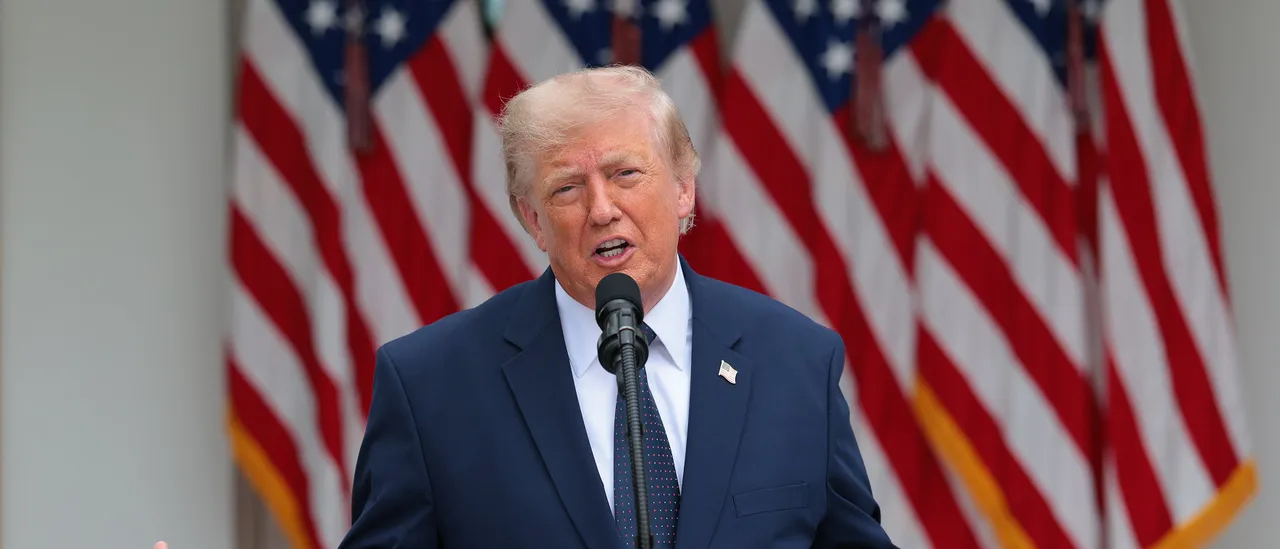
GOP Fractures Over SAVE America Act Voter ID Rider
Intra-Party Split Detected
Several Republicans (Roy, Massie, Luna, Burchett, Crane, Hageman, Brecheen) opposed the NDAA over SAVE Act attachment strategy, while Senate GOP moderates like Murkowski, Collins, Murkowski, Tillis, and McConnell resisted attaching the SAVE America Act despite Trump's pressure campaign.
Left says
- •Requiring documentary proof of citizenship and photo ID to vote imposes real burdens on elderly, rural, low-income, and Native American voters who lack easy access to underlying documents or ID-issuing offices.
- •Attaching the SAVE America Act as a rider to must-pass legislation like defense funding or housing bills is seen as a coercive tactic to force through a policy that lacks standalone Senate support.
- •Restricting mail-in voting beyond narrow exceptions is viewed as disenfranchising working people, the disabled, and those who cannot easily travel to polling sites, not as a fix for any documented widespread fraud.
- •Progressive lawmakers argue the administration and congressional Republicans are prioritizing partisan election rules over urgent material needs like housing and worker support.
Right says
- •Requiring photo ID and proof of citizenship to vote is broadly popular, including among many independents, and is framed as basic common-sense protection for election integrity.
- •Trump and House allies argue Senate Republicans like Thune have failed to deliver despite repeated attempts, forcing supporters to escalate pressure and attach the measure to unrelated bills like defense authorization or anti-insider-trading legislation.
- •Senators such as Murkowski who cite implementation burdens in rural states are accused of using sympathetic hypotheticals to mask opposition rooted in broader disagreement with Trump rather than genuine logistical concern.
- •Conservative House members like Chip Roy and the Freedom Caucus see this as a rare trifecta moment that must be used decisively before momentum and majorities are lost, tying SAVE America to a broader 14-point legislative agenda.
Common Take
High Consensus- The SAVE America Act requires proof of citizenship to register to vote and photo ID to cast a ballot, with exceptions for military, disabled, ill, or traveling voters for mail-in ballots.
- The measure has repeatedly failed to secure the 60 votes needed to overcome a Senate filibuster despite passing the House multiple times in different forms.
- Republican senators including Collins, Murkowski, Tillis, and McConnell have joined Democrats in blocking the bill's attachment to other legislation.
- The fight over the SAVE America Act has delayed or complicated unrelated legislation, including a housing bill and defense authorization funding for military pay and family support.
The Arguments
Left argues
Requiring documentary proof of citizenship and photo ID creates genuine, disproportionate burdens on elderly, rural, low-income, and Native American voters, such as an Alaskan fisherman facing a $1,500 round-trip flight just to reach an election office.
Right counters
The bill explicitly includes exceptions for military service, disability, illness, and travel, and supporters argue implementation details like additional time or mobile registration units can address remote-access concerns without abandoning the core integrity requirements.
Right argues
Voter ID and proof-of-citizenship requirements poll extremely well, including with independents and many Democrats, making this a matter of enacting broadly popular, common-sense election safeguards rather than a fringe partisan project.
Left counters
Polling popularity of a slogan doesn't capture the real-world administrative burden of the specific implementation, and popularity alone doesn't justify attaching unrelated voting law to must-pass defense or housing legislation instead of debating it on its own merits.
Right argues
After Senate Republicans repeatedly failed to secure 60 votes for standalone passage, attaching SAVE America to NDAA, housing, and insider-trading bills was a legitimate escalation tactic to force a reluctant Senate majority to actually deliver on a long-promised priority.
Left counters
Using must-pass funding for troops or urgent housing relief as leverage for an unrelated voting policy is coercive governance that holds hostage unrelated priorities like military pay raises and housing assistance to extract votes the policy can't win on its own.
Left argues
Progressive lawmakers argue that spending political capital forcing through restrictive voting rules, while housing and worker-support legislation gets delayed or held hostage, reveals a prioritization of partisan election control over Americans' material needs.
Right counters
Republicans counter that election integrity is itself a foundational issue affecting the legitimacy of all other policymaking, and that Democrats' refusal to negotiate on modest ID requirements — not GOP tactics — is what has delayed unrelated bills.
Right argues
Chip Roy and the Freedom Caucus argue that a rare Republican trifecta creates a narrow window that must be used decisively, since majorities are historically short-lived and this may be the only chance to enact SAVE America and related priorities before momentum is lost.
Left counters
This urgency argument reveals the tactic's weakness: if a policy requires bypassing normal deliberation and attaching it to unrelated bills before public support erodes, that suggests the policy can't survive open debate on its own merits.
Challenge Questions
These questions target genuine internal contradictions — meant to provoke honest reflection.
Right asks Left
“If proof-of-citizenship and ID requirements are unconstitutional burdens on the groups you cite, why do many Democrat-led countries and even some blue states already require government-issued ID for voting or comparable civic functions without being called disenfranchising?”
Left asks Right
“If Senate Republicans like Thune, Tillis, Collins, Murkowski, and McConnell have repeatedly said the votes aren't there and cited genuine implementation concerns, at what point does continuing to attach SAVE America to unrelated must-pass bills stop being 'forcing action' and start being an admission that the policy cannot win a fair up-or-down vote?”
Outlier Report
Left Fringe
Rep. Pramila Jayapal and the Congressional Progressive Caucus, who frame the entire bill as illegitimate voter suppression tied to broader anti-worker priorities; this represents roughly 15-20% of the left, as most Democratic voters support some form of voter ID while opposing the rider tactics and stricter mail-in restrictions.
Right Fringe
Rep. Chip Roy, Rep. Anna Paulina Luna, and the House Freedom Caucus pushing to eliminate the filibuster and attach SAVE America to unrelated bills as a 'use it or lose it' trifecta strategy; this represents about 20-25% of the right, as many mainstream Republicans (including Sens. Murkowski, Collins, Tillis, McConnell) support the policy goal but object to the procedural brinksmanship.
Noise Assessment
High noise ratio—Trump's rally rhetoric, Truth Social posts, and the Federalist's attack on Murkowski amplify intra-GOP conflict far beyond how most Americans engage with this issue; most voters likely support ID/citizenship requirements in the abstract but are largely unaware of or indifferent to the specific legislative rider strategy and NDAA/housing bill entanglements.
Sources (6)
<img src="https://www.theblaze.com/media-library/house-narrowly-passes-save-america-act-as-rider-to-trillion-dollar-spending-bill.jpg?id=67522993&width=1245&height=700&coordinates=0%2C36%2C0%2C36" /><br /><br /><p>President Donald Trump was finally able to pass his SAVE America Act through the U.S. House, but it may not make it through the Senate.</p><p>The House narrowly <a href="https://thehill.com/homenews/house/5983971-house-passes-ndaa-defense-bill/" target="_blank">passed</a> a massive $1.15 trillion defense spending bill on a 216-212 vote with the SAVE America Act as a rider.</p><p class="pull-quote">'In an increasingly dangerous world, we are reminded of President Reagan's admonition that freedom is not passed along in the bloodstream.' </p><p>Six Democrats voted to pass the National Defense Authorization Act, and seven Republicans voted against it.</p><p>The bill will raise service member pay by 5% to 7%, increase education and child care availability for military families, and spend $1.8 billion for barracks and housing costs.</p><p>Republican Speaker Mike Johnson of Louisiana praised the bill by claiming it would "ensure America maintains the most lethal, most dynamic, most capable fighting force in the world."</p><p>Senate Democrats were able to block one version of the bill last week.</p><p>"In an increasingly dangerous world, we are reminded of President Reagan's admonition that freedom is not passed along in the bloodstream," Johnson continued. "It must be fought for and protected so the next generation may enjoy the same level of security and opportunity we have known. And that starts in Congress."</p><p> One sticking point in the bill was the expansion of collaboration between the Israel's defense forces and the U.S. military on weapons and intelligence development.</p><p>Progressive Rep. Pramila Jayapal (D-Wash.) excoriated the bill in a scathing statement.</p><p><strong>RELATED: </strong><a href="https://www.theblaze.com/news/ted-lieu-trump-terminal-disease" target="_blank"><strong>Trump team slams 'b***h' Democrat for floating bizarre conspiracy theory on housing bill delay</strong></a></p><p class="shortcode-media shortcode-media-youtube"> <span class="rm-shortcode" style="display: block; padding-top: 56.25%;"></span> </p><p>"Time and again we are seeing from this administration, and their Republican yes-men in Congress, that they simply do not care that working people are struggling," she said.</p><p>"I refuse to support that agenda and will continue working to stop this funding and actually invest in our people and our communities," she added.</p><p>If the bill is approved by the Senate, it will go to Trump's desk for approval.</p><p><em>Like Blaze News? Bypass the censors, sign up for our newsletters, and get stories like this direct to your inbox. </em><em><a href="https://www.theblaze.com/newsletters/theblaze-articlelink" target="_self">Sign up here</a></em><em>!</em></p>
‘I will not sign the Housing Bill’
President Donald Trump on Wednesday ramped up his pressure campaign against Senate Majority Leader John Thune (R-SD), urging supporters to flood his office with calls demanding action on the SAVE America Act. “We have to pass the SAVE America Act to defend American elections. And I have to say, Mike Johnson and Congress have done ...
The following is an excerpt of Daily Signal Politics Editor Bradley Devlin’s interview with Rep. Chip Roy, R-Texas, for “Signal Sitdown,” which premieres on the Daily Signal’s YouTube page at 6:30 a.m. EDT on July 23. This transcript has been edited for clarity. Bradley Devlin: You just came out with a letter outlining 14 different items...
<img alt="Sen. Lisa Murkowski, R-Alaska, explains her moderate lawmaking philosphy during an interview with CBS News." class="webfeedsFeaturedVisual wp-post-image" src="https://thefederalist.com/wp-content/uploads/2026/07/Screenshot-2026-07-20-at-8.38.57-PM-1200x675.png" style="display: block; margin: auto; margin-bottom: 5px;" />The Alaska Republican has turned her back on the critical election integrity bill. Again. But she's had help chloroforming the SAVE America Act.