Hantavirus Outbreak: Pandemic Panic or Reasonable Precaution?
Intra-Party Split Detected
Some left-leaning outlets criticize media alarmism while others focus on government preparedness failures
Left says
- •The Trump administration has dismantled pandemic preparedness infrastructure, leaving the country vulnerable to future outbreaks regardless of hantavirus specifics
- •Media coverage should focus on systemic public health failures rather than sensationalizing individual disease outbreaks
- •Ivermectin advocates are exploiting the situation to spread misinformation, echoing dangerous patterns from the COVID-19 pandemic
- •Public health authorities must adopt precautionary approaches and avoid overconfident pronouncements that could undermine trust if circumstances change
Right says
- •Media outlets are manufacturing pandemic hysteria over a routine disease that affects thousands annually without justification
- •The outbreak involves fewer than a dozen cases with established containment protocols already in place
- •Health officials are applying appropriate monitoring procedures without creating unnecessary public alarm
- •The situation demonstrates that existing disease surveillance systems are functioning effectively
Common Take
High Consensus- The hantavirus outbreak originated on the Dutch cruise ship MV Hondius with 11 confirmed cases and 3 deaths
- Patient zero was identified as a Dutch ornithologist who contracted the virus at an Argentinian landfill
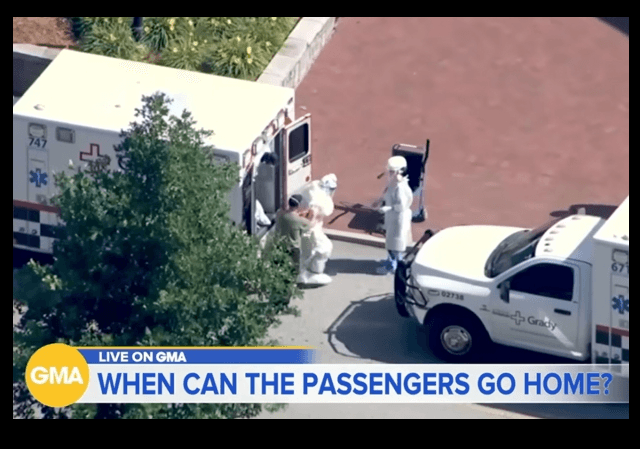
- American passengers from the cruise are being monitored in specialized medical facilities in Nebraska and Georgia
- The Andes strain of hantavirus has a high mortality rate and requires close contact for human-to-human transmission
The Arguments
Right argues
The hantavirus outbreak involves fewer than a dozen confirmed cases with established containment protocols already functioning effectively, demonstrating that existing disease surveillance systems are working as designed without requiring extraordinary measures.
Left counters
Public health authorities are making overconfident pronouncements about containment when the virus has a mortality rate as high as 50% and we're still learning about its transmission patterns, risking a repeat of early COVID-19 mistakes where premature reassurances undermined public trust.
Left argues
The Trump administration's systematic dismantling of pandemic preparedness infrastructure has left the country fundamentally vulnerable to any future outbreak, making this a critical test of our weakened public health capacity regardless of hantavirus specifics.
Right counters
Current monitoring and quarantine procedures for the cruise ship passengers are proceeding smoothly with proper isolation protocols at specialized medical centers, proving that existing systems can handle emerging threats without the need for expanded federal infrastructure.
Right argues
Media outlets are manufacturing pandemic hysteria over a routine disease that affects thousands annually, with hantavirus being a well-understood pathogen that requires close contact for transmission and poses minimal risk to the general population.
Left counters
The emergence of ivermectin misinformation campaigns and social media panic demonstrates how quickly false information spreads during health crises, requiring responsible media coverage that addresses systemic preparedness failures rather than dismissing legitimate public health concerns.
Left argues
Health authorities should adopt precautionary approaches given the virus's high mortality rate and uncertain transmission patterns, as the costs of early protective measures are modest compared to the profound consequences of delayed action during a high-consequence outbreak.
Right counters
The Andes strain requires prolonged close contact for transmission and has distinct characteristics that make large-scale outbreaks unlikely, with current control measures appropriately calibrated to the actual risk level rather than worst-case scenarios.
Left argues
This outbreak serves as a warning about our broader vulnerability to emerging pathogens, with the focus needing to shift from individual disease coverage to addressing the systematic destruction of pandemic preparedness capabilities that leaves us exposed to future threats.
Right counters
The successful identification, tracking, and quarantine of affected passengers across multiple countries demonstrates that international disease surveillance and response systems are functioning effectively without requiring additional panic-driven measures.
Challenge Questions
These questions target genuine internal contradictions — meant to provoke honest reflection.
Right asks Left
“If you argue that authorities shouldn't make overconfident pronouncements about hantavirus containment, how do you reconcile advocating for precautionary approaches while simultaneously criticizing media coverage as potentially alarmist - aren't you asking for both more caution and less public concern?”
Left asks Right
“If existing disease surveillance systems are working effectively as evidenced by the hantavirus response, how do you explain the need to characterize media coverage as 'manufacturing hysteria' rather than simply acknowledging that public interest in potential health threats is a natural and potentially beneficial response to emerging risks?”
Outlier Report
Left Fringe
Gregg Gonsalves and some progressive public health advocates who frame every health incident as evidence of Trump administration failures represent about 15-20% of the left. Their focus on systemic preparedness destruction resonates mainly with highly engaged progressive activists rather than mainstream Democratic voters.
Right Fringe
Marjorie Taylor Greene and ivermectin advocates like Mary Talley Bowden who promote unproven treatments and conspiracy theories about bioweapons represent roughly 10-15% of the right. Most conservatives prefer straightforward 'media overreaction' messaging without diving into alternative medicine claims.
Noise Assessment
Moderate noise level - while some figures are amplifying extreme positions, the core debate between 'reasonable monitoring' vs 'media hysteria' reflects genuine public sentiment rather than purely performative positioning.
Sources (7)
<p>Why is the media suddenly so interested in this disease, given that thousands of people are stricken with hantavirus annually?</p> The post <a href="https://legalinsurrection.com/2026/05/hantavirus-panic-or-precaution-u-s-monitoring-expands-beyond-cruise-cluster/">Hantavirus Panic or Precaution? U.S. Monitoring Expands Beyond Cruise Cluster</a> first appeared on <a href="https://legalinsurrection.com">Le·gal In·sur·rec·tion</a>.
The Dutch cruise ship incident probably isn’t the next pandemic. That doesn’t mean we’re risk-free from outbreaks
<p>Those who cheered ivermectin as a Covid-19 treatment are now making unsubstantiated claims about its use against hantavirus.</p> <p>The post <a href="https://theintercept.com/2026/05/08/hantavirus-cruise-ship-outbreak-ivermectin-covid/">Amid Hantavirus Panic, the Ivermectin Super Fans Are Back</a> appeared first on <a href="https://theintercept.com">The Intercept</a>.</p>
<p>Gregg Gonsalves</p> <div><img alt="" src="https://www.thenation.com/wp-content/uploads/2026/05/GettyImages-2275642076.jpg" /></div> <div> <div class="wp-block-the-nation-dek article-title__dek"> <p>The government’s destruction of our pandemic preparedness is.</p> </div> </div> <p>The post <a href="https://www.thenation.com/article/society/hantavirus-pandemic-preparedness/">The Hantavirus Isn’t the Biggest Threat We’re Facing</a> appeared first on <a href="https://www.thenation.com">The Nation</a>.</p>
Should you be worried about the hantavirus outbreak? Should you be afraid? Should you be panicking? Should you start freaking out? If you’ve been following the coverage of the hantavirus outbreak aboard the cruise ship MV Hondius, these are the questions you’ve seen posed in headlines. And a small tip from inside  the media: If […]
Almost as soon as the hantavirus outbreak on the cruise ship MV Hondius became international news, public health experts rushed to assuage the public: This is not Covid-19. Don’t worry — this is a virus that requires “close contact” to spread. The risk of a pandemic is quite low. But if this apparent certainty from […]