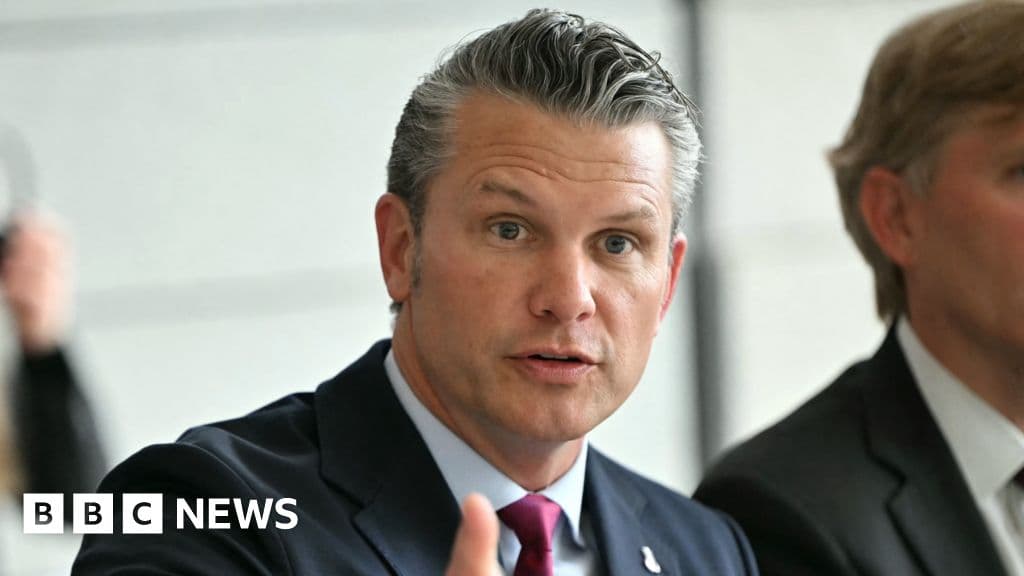
Hegseth Compares European Migration to Nazi Invasion on D-Day Anniversary
Left says
- •Hegseth's comparison of refugees and migrants to Nazi invaders fundamentally misrepresents the moral dynamics of D-Day, where Allied forces fought against fascist ideology
- •The speech inappropriately weaponizes a solemn commemoration of anti-fascist sacrifice to advance anti-immigrant rhetoric
- •European migration involves people fleeing persecution and seeking safety, not armed invaders seeking to conquer territory
- •The inflammatory language echoes dangerous far-right talking points that dehumanize vulnerable populations
Right says
- •European leaders have failed to adequately control mass migration that threatens national security and cultural stability
- •The freedom won by D-Day veterans is being squandered by policies that allow unchecked immigration across European borders
- •Current migration patterns represent a genuine threat to European sovereignty that requires decisive government action
- •Hegseth appropriately honored D-Day heroes by calling for vigilance against modern threats to Western civilization
Common Take
High Consensus- The D-Day landings represent a pivotal moment in defending freedom and democracy against tyranny
- European migration has become a significant political issue across the continent
- The speech was delivered at the Normandy American Cemetery during the 82nd anniversary commemoration
- Immigration policy remains a contentious topic requiring thoughtful leadership and solutions
The Arguments
Left argues
Comparing refugees fleeing persecution to Nazi invaders fundamentally inverts the moral framework of D-Day, where Allied forces fought against fascist ideology to protect vulnerable populations. This rhetoric dehumanizes asylum seekers and echoes the same dangerous language historically used to justify persecution of minorities.
Right counters
The comparison isn't about the people themselves but about the failure of European governments to control their borders and protect their sovereignty. Mass uncontrolled migration poses genuine security risks and threatens the democratic institutions that D-Day veterans died to preserve.
Right argues
European leaders have demonstrably failed to manage migration flows that strain public resources, create security vulnerabilities, and undermine social cohesion. The freedom won by D-Day heroes is being squandered by policies that prioritize global humanitarian concerns over the welfare and security of European citizens.
Left counters
Most European migration involves legal asylum processes and humanitarian obligations under international law. The real threat to democratic values comes from inflammatory rhetoric that scapegoats vulnerable populations rather than addressing root causes of displacement or investing in integration programs.
Left argues
Using a solemn commemoration of anti-fascist sacrifice to advance anti-immigrant rhetoric inappropriately weaponizes the memory of those who died fighting against the very ideologies that sought to exclude and persecute based on ethnicity and nationality. This dishonors the inclusive democratic values they fought to defend.
Right counters
Honoring D-Day veterans requires defending the Western civilization and democratic institutions they died to preserve. Warning about threats to European sovereignty and cultural stability is exactly the kind of vigilance needed to ensure their sacrifice wasn't in vain.
Right argues
Current migration patterns represent an unprecedented challenge to European sovereignty that requires decisive action to prevent the erosion of national identity and democratic governance. European capitals have grown complacent about defending the freedoms that previous generations fought to secure.
Left counters
Democratic societies are strengthened, not weakened, by their ability to provide refuge to those fleeing persecution. The real threat to democracy comes from abandoning humanitarian principles and constitutional protections in favor of exclusionary nationalism.
Challenge Questions
These questions target genuine internal contradictions — meant to provoke honest reflection.
Right asks Left
“If European migration policies are working effectively and pose no significant challenges, why have voters across multiple European democracies increasingly supported parties calling for stricter immigration controls, and how do you reconcile support for unlimited humanitarian obligations with democratic accountability to existing citizens?”
Left asks Right
“How can you claim to honor the legacy of soldiers who died fighting fascism while simultaneously using their sacrifice to justify rhetoric that dehumanizes vulnerable populations seeking refuge, and what distinguishes your 'invasion' language from the exclusionary nationalism that Allied forces fought against?”
Outlier Report
Left Fringe
Progressive commentators like those at Mother Jones who explicitly compared Hegseth's position to Nazi ideology represent about 15% of the left. Most mainstream Democrats would criticize the rhetoric without making such extreme historical parallels.
Right Fringe
Hard-right figures like those at PJ Media who frame this as defending 'Western civilization' against 'civilizational erasure' represent about 20% of the right. Most mainstream conservatives would support the immigration message without the more apocalyptic framing.
Noise Assessment
Moderate noise level - the D-Day anniversary timing amplified coverage, but the core immigration debate reflects genuine public divisions rather than manufactured controversy.
Sources (10)
The US defence secretary was speaking in Normandy, 82 years after allied forces launched their operation to liberate Nazi-occupied north-western Europe.
Hegseth's speech echoed broader Trump administration rhetoric over border security and migration in Europe.
“Different European beaches are stormed by dangerous ideologies,” Hegseth said during the address, questioning whether European capitals would act before it was “too late.”
In a perplexing speech Saturday commemorating the World War II D-Day landings in Normandy, France, Secretary of Defense Pete Hegseth called for European leaders to combat what he implied was a second, modern D-Day—in which European countries were being “stormed by different dangerous ideologies” accompanied by “boats and men.” The original D-Day was the Allied […]
“Beaches in Spain and Italy and Greece and Bulgaria. Boats and men arrive,” Hegseth said.
U.S. Defense Secretary Pete Hegseth used a D-Day anniversary speech on Saturday to appear to link immigration by sea to the wartime liberation of Europe, warning that the freedom won by Allied troops could prove temporary if leaders failed to defend it.
How did standards for military leaders fall so low?
America’s armed forces are supremely capable and roiled by infighting
Defense Secretary Pete Hegseth urged European leaders on Saturday to remain vigilant against the threat of what he described as “dangerous ideologies” coming to the continent, invoking the lessons of D-Day to warn about modern-day immigration.    “In the years since these beaches, much of the West, in some places, in some quarters, and in…