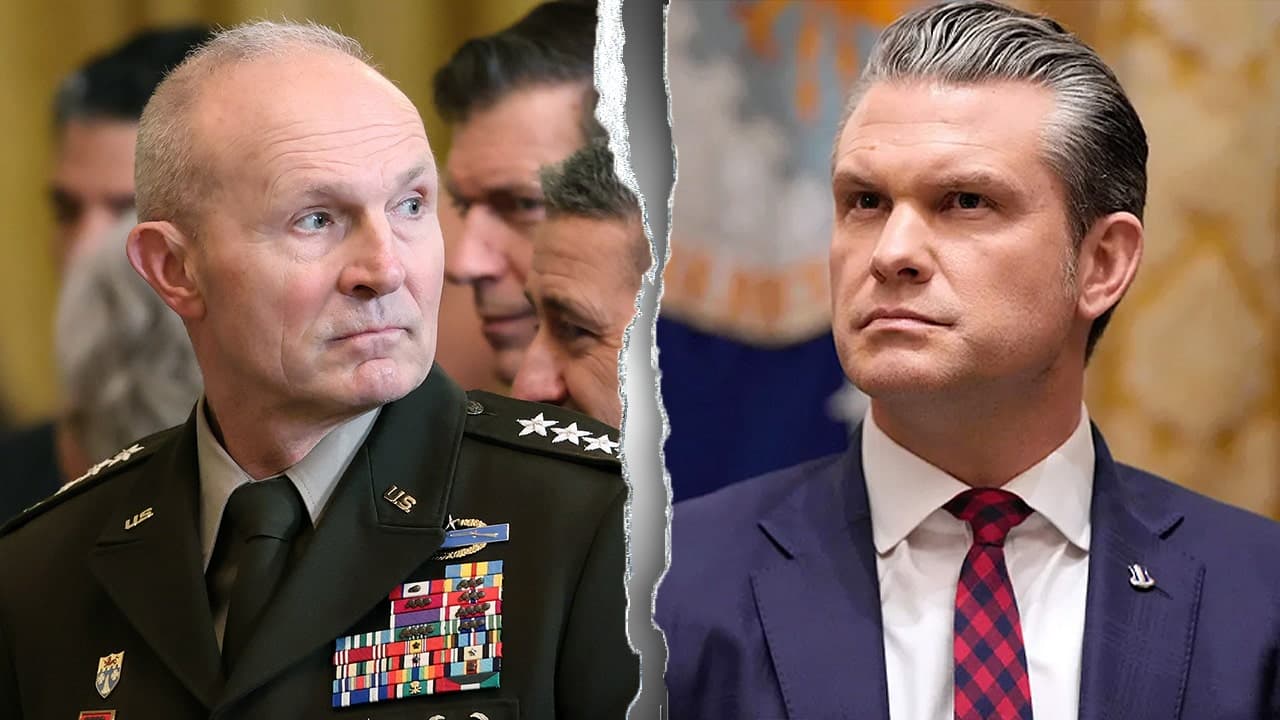
Hegseth forces out Army chief during Iran war amid Pentagon shakeup
Left says
- •Hegseth's removal of George represents dangerous politicization of military leadership during active combat operations against Iran
- •The firing continues a troubling pattern of over a dozen dismissals of experienced senior officers, potentially weakening military readiness
- •George's previous service as Lloyd Austin's military assistant appears to have made him a target in ideological purges rather than performance-based decisions
- •The timing undermines military stability when experienced leadership is most critical for ongoing war operations
Right says
- •Hegseth is implementing necessary leadership changes to modernize the Army and remove officers resistant to his reform agenda
- •George's close ties to the previous administration's policies made fresh leadership essential for military transformation
- •The changes reflect Hegseth's commitment to merit-based promotion and removing institutional barriers to effective military operations
- •New leadership is needed to break from failed policies and ensure the Army adapts to 21st-century warfare requirements
Common Take
High Consensus- Gen. Randy George was nominated by Biden in 2023 and had been expected to serve through 2027
- The removal occurred during active U.S. military operations against Iran
- George previously served as senior military assistant to Defense Secretary Lloyd Austin from 2021-2022
- Hegseth has removed more than a dozen senior military officers since taking office
The Arguments
Left argues
Removing experienced military leadership during active combat operations against Iran creates dangerous instability and weakens military readiness when continuity of command is most critical. George's dismissal appears to be based on his previous association with Lloyd Austin rather than performance, representing a troubling politicization of military leadership.
Right counters
Military effectiveness requires leaders aligned with current strategic priorities, not those wedded to failed policies of previous administrations. Fresh leadership can better adapt to evolving combat requirements and implement necessary reforms without institutional resistance.
Right argues
Hegseth's leadership changes reflect a merit-based approach to modernizing the Army and removing institutional barriers that prevent effective 21st-century warfare capabilities. The dismissals target officers resistant to necessary reforms, not political affiliations.
Left counters
Over a dozen dismissals of senior officers suggests systematic purging based on ideology rather than performance, as no specific performance failures have been cited for George or other removed officers. This pattern undermines military professionalism and institutional knowledge.
Left argues
The timing of these dismissals during wartime operations demonstrates poor judgment that prioritizes political loyalty over military expertise and operational continuity. George's extensive combat experience in Iraq and Afghanistan represents valuable institutional knowledge being lost.
Right counters
Wartime actually demands the most effective leadership possible, making it the optimal time to replace underperforming or misaligned officers with those better suited to current operational needs and strategic objectives.
Right argues
Breaking from previous administration policies requires new leadership untainted by failed approaches, and George's close ties to Austin's tenure made him unsuitable for implementing necessary military transformation. Leadership changes ensure the Army can adapt to current threats effectively.
Left counters
Military leadership should be evaluated on professional competence and operational effectiveness, not political associations with previous administrations. This approach risks creating a precedent where military careers depend on political alignment rather than merit.
Challenge Questions
These questions target genuine internal contradictions — meant to provoke honest reflection.
Right asks Left
“If military effectiveness and readiness are your primary concerns, how do you reconcile supporting retention of leaders who may be genuinely resistant to necessary reforms or whose strategic approaches have proven inadequate for current threats?”
Left asks Right
“If merit-based leadership is truly your goal, why haven't specific performance deficiencies been cited for George and other dismissed officers, and how does removing over a dozen senior officers simultaneously serve military effectiveness rather than political objectives?”
Outlier Report
Left Fringe
Progressive anti-war activists like CodePink's Medea Benjamin and some Squad members may use this to call for broader military leadership overhauls or question the Iran war itself, representing roughly 15% of the left coalition.
Right Fringe
MAGA hardliners like Steve Bannon and some America First commentators may celebrate this as necessary 'deep state' purging regardless of military readiness concerns, representing about 25% of the right coalition.
Noise Assessment
Moderate noise level - while partisan media amplifies the story significantly, the core issue of military leadership stability during wartime resonates with genuine public concerns about national security effectiveness.
Sources (8)
Gen. Randy George was asked to retire immediately as Army chief of staff after War Secretary Pete Hegseth asked him to step down in a leadership shakeup, officials say.
Pete Hegseth forces out Army's top officer
Pentagon chief Pete Hegseth has asked U.S. Army Chief of Staff Randy George to step down and take immediate retirement, CBS News reported on Thursday, citing sources familiar with the decision.
The ouster of Gen. Randy George is just the latest of more than a dozen firings of top generals and admirals by Defense Secretary Pete Hegseth since he first took office last year.
<p>Pentagon announces Randy George retiring from role as US army chief of staff, ‘effective immediately’</p><ul><li><p><a href="https://www.theguardian.com/news/2026/feb/17/sign-up-for-the-breaking-news-us-email-to-get-newsletter-alerts-direct-to-your-inbox?utm_medium=ACQUISITIONS_STANDFIRST&utm_campaign=BN22326&utm_content=signup&utm_term=standfirst&utm_source=GUARDIAN_WEB">Sign up for the Breaking News US email to get newsletter alerts in your inbox</a></p></li></ul><p>Randy George, the US army’s top officer, is stepping down from his role after the defense secretary, <a href="https://www.theguardian.com/us-news/pete-hegseth">Pete Hegseth</a>, reportedly requested that he retire immediately. The Pentagon confirmed on Thursday that George, who had been serving as the army’s 41st chief of staff, was retiring.</p><p>“General Randy A George will be retiring from his position as the 41st Chief of Staff of the Army effective immediately. The Department of War is grateful for General George’s decades of service to our nation. We wish him well in his retirement,” Pentagon chief spokesperson Sean Parnell said in <a href="https://x.com/SeanParnellASW/status/2039812664902271107">a statement</a> shared on social media.</p> <a href="https://www.theguardian.com/us-news/2026/apr/02/randy-george-pete-hegseth-us-army">Continue reading...</a>
Defense Secretary Pete Hegseth asked the Army’s chief of staff, Gen. Randy George, to step down from the post and retire immediately, a Pentagon official told The Hill on Thursday.  The Army did not immediately respond to The Hill’s request for comment.  The Pentagon confirmed George’s retirement, who served as the Army’s 41st chief of…
Gen. Randy George’s ouster is the latest clash between the Pentagon chief and the service’s senior leadership, and comes during the war in Iran.