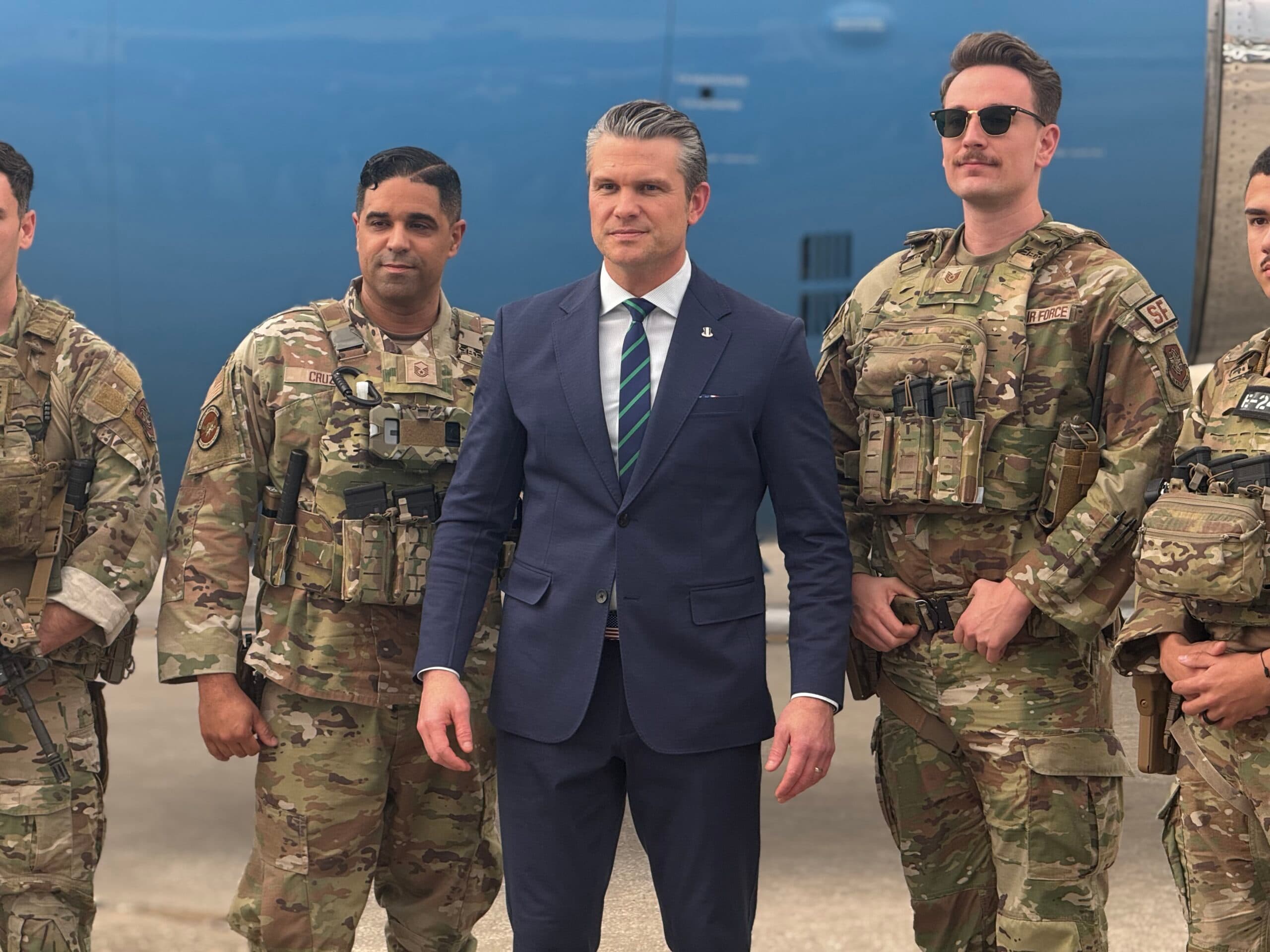
 Pete Hegseth poses with military personnel in combat gear
Hegseth Promises Iran War Won't Become Nation-Building Despite Mixed Messaging
Intra-Party Split Detected
Conservative sources show tension between supporting Trump's war while criticizing inconsistent messaging and lack of clear objectives
Left says
- •The administration's contradictory messaging about war objectives undermines democratic accountability and public trust in military decision-making
- •Comparisons to 'Shock and Awe' and acknowledgments of potentially protracted conflict directly contradict promises of limited engagement
- •The lack of clear exit strategy and shifting timelines echo the same mission creep that led to decades-long occupations in Iraq and Afghanistan
- •Military action without transparent goals and consistent communication violates the public's right to understand what their government is doing in their name
Right says
- •Trump's administration learned from past mistakes and is committed to avoiding the nation-building quagmires that characterized previous Republican and Democratic wars
- •The President maintains control over mission scope and can adjust tactics while keeping the core objective focused and time-limited
- •Swift military action with clear boundaries prevents the kind of endless commitments that drain American resources and lives
- •Refusing to accept refugees from the conflict demonstrates commitment to putting American interests first and avoiding the complications that followed previous Middle East interventions
Common Take
High Consensus- The Iran war has been ongoing for more than a week with significant air power deployment
- There are legitimate concerns about mission creep and avoiding prolonged military engagement
- The administration's messaging about war objectives and timeline has been inconsistent
- Past nation-building efforts in Iraq and Afghanistan created problems that should be avoided
The Arguments
Left argues
The administration's contradictory messaging—promising limited engagement while comparing operations to 'Shock and Awe' and acknowledging potentially protracted conflict—fundamentally undermines democratic accountability and creates the exact conditions that led to mission creep in Iraq and Afghanistan.
Right counters
Swift, decisive military action requires tactical flexibility, and the President maintains ultimate control over mission scope while learning from past mistakes to avoid the open-ended commitments that characterized previous administrations' nation-building efforts.
Right argues
Trump's explicit commitment to avoiding refugee resettlement and rejecting nation-building demonstrates a fundamental break from past interventions, keeping American interests first while preventing the domestic complications that followed previous Middle East wars.
Left counters
Refusing to plan for humanitarian consequences while launching military action without clear objectives or exit strategies repeats the same strategic failures that created refugee crises in the first place, just with less accountability.
Left argues
The shifting timelines—from 'very complete' to 'four to five weeks' to potentially September—combined with demands for 'unconditional surrender' reveal the same lack of coherent strategy that turned limited interventions into decades-long occupations.
Right counters
Military operations require adaptability to changing conditions, and maintaining strategic ambiguity while keeping core objectives focused prevents enemies from exploiting predictable timelines and demonstrates presidential control over mission scope.
Right argues
This administration learned from the failures of both Republican and Democratic predecessors by establishing clear boundaries against regime change and nation-building from the outset, preventing the gradual expansion of mission objectives that characterized previous wars.
Left counters
The regime has already changed and officials acknowledge they're 'not happy' with the new leadership, proving that mission boundaries are already being violated despite promises, exactly as happened in Iraq when limited objectives expanded into full occupation.
Left argues
Without transparent communication about war objectives and consistent messaging, the public cannot provide informed democratic oversight of military action, violating the fundamental principle that citizens must understand what their government does in their name.
Right counters
Operational security and strategic flexibility require some ambiguity in public messaging, while the elected President maintains constitutional authority over military decisions and can adjust tactics while preserving core commitments to avoid endless wars.
Challenge Questions
These questions target genuine internal contradictions — meant to provoke honest reflection.
Right asks Left
“If democratic accountability requires complete transparency about military objectives and timelines, how do you reconcile this demand with the operational security needs that protect American forces and the strategic ambiguity that can prevent enemies from exploiting predictable plans?”
Left asks Right
“If the administration has truly learned from past mistakes and established clear boundaries against nation-building, how do you explain the regime change that has already occurred and the stated dissatisfaction with new Iranian leadership—isn't this exactly how mission creep began in Iraq?”
Outlier Report
Left Fringe
Unable to identify specific left-wing figures from provided sources, as coverage comes exclusively from center and right-leaning outlets with no left-wing commentary or opposition statements included.
Right Fringe
The Federalist's editorial stance represents approximately 15-20% of the right - the anti-interventionist, 'America First' faction that supported Trump's 2016 campaign promises to end forever wars, now criticizing inconsistent war messaging despite supporting the administration.
Noise Assessment
Moderate noise level - The Federalist's detailed criticism suggests genuine policy concerns rather than performative opposition, though the refugee-focused article may amplify cultural anxieties beyond immediate war policy debates.
Sources (4)
Secretary of War Pete Hegseth promised Tuesday that the Iran war "is not 2003" and will not look like another nation-building, regime-change war like in Iraq. Giving an update ten days into the war, Hegseth was joined by Chairman of the Joint Chiefs of Staff Gen. Dan Caine at the Pentagon...
<img alt="hegseth iran war" class="webfeedsFeaturedVisual wp-post-image" src="https://thefederalist.com/wp-content/uploads/2026/03/IMG_8262-1200x675.jpeg" style="display: block; margin: auto; margin-bottom: 5px;" />Both Caine and Hegseth suggested the U.S. would probably help oil vessels safely through the Strait of Hormuz if the need arose.
<img alt="F16" class="webfeedsFeaturedVisual wp-post-image" src="https://thefederalist.com/wp-content/uploads/2026/03/F16-1200x675.jpeg" style="display: block; margin: auto; margin-bottom: 5px;" />We’re more than a week into the Iran war and yet we have no clear or consistent objectives, no theory of victory.
<img alt="Secretary of War Pete Hegseth" class="webfeedsFeaturedVisual wp-post-image" src="https://thefederalist.com/wp-content/uploads/2026/03/Screenshot-170-e1772927338584-1200x675.png" style="display: block; margin: auto; margin-bottom: 5px;" />Allowing zero refugees to resettle on American soil should be the absolute minimum requirement for any U.S. military action in the Middle East.