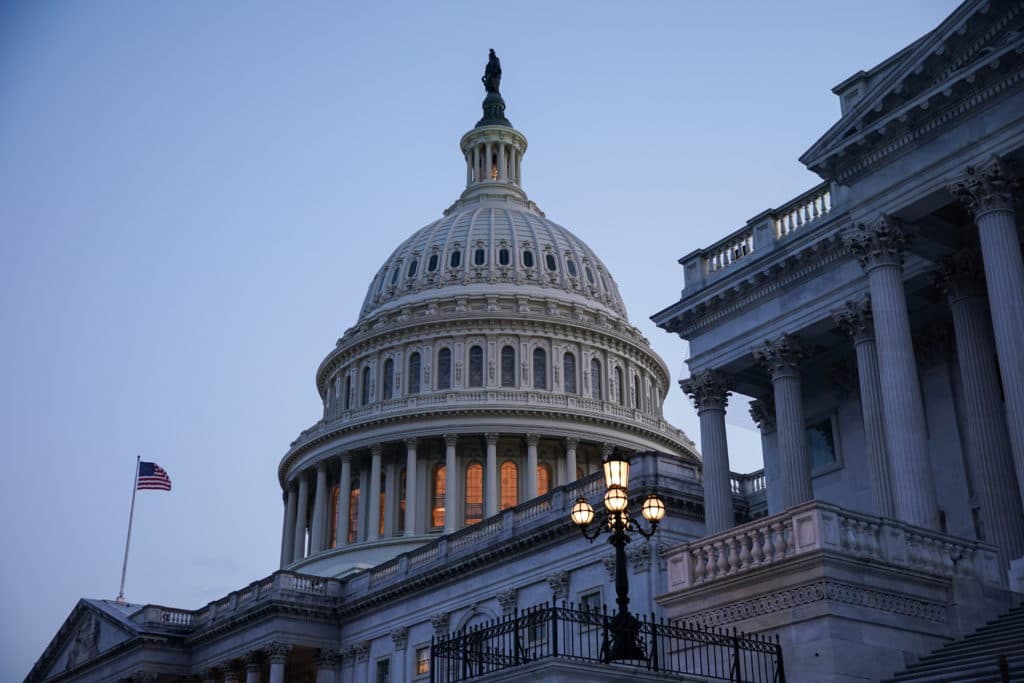
 U.S. Capitol building at dusk where House extended surveillance powers
House GOP Revolt Derails Trump's Push for Surveillance Extension
Intra-Party Split Detected
About 20 House Republicans defied Trump and Speaker Johnson by blocking the surveillance program extension they demanded
Left says
- •The chaotic midnight voting process demonstrates Republican leadership's inability to govern effectively and manage their own caucus
- •Section 702 allows warrantless surveillance that can sweep up Americans' communications, raising serious civil liberties concerns that require stronger privacy protections
- •The short-term extension only delays necessary reforms to protect constitutional rights and prevent potential government overreach
Right says
- •Section 702 is critical for national security, allowing intelligence agencies to disrupt terrorist plots, cyber intrusions, and foreign espionage operations
- •Republican opposition reflects legitimate concerns about FBI abuses and the need for proper oversight of surveillance powers
- •The revolt shows principled conservatives standing firm on constitutional protections even when pressured by party leadership and the White House
Common Take
High Consensus- Section 702 of FISA was set to expire and required congressional action to continue operating
- The House ultimately passed a 10-day extension after midnight voting that keeps the program running until April 30
- Both parties acknowledge the program involves collecting communications that can include American citizens
- The surveillance authority is used by multiple intelligence agencies including the CIA, NSA, and FBI
The Arguments
Right argues
Section 702 is essential for national security, allowing intelligence agencies to disrupt terrorist plots, cyber intrusions, and foreign espionage operations that threaten American lives and interests.
Left counters
The program's warrantless surveillance capabilities sweep up Americans' communications without judicial oversight, creating a dangerous precedent for government overreach that undermines Fourth Amendment protections.
Left argues
The chaotic midnight voting process demonstrates Republican leadership's fundamental inability to govern effectively and manage their own caucus, creating legislative dysfunction that undermines public confidence.
Right counters
The revolt shows principled conservatives standing firm on constitutional protections even when pressured by party leadership and the White House, demonstrating that oversight of surveillance powers transcends partisan politics.
Right argues
Republican opposition reflects legitimate concerns about documented FBI abuses of surveillance powers and the urgent need for proper oversight mechanisms to prevent future violations of civil liberties.
Left counters
The short-term extension only delays necessary comprehensive reforms and allows the surveillance apparatus to continue operating without the stronger privacy protections that Americans deserve.
Left argues
Section 702's ability to incidentally collect Americans' communications without warrants creates a backdoor surveillance system that violates constitutional principles and requires immediate reform with judicial oversight requirements.
Right counters
U.S. officials emphasize that this authority is critical for protecting national security, and the program already includes safeguards while targeting foreign communications abroad, not domestic surveillance.
Challenge Questions
These questions target genuine internal contradictions — meant to provoke honest reflection.
Right asks Left
“If you believe the surveillance program is fundamentally unconstitutional and requires major reforms, why do most Democrats also voted against the clean extension, suggesting they too recognize some value in the program's national security benefits?”
Left asks Right
“If principled constitutional concerns truly motivated the Republican revolt, why did the same conservatives who blocked the extension due to civil liberties concerns not propose specific reform amendments rather than simply obstructing the process?”
Outlier Report
Left Fringe
Progressive Squad members like Alexandria Ocasio-Cortez and civil liberties absolutists who want to completely eliminate Section 702 represent about 15-20% of the left coalition.
Right Fringe
Rand Paul and libertarian-leaning Republicans who oppose all warrantless surveillance programs represent about 10-15% of the right, while Trump loyalists demanding complete deference to executive branch requests represent another 20%.
Noise Assessment
Moderate performative outrage about 'chaos' and 'amateur hour' governance, but the underlying surveillance debate reflects genuine policy disagreements rather than pure political theater.
Sources (5)
Donald Trump and his allies had lobbied aggressively all week for a clean renewal of the controversial surveillance program used by U.S. spy agencies.
President Donald Trump has signed a 10-day extension of Section 702 of the Foreign Intelligence Surveillance Act, keeping the warrantless surveillance program alive through April 30 after House Republican leaders failed overnight to move either a five-year rewrite or a...
In our news wrap Friday, the Senate approved a short-term renewal of a controversial surveillance program used by U.S. spy agencies, millions across the Midwest are facing the risk of severe storms and French officials say an 85-year-old widow of an American military veteran has returned home after being held in U.S. immigration custody for more than two weeks.
The Senate on Friday passed a 10-day extension of the nation’s warrantless spy powers, approving a House plan hatched on the floor after a chaotic rejection of a package negotiated with skeptics. The bill will now head to the president’s desk, but Section 702 of the Foreign Intelligence Surveillance Act (FISA) will continue to dominate Congress in…
Trump officials say the program is vital to national security, but skeptics — including some Republicans — have stonewalled its reauthorization without changes to protect civil liberties.