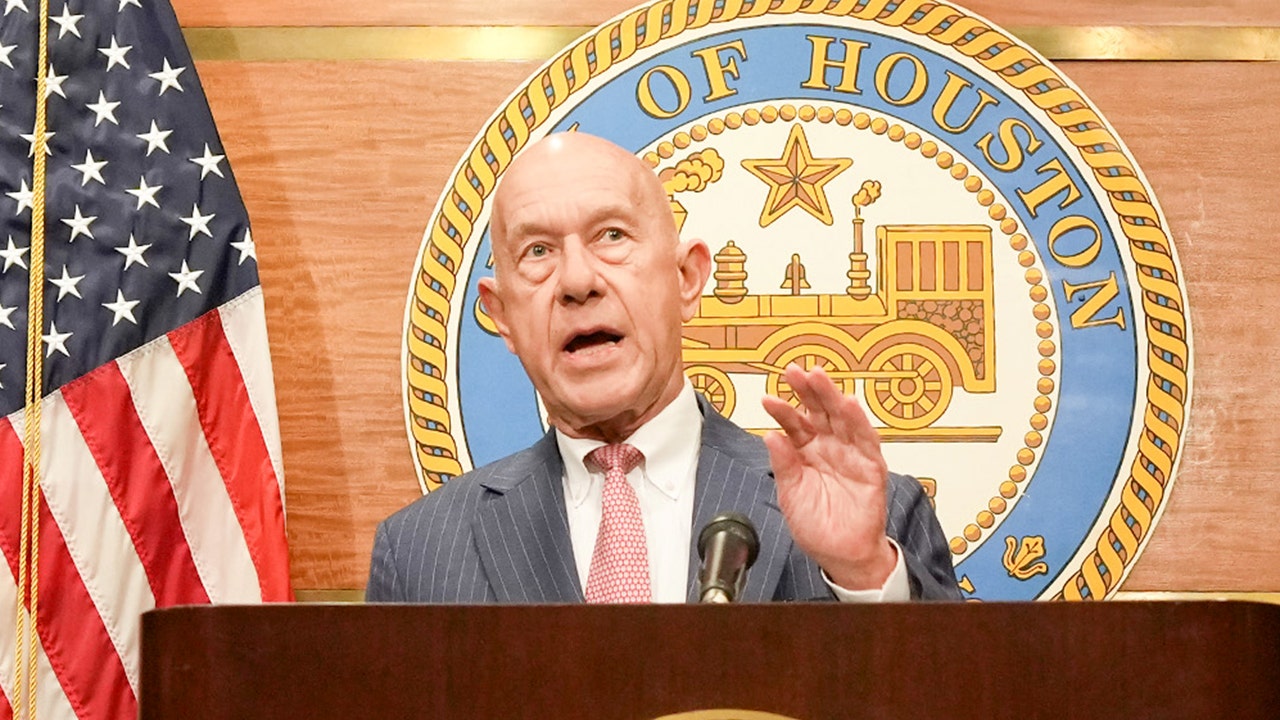
Houston Mayor Defies Abbott's ICE Order After Texas Flips Blue
Left says
- •Violence against immigrants in Houston, including a fatal shooting by an ICE officer and a separate incident where an agent struck a man with a vehicle and was indicted for aggravated assault, has fueled community fear that goes beyond immigration status alone.
- •Limiting police involvement to jailable offenses and violent crime lets local law enforcement focus resources on public safety rather than acting as an extension of federal immigration enforcement.
- •Immigrant families, workers, and students should be able to go about daily life, including minor traffic stops, without fear that a routine encounter will trigger deportation proceedings.
- •Democratic victories in Texas, including the governor's race, reflect a mandate from voters to change the state's approach to aggressive immigration enforcement.
Right says
- •Governor Abbott's executive order required local cooperation with ICE and threatened to withhold millions in state funding from cities that failed to comply, a policy Houston is now openly defying.
- •Rolling back cooperation with federal immigration authorities, even for only nonviolent or non-jailable offenses, can allow illegal immigrants to avoid any immigration consequences after an encounter with police.
- •The timing, coming immediately after a single election cycle and before the incoming governor even takes office, suggests a political response rather than a carefully deliberated public safety policy.
- •Texas has positioned itself as a close partner with the Trump administration's deportation agenda, and this reversal undercuts the state's prior commitment to that federal-local coordination model.
Common Take
High Consensus- Mayor Whitmire signed an executive order directing Houston police to limit contact with ICE to cases involving jailable offenses or active administrative warrants.
- The decision follows Democratic wins across Texas in the November elections, including Gina Hinojosa's victory over incumbent Governor Greg Abbott.
- An ICE officer fatally shot a man in Houston this summer and another ICE agent, Mario Alberto Morales, was indicted on an aggravated assault charge for striking a man with a vehicle.
- Under the new policy, people cited for minor offenses like traffic violations will not have ICE contacted and will be allowed to continue on their way.
The Arguments
Left argues
Incidents of ICE-related violence in Houston, including a fatal shooting and an indicted assault case, have created legitimate fear in immigrant communities that undermines trust in all law enforcement, not just federal agents.
Right counters
Isolated incidents involving individual officers, even if serious, don't justify a blanket policy change that reduces cooperation on immigration enforcement across the board; misconduct should be addressed through accountability for those specific actors, not by limiting ICE referrals generally.
Right argues
Abbott's executive order explicitly conditioned state funding on local cooperation with ICE, and Houston's new policy is a direct, open defiance of that order while Abbott technically remains in office for two more months.
Left counters
Elections have consequences, and with voters having just rejected Abbott's approach and a new governor-elect in place, continuing to enforce a lame-duck executive's mandate against the clearly expressed will of the electorate is not a sustainable or democratically sound position.
Right argues
Limiting ICE contact to only jailable or violent offenses creates a loophole where illegal immigrants committing lesser offenses, like traffic violations, can avoid any immigration consequence entirely, effectively nullifying meaningful enforcement.
Left counters
Focusing local police resources on violent and jailable offenses rather than minor infractions is a targeted public-safety approach that allows officers to build trust with immigrant communities, which in turn makes those communities more likely to report crimes and cooperate with investigations.
Left argues
Forcing local police to act as immigration enforcers for even minor infractions discourages immigrant residents from interacting with police at all, including as witnesses or victims of crime, which undermines overall public safety.
Right counters
Public safety also depends on consistent enforcement of immigration law, and carving out broad exceptions for non-jailable offenses sends a signal that illegal presence in the country carries no practical consequence absent a separate serious crime.
Right argues
The timing of this reversal, announced mere days after the election and before the incoming administration is sworn in, suggests it is a hasty political gesture responding to a single election cycle rather than a carefully considered, lasting public safety policy.
Left counters
Policy changes often follow immediately after decisive elections because that is precisely when elected officials have the clearest mandate to act on the issues voters prioritized, and delaying action for its own sake would be an abdication of responsiveness to constituents.
Challenge Questions
These questions target genuine internal contradictions — meant to provoke honest reflection.
Right asks Left
“If the goal is to reduce fear and build trust with immigrant communities, how does selectively enforcing ICE cooperation only for 'jailable' offenses address the fact that an administrative immigration warrant reflects a federal judgment unrelated to the severity of a local charge?”
Left asks Right
“If Texas's partnership with federal immigration enforcement is meant to reflect public will, how should that commitment be reconciled with an election in which voters in the state's largest city and statewide races just rejected the officials most responsible for that policy?”
Outlier Report
Left Fringe
Groups like RAICES and immigrant-rights activists aligned with Rep. Ilhan Omar's abolish-ICE rhetoric represent a smaller fringe (~15-20% of the left) pushing for full noncooperation or ICE abolition, beyond the more moderate 'focus on violent crime only' position described in the synopsis.
Right Fringe
Figures like Stephen Miller and commentators such as Tom Homan represent a harder-line fringe (~20-25% of the right) who would favor withholding all state funding and potentially criminal prosecution of local officials who limit ICE cooperation at all, beyond the more mainstream concern about funding and policy timing reflected in the synopsis.
Noise Assessment
High noise ratio: this story involves a hypothetical major electoral realignment in Texas, meaning much of the reaction would be amplified partisan signaling and speculative framing rather than grounded in settled public opinion on an actual policy outcome.
Sources (6)
Houston Democrat Mayor John Whitmire is rolling back local police cooperation with Immigration and Customs Enforcement (ICE) after a blue wave swept through Texas during Tuesday’s election. On Friday, Whitmire signed an order limiting local police officers’ ability to contact ICE that would let some illegal immigrants walk free. “This is the right thing to ...
Houston Mayor John Whitmire bars police from notifying ICE during nonviolent stops despite defeated Texas Republican Gov. Greg Abbott's order.
The Trump administration’s immigration crackdown in Houston has sparked protests after an ICE officer fatally shot a Mexican homebuilder this summer and another struck a man with a car.
Houston Mayor John Whitmire directed law enforcement to only contact U.S. Immigration and Customs Enforcement if the person stopped is arrested on a charge that is subject to jailing or if ICE issues an administrative warrant.
The shift in the nation's fourth-largest city is one of the first actions to restrict U.S. Immigration and Customs Enforcement operations since Democrats' rout in Tuesday's midterm elections.
Houston Mayor John Whitmire (D) said the city would limit cooperation with Immigration and Customs Enforcement (ICE) officers just days after Democrats swept the state-level offices in the midterm elections. The mayor said his executive order applied to nonviolent criminals, who will be released with a citation, and that unless someone is arrested for an…