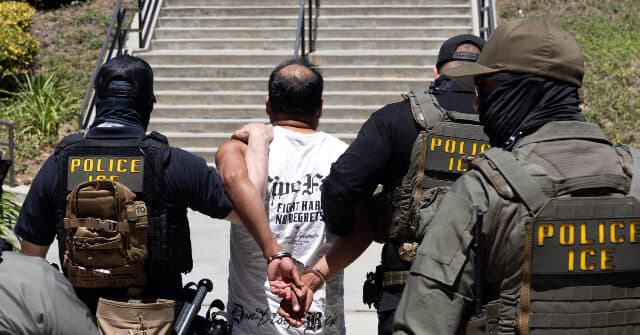
ICE to Deploy $20M Electric Shock Gloves on Detainees
Left says
- •ICE already faces intense scrutiny for fatal shootings and violent encounters, and giving officers a covert shock device raises fears of unaccountable, hidden force since a bystander may not even see the button being pressed.
- •Civil liberties advocates warn that an agency they say has been too quick to use force will now have an easily concealable way to inflict pain, compounding existing oversight problems rather than solving them.
- •The device has mostly been tested and used in confined settings like jails, and applying it to unpredictable street encounters during immigration enforcement raises new risks for the broader public.
- •Lawmakers and critics question the cost and necessity of a no-bid, multimillion-dollar contract at a time when ICE's tactics and use-of-force record are already under investigation.
Right says
- •The gloves offer officers a less-lethal option to de-escalate physically combative encounters, potentially reducing the number of fatal shootings that have drawn criticism of ICE.
- •Agents have reportedly faced a dramatic rise in assaults and vehicular attacks during enforcement operations, making a quick, non-lethal compliance tool a practical safety measure.
- •Experts who have studied the device describe the shock as brief and comparable to a bee sting, unlikely to cause lasting injury, and especially useful for smaller or older officers facing physical resistance.
- •Critics of ICE are accused of preferring dramatic, deadly confrontations over de-escalation tools that could actually reduce harm to both officers and the people they arrest.
Common Take
High Consensus- ICE plans to spend between $10 million and $20 million on the CTG-5 G.L.O.V.E. devices, manufactured by Compliant Technologies LLC of Kentucky.
- The gloves deliver an electric shock through direct skin contact intended to disrupt coordinated muscle movement and gain compliance within seconds.
- The devices have previously been used by some police departments and jails before this planned large-scale purchase by ICE.
- Officers will be required to complete training and recertify every two years to use the devices, and the manufacturer advises against use on vulnerable populations like children, the elderly, and pregnant women.
The Arguments
Left argues
ICE's covert shock capability compounds existing accountability problems, since a bystander or even a court reviewing an incident may not be able to tell that an officer has pressed a hidden switch to inflict pain, unlike a visible baton strike or drawn firearm.
Right counters
The device requires direct skin contact and produces an observable, immediate reaction in the person shocked, and officers already undergo certification and recertification training, so the claim that it's undetectable overstates the case; DHS also says officers get ongoing use-of-force training regardless of the tool.
Right argues
With agents reportedly facing a 1,300% surge in assaults and a 3,300% increase in vehicular attacks during enforcement operations, a quick-acting compliance tool gives officers, especially smaller or older ones, a way to end physical confrontations in seconds without resorting to firearms.
Left counters
A rise in physical resistance may itself be a response to aggressive tactics, and introducing a new pain-based tool into unpredictable street encounters risks escalating confrontations rather than de-escalating them, particularly given the device was designed for controlled jail settings, not the open street.
Left argues
Awarding a no-bid contract worth up to $20 million to a single small manufacturer, without competitive bidding, raises legitimate questions about cost, favoritism, and whether this expenditure is the most urgent use of funds for an agency already under investigation for use-of-force problems.
Right counters
Emergency procurement processes are routine for specialized law-enforcement equipment where few vendors exist, and moving quickly to equip agents facing rising violence is a reasonable operational priority rather than evidence of waste or cronyism.
Right argues
Experts who have studied the device, like John Peters, describe the shock as brief and comparable to a bee sting that leaves no lasting marks, making it a genuinely less-lethal alternative that could reduce the kind of fatal shootings that have drawn intense criticism of ICE.
Left counters
Even proponents like Peters acknowledge the device 'could be misused,' and pain-compliance tools have a documented history of being applied excessively or punitively in other law-enforcement contexts, so comparisons to a bee sting understate the risk when deployed by an agency already criticized for excessive force.
Left argues
Because the manufacturer's own guidance says the device shouldn't be used against merely verbal defiance or on vulnerable populations like children, the elderly, or pregnant women, and because ICE's rules of engagement are poorly understood by the public, there's a real risk the gloves will be applied inconsistently or against people who pose no genuine physical threat.
Right counters
The existence of clear manufacturer guidelines and a mandatory certification and biennial recertification process demonstrates that safeguards are built into the deployment of this tool, and misuse would be a violation of policy that can be investigated and punished, not an inherent flaw in giving officers the option.
Challenge Questions
These questions target genuine internal contradictions — meant to provoke honest reflection.
Right asks Left
“If the primary objection is that ICE cannot be trusted to use any force responsibly, does opposing a tool specifically designed to reduce reliance on firearms suggest a preference for the status quo of lethal encounters over incremental de-escalation options?”
Left asks Right
“If the justification for these gloves rests on trusting ICE's internal training and policy safeguards to prevent misuse, how does that square with the argument that ICE's use-of-force problems stem precisely from insufficient accountability and oversight of how officers already use force?”
Outlier Report
Left Fringe
Groups like Democracy Now! commentators and some abolish-ICE activists (e.g., voices amplified by groups like Mijente) who frame any ICE tool acquisition as inherently abusive represent maybe 15-20% of the left, holding views more extreme than mainstream Democratic concerns about oversight.
Right Fringe
Commentators like Breitbart's John Nolte, who suggested ICE critics 'want death' and framed opposition as bad-faith, represent an extreme framing held by perhaps 10-15% of the right; most conservatives support the tool without such inflammatory rhetoric.
Noise Assessment
Moderate-to-high noise: cable news framing (CNN's Kayyem) and partisan outlets amplify dramatic language ('electrocute people' from Sen. Hickenlooper, 'bee sting' from industry-linked expert John Peters) that may not reflect nuanced views of most Americans who likely see this as a secondary issue within the larger ICE enforcement debate.
Sources (14)
The Trump administration could soon equip federal immigration agents with gloves capable of delivering electric shocks during physical confrontations, according to a Department of Homeland Security (DHS) procurement notice. The devices—known as the G.L.O.V.E., or Generated Low Output Voltage Emitter—are manufactured by Kentucky-based Compliant Technologies LLC, and are marketed as a tool to help officers gain control of resistant individuals during close-range encounters.
Immigration and Customs Enforcement officers may soon be outfitted with gloves that can deliver painful electric shocks intended to gain compliance from combative individuals. ICE plans to spend up to $20 million to purchase thousands of "conductive distraction and de-escalation devices" for officers and agents by March, according to a notice published Monday by the Department of Homeland Security.
Immigration and Customs Enforcement (ICE) agents could soon take to the streets equipped with gloves that deliver painful electric shocks to combative arrest targets. The federal government plans to spend up to $20 million on thousands of "conductive distraction and de-escalation devices" by March, according to the Associated Press and a Monday Department of Homeland Security (DHS) notice.
<p><a href="https://www.axios.com/2026/07/16/ice-agents-body-cameras" target="_blank">Immigration and Customs Enforcement</a> plans to begin using electric shock gloves designed to cause pain and disrupt a person's ability to react.</p><p><strong>The big picture: </strong>The gloves could give ICE officers a new way to use force as their<strong> </strong>tactics face intense scrutiny after several <a href="https://www.axios.com/2026/07/15/maine-killing-fatal-dhs-ice-shootings" target="_blank">deaths</a> and <a href="https://www.axios.com/2026/01/08/dhs-ice-shootings-trump" target="_blank">violent encounters</a>.</p><hr /><p><strong>Driving the news:</strong> ICE plans to spend between $10 and $20 million on the gloves and issue them to Homeland Security Investigations and Enforcement Removal Operations officers and agents, per a Department of Homeland Security <a href="https://apfs-cloud.dhs.gov/record/74524/public-print/" target="_blank">notice</a> published Monday. </p><ul><li>The Associated Press was first to report the plan.</li><li>The CTG-5 Generated Low Output Voltage Emitter, or G.L.O.V.E, is produced by Kentucky-based Compliant Technologies, which did not respond to Axios' request for comment.</li><li>The device's user guide says it should not be used against verbal defiance or as a form of punishment. The manufacturer advises against using it on the elderly, children, pregnant women and those with serious disabilities.</li></ul><p><strong>Friction point: </strong>Jenn Rolnick Borchetta, ACLU's deputy director on policing, raised concerns about how immigration agents could use the device.</p><ul><li>"ICE spent the last year showing this country that they are willing to disregard the law and are too quick to use force, with devastating and at times fatal consequences for citizens and noncitizens alike," she said in a statement.</li><li>She noted officers could use the gloves to deliver shocks covertly, "a recipe for more harm to the public and less accountability."</li></ul><p><strong>The fine print: </strong>The gloves are meant to stop detainees or subjects from "performing coordinated muscle movement" by causing pain through direct skin contact.</p><ul><li>G.L.O.V.E. users must undergo training for certification every two years, according to the manufacturer's user manual.</li><li>A DHS spokesperson said in a statement that officers are "highly trained in de-escalation tactics and regularly receive ongoing use of force training."</li></ul><p><strong>Worth noting: </strong>ICE is also expanding its use of <a href="https://www.axios.com/2026/07/16/ice-agents-body-cameras" target="_blank">body cameras</a> after the agency's fatal shootings and other use-of-force incidents.</p><p><strong>Zoom out: </strong>In the background, <a href="https://www.axios.com/2026/08/06/trump-immigration-approvals-ice-arrests" target="_blank">millions of people</a> are living in immigration limbo — colliding with the reality of ramped-up enforcement at airports, application interviews and beyond, <em>Axios' Brittany Gibson reports.</em></p><ul><li>ICE has been infused with billions from Republican lawmakers as the administration <a href="https://www.axios.com/2026/07/28/trump-self-deportation-ice" target="_blank">maintains lofty goals</a> to remove unauthorized immigrants from the U.S.</li></ul><p><strong>Go deeper: </strong><a href="https://www.axios.com/2026/08/05/trump-deportation-costs-taxpayers" target="_blank">Trump deportations cost taxpayers $2,358 each</a></p>
<img src="https://www.theblaze.com/media-library/ice-officers-will-have-shocking-new-glove-device-to-pacify-targets.jpg?id=67609870&width=1245&height=700&coordinates=120%2C314%2C154%2C49" /><br /><br /><p>The Department of Homeland Security is <a href="https://apnews.com/article/ice-electric-shock-gloves-85ff746d3e0ee5f39e7a9a3f1f576252" target="_blank">reportedly</a> planning to spend millions to outfit Immigration and Customs Enforcement Agents with gloves that can deliver an electric shock to targeted individuals.</p><p>The gloves were developed by Compliant Technologies LLC out of Lexington, Kentucky, and have already been deployed by police departments and some jails.</p><p class="pull-quote">'If the officer is getting any type of resistance from the person, this is certainly an effective tool.'</p><p>A DHS notice published Monday says the agency is seeking to spend $20 million on the shocking gloves.</p><p>The devices are named G.L.O.V.E., an acronym for Generated Low Output Voltage Emitter. The manufacturer says the gloves function normally until the wearer activates the electrical mode. The globe must be in contact directly with the target's skin, and the shock typically incapacitates the target in seconds. </p><p>John Peters, president of the Institute for the Prevention of In-Custody Deaths, studied the device and described its effects.</p><p>"It's immediate and sharp, and it will distract you. I call it like a bee sting," said Peters. "If the officer is getting any type of resistance from the person, this is certainly an effective tool."</p><p>He went on to say the device could be misused but that it is unlikely to cause injuries. </p><p>"Unfortunately, we are unable to speak on this subject," said Compliant Technologies founder Jeff Niklaus in an email about the report.</p><p>The manufacturer said officers must complete a course on the gloves and be recertified every two years. </p><p>"For smaller officers or weaker officers or older officers, I think it has a great advantage" because it can produce faster takedowns and shorten confrontations," Peters added. </p><p><span style="background-color: initial;"><strong>RELATED: </strong></span><a href="https://www.theblaze.com/news/massachusetts-gov-ice-law-illegals" target="_blank"><strong>Democratic governor signs 'strongest' anti-ICE legislation yet</strong></a></p><p class="shortcode-media shortcode-media-youtube"> <span class="rm-shortcode" style="display: block; padding-top: 56.25%;"></span> </p><p>Jenn Rolnick Borchetta of the American Civil Liberties Union warned that the gloves could be abused. </p><p>"ICE spent the last year showing this country they are too quick to use force. Now they will be able to deploy electric shocks with the slight push of a button that maybe nobody else can see them do," Borchetta said. "Introducing gloves that can so easily be used to deliver terrible pain in encounters is a recipe for harm to the public." </p><p><em>Like Blaze News? Bypass the censors, sign up for our newsletters, and get stories like this direct to your inbox. </em><em><a href="https://www.theblaze.com/newsletters/theblaze-articlelink" target="_self">Sign up here!</a></em><em> </em></p>
<p>ICE officers will soon receive gloves that deliver a painful electric jolt to those who choose to fight rather than comply.</p> <p>The post <a href="https://www.breitbart.com/politics/2026/08/12/nolte-ice-to-receive-gloves-deliver-electric-shock-de-escalate-confrontations/" rel="nofollow">Nolte: ICE to Receive Gloves that Deliver Electric Shock to De-Escalate Confrontations</a> appeared first on <a href="https://www.breitbart.com" rel="nofollow">Breitbart</a>.</p>
‘Certainly an effective tool’
Immigration and Customs Enforcement (ICE) agents could soon take to the streets equipped with gloves that deliver painful electric shocks to combative arrest targets. The federal government plans to spend up to $20 million on thousands of “conductive distraction and de-escalation devices” by March, according to the Associated Press and a Monday Department of Homeland ...
Juliette Kayyem, a former assistant secretary for policy at the Department of Homeland Security, said it “could be a real danger for the American public.”
The manufacturer warns the gloves should not be used as punishment, against people merely exhibiting “verbal defiance or belligerence” or on high-risk populations.
Inflation cooled a bit last month, according to a new report from the Labor Department. And, ICE plans to equip its officers with electric shock gloves.
Immigration and Customs Enforcement plans to spend up to $20 million to purchase thousands of gloves that can deliver painful electric shocks intended to gain compliance from individuals.
ICE is seeking to buy electrified gloves for its agents and officers to use for "distraction and de-escalation" of situations.