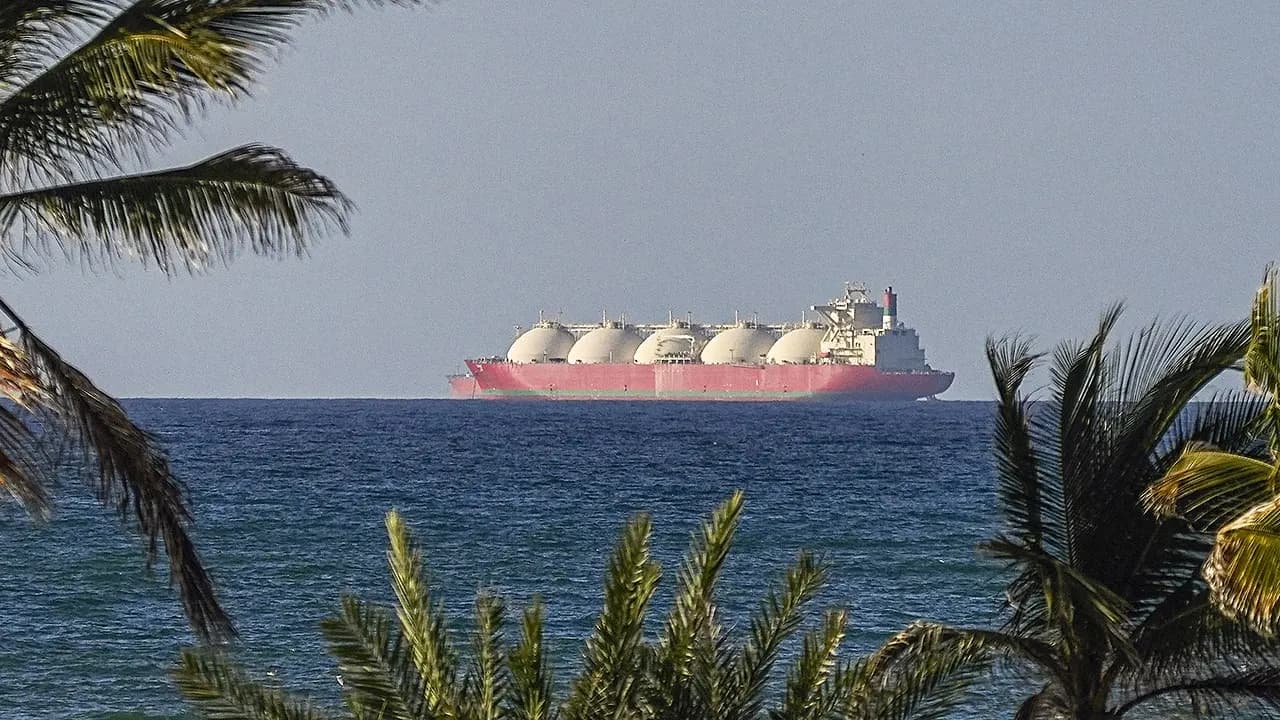
Iran defies ceasefire terms, keeps Strait of Hormuz effectively closed
Left says
- •Israel's continued bombing of Lebanon violates the spirit of the ceasefire agreement and undermines diplomatic efforts to achieve lasting peace
- •Iran's control of the strait represents legitimate leverage against aggressive military actions by Israel and the U.S. in the region
- •The fragile ceasefire requires all parties to honor their commitments, including halting attacks on Iranian allies like Hezbollah in Lebanon
- •Diplomatic negotiations in Pakistan offer the best path forward to prevent further escalation and regional instability
Right says
- •Iran is dishonoring the ceasefire agreement by maintaining effective control over the strait despite promises to reopen it
- •Tehran's demand for tolls on oil shipments violates international maritime law and amounts to economic extortion
- •Iran's military has been decisively defeated and is now using the strait as its only remaining leverage to extract concessions
- •The U.S. achieved total victory in dismantling Iran's nuclear program and military capabilities, forcing Tehran to accept negotiations
Common Take
High Consensus- The Strait of Hormuz remains effectively closed to oil tanker traffic despite the ceasefire agreement
- Hundreds of ships and thousands of mariners remain stranded in the Persian Gulf awaiting safe passage
- Oil prices have risen significantly due to the disruption of approximately 25% of global seaborne oil supply
- Peace negotiations scheduled in Pakistan represent a critical opportunity to resolve the crisis diplomatically
The Arguments
Left argues
Israel's massive bombardment of over 100 sites in Lebanon within 10 minutes directly violates the ceasefire agreement and justifies Iran's response to close the strait again. The ceasefire requires all parties to honor their commitments, including halting attacks on Iranian allies like Hezbollah.
Right counters
Iran agreed to reopen the strait as a central condition of the ceasefire, and its closure violates international maritime law regardless of other regional conflicts. Tehran cannot use the strait as leverage to extract political concessions while dishonoring its own commitments.
Right argues
Iran's demand for $1 per barrel tolls paid in cryptocurrency amounts to economic extortion and violates international norms of free navigation through critical waterways. With its military capabilities decimated, Tehran is using the strait as its only remaining leverage.
Left counters
Iran has legitimate sovereignty over the strait and the right to regulate passage through its territorial waters, especially when facing continued aggression from Israel and threats from the U.S. The toll represents compensation for damages inflicted during the conflict.
Right argues
The U.S. achieved total victory by dismantling Iran's nuclear program, destroying its navy, and degrading its missile capabilities, forcing Tehran to accept negotiations from a position of weakness. Iran's military has been functionally destroyed and it 'begged for this ceasefire.'
Left counters
If Iran were truly defeated, it would not still control the strait or be able to dictate terms for oil shipments. Iran's continued leverage over global energy markets demonstrates that military strikes alone cannot resolve regional conflicts without addressing underlying political grievances.
Left argues
Diplomatic negotiations in Pakistan offer the best path forward to prevent further escalation and achieve lasting peace, but this requires good faith from all parties including Israel ceasing attacks on Lebanon. Military solutions have only created more instability and higher oil prices.
Right counters
Iran is using the negotiations to buy time while maintaining its stranglehold on global energy supplies, with 800 tankers backed up and 20,000 mariners stranded. Tehran's refusal to honor the strait reopening shows it negotiates in bad faith.
Right argues
Iran's effective closure of the strait despite ceasefire promises threatens global economic stability, with oil prices approaching $100 per barrel and critical supply chains disrupted. The international community cannot allow one nation to hold the world economy hostage.
Left counters
The fragile ceasefire is being undermined by Israel's continued military actions in Lebanon, giving Iran legitimate grounds to respond defensively. Sustainable peace requires addressing the root causes of conflict, not just forcing Iran to capitulate while attacks on its allies continue.
Challenge Questions
These questions target genuine internal contradictions — meant to provoke honest reflection.
Right asks Left
“If diplomatic negotiations are truly the best path forward, how can you justify Iran's continued closure of the strait - which harms innocent civilians globally through higher energy prices - while simultaneously calling for Israel to honor ceasefire terms?”
Left asks Right
“If Iran's military has been so thoroughly defeated that it 'begged for ceasefire' and has no remaining capabilities, how do you explain its continued ability to effectively control one of the world's most critical shipping lanes and dictate terms to global commerce?”
Outlier Report
Left Fringe
Progressive anti-war activists like CodePink's Medea Benjamin and some Squad members who might frame Iran's actions as justified resistance to American imperialism represent roughly 15-20% of the left coalition.
Right Fringe
Hardline hawks like Senator Tom Cotton or John Bolton who might advocate for immediate military action to forcibly reopen the strait regardless of ceasefire negotiations represent about 25-30% of the right coalition.
Noise Assessment
Moderate noise level - while partisan media amplifies extreme positions, the core economic concerns about oil prices and shipping disruption reflect genuine public priorities rather than manufactured outrage.
Sources (13)
A ceasefire deal to pause the war in Iran appeared to hang by a thread Wednesday after the Islamic Republic closed the Strait of Hormuz again in response to Israeli attacks in Lebanon. The White House demanded that the channel be reopened and sought to keep peace talks on track.
Israel launched a barrage of attacks without warning in Lebanon on Wednesday, striking more than 100 sites in 10 minutes as a fragile ceasefire agreement between the U.S. and Iran hangs in the balance. The attacks were of the largest scale in Lebanon since Israel started its latest offensive there more than a month ago. It stands to expose a major stumbling block in the hours after fragile negotiations were agreed upon to pause fighting between the U.S. and Iran.
No oil tankers traversed the Strait of Hormuz for the entire first day of the ceasefire between the United States and Israel, despite the waterway being opened by the Islamic Republic. The first 24 hours after the ceasefire was implemented, four bulk carriers traversed the strait, but no oil or gas tankers, the ships highest in demand, global ship-tracking firm Kpler told the New York Times. After Israeli airstrikes against Lebanon caused Iranian state media to announce the strait was "fully closed" again on Wednesday, no ships crossed the strait.
<p>President Trump on Thursday demanded Iran stop charging tolls for tankers to cross the <a href="https://www.axios.com/2026/04/08/iran-ceasefire-oil-shipping-impact-prices" target="_blank">Strait of Hormuz</a>, as Iran's supreme leader promised the country would control the crucial waterway.</p><p><strong>Why it matters: </strong>The already shaky ceasefire between the two countries is getting more strained by the day, even as they prepare for peace talks in Islamabad on Saturday. </p><hr /><ul><li>The narrow waterway off Iran's southern coast is vital to the normal functioning of the global economy</li></ul><p><strong>What they're saying: </strong>"There are reports that Iran is charging fees to tankers going through the Hormuz Strait — They better not be and, if they are, they better stop now!" Trump <a href="https://truthsocial.com/%40realDonaldTrump/posts/116376791555549648" target="_blank">posted</a> to Truth Social.</p><ul><li>That followed a Financial Times <a href="https://giftarticle.ft.com/giftarticle/actions/redeem/708f5a5b-a570-444c-8d1e-58177d49e57b" target="_blank">report</a> that Iran is demanding the right to toll ships passing through the strait: $1 per barrel of oil aboard, paid in cryptocurrency.</li><li>Trump later added in another post: "Iran is doing a very poor job, dishonorable some would say, of allowing Oil to go through the Strait of Hormuz. That is not the agreement we have!"</li></ul><p><strong>Threat level: </strong>A U.S. official earlier said the strait is "wide open," but at the same time admitted ships are not moving through it because they are intimidated by the Iranians.</p><ul><li>"Iran has threatened and coerced everybody," the official said.</li><li>The official said the U.S. is considering steps that would encourage ships to start moving through the strait.</li></ul><p><strong>Zoom out: </strong>Sultan Al Jaber,<strong> </strong>head of the Abu Dhabi National Oil Company, <a href="https://www.linkedin.com/feed/update/urn%3Ali%3Aactivity%3A7447938455071830017/?originTrackingId=OwyGVfVpDf%2FGi3yvjecfdg%3D%3D" target="_blank">posted on LinkedIn</a> Thursday morning: "This moment requires clarity. So let's be clear: the Strait of Hormuz is not open."</p><ul><li>"Access is being restricted, conditioned and controlled. Iran has made clear — through both its statements and actions — that passage is subject to permission, conditions and political leverage."</li></ul><p><strong>State of play: </strong>Hundreds of tankers carrying oil and other vital commodities are <a href="https://www.nytimes.com/2026/04/09/business/iran-strait-of-hormuz-what-to-know.html" target="_blank">still waiting</a> to transit Hormuz, the New York Times reports.</p><ul><li>Their operators and captains remain unclear on how to get through without risking Iranian attack.</li><li>Nearly 20,000 mariners are <a href="https://www.nytimes.com/2026/04/01/world/middleeast/sailors-stranded-phillipines-iran.html?unlocked_article_code=1.ZlA.kk7X.wb-u60xM5DKy&smid=url-share" target="_blank">essentially stranded</a> in the Persian Gulf amid the crisis, per the International Maritime Organization. </li></ul><p><strong>Follow the money: </strong>Iran "will bring the management of the Strait of Hormuz into a new stage" during negotiations with the U.S., the country's supreme leader Mojtaba Khamenei said in a new public message Thursday.</p><ul><li>That could potentially include the toll, which would keep global energy prices elevated indefinitely — plus violate international norms of free navigation. </li><li>Oil is once again flirting with $100/barrel as of Thursday afternoon, and remains considerably above pre-war prices.</li></ul><p><strong>Khamenei commented</strong> on the strait in a new written message released Thursday for the 40-day commemoration of his father's assassination by Israel on the first day of the war. </p><ul><li>It was his first public message since the ceasefire with the U.S. came into force. He said Iran is the "definite victor" of the war. </li><li>Iran "did not seek war and does not seek it" now, but stressed the country "will not withdraw from our rightful rights," he said. </li><li>"We will certainly not leave the aggressors. We will demand compensation for all damages and the price for the blood of martyrs and the compensation of the wounded," he added. </li></ul><p><strong>What to watch: </strong>Whether Israel's <a href="https://www.axios.com/2026/04/08/lebanon-attacks-israel-iran-ceasfire" target="_blank">continued attacks in Lebanon</a> lead Iran to keep Hormuz effectively shuttered, choking off about 25% of the world's seaborne oil supply.</p><p><em>Editor's note: This story has been updated with President Trump's statement.</em></p>
The Strait of Hormuz remains effectively closed despite a ceasefire deal, with 800 tankers among 3,200 vessels backed up and mariners stranded.
President Trump said Iran had agreed to open the strait during the two-week ceasefire, but Iran has instead moved to exert greater control over the crucial shipping lane, perhaps the only leverage the theocracy has.
Iran flexed its leverage in the Strait of Hormuz this week, forcing President Trump to lean on Israeli Prime Minister Benjamin Netanyahu to scale back deadly strikes in Lebanon ahead of ceasefire negotiations planned in Pakistan this weekend. However, Israeli attacks on Lebanon continued into Friday, and there’s still almost no shipping traffic passing through…
Mohammad Bagher Qalibaf, the Speaker of Iran’s Parliament, said Friday there will be no negotiations with the U.S. without a ceasefire in Lebanon and a release of blocked Iranian assets. Qalibaf wrote on the social platform X that two measures “mutually agreed upon between the parties have yet to be implemented.” “These two matters must…
<p>Energy prices are climbing amid concerns that shipping through the strait remains minimal even after the U.S.‑Iran ceasefire announcement.</p> <p>The post <a href="https://www.twz.com/news-features/iran-ceasefire-hangs-in-balance-as-israel-bombards-lebanon">Iran Ceasefire Hangs In Balance As Israel Bombards Lebanon (Updated)</a> appeared first on <a href="https://www.twz.com">The War Zone</a>.</p>
<p>Both sides are claiming a triumphant victory, but the peace that’s in place now is very delicate and will have to survive tumultuous negotiations.</p> <p>The post <a href="https://www.twz.com/news-features/questions-loom-over-iran-ceasefire">Questions Loom Over Iran Ceasefire</a> appeared first on <a href="https://www.twz.com">The War Zone</a>.</p>
<p>As Trump's deadline for making Iran into a "living hell" fast approaches, a chasm remains between the two foes on a way to even temporarily pause the war.</p> <p>The post <a href="https://www.twz.com/news-features/iran-rejects-u-s-ceasefire-deal">Iran Rejects Ceasefire Deal (Updated)</a> appeared first on <a href="https://www.twz.com">The War Zone</a>.</p>
As the Trump administration claimed success, Tehran disputed the terms, shipping through the Strait of Hormuz remained stalled, and new questions emerged.
President Trump says he wants to see oil traffic move freely through the Persian Gulf region "with or without" cooperation from Iran as talks get underway to end the war.