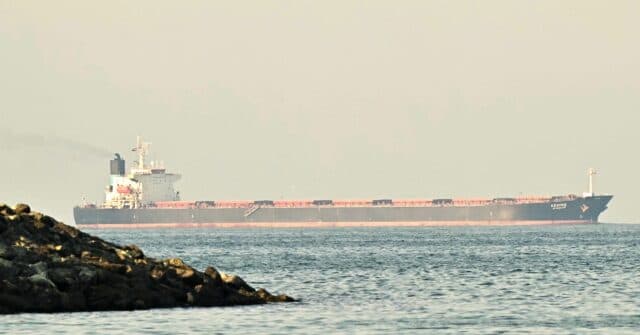
Iran Fires on Ships After Closing Strait Despite Trump Deal Claims
Left says
- •Iran's actions represent a defensive response to continued U.S. blockade tactics that violate international maritime law and escalate tensions unnecessarily
- •The attacks on commercial vessels demonstrate the dangerous consequences of Trump's aggressive military posturing that prioritizes confrontation over diplomatic solutions
- •U.S. blockade policies are causing humanitarian and economic harm by disrupting global oil supplies and threatening the livelihoods of ordinary Iranian citizens
- •Trump's premature claims of a deal while maintaining hostile actions show diplomatic bad faith that undermines genuine peace negotiations
Right says
- •Iran's unprovoked attacks on civilian commercial vessels constitute acts of maritime terrorism that threaten global shipping and energy security
- •The regime's closure of the Strait of Hormuz represents economic blackmail against the international community and violates freedom of navigation principles
- •Iran's contradictory behavior of granting clearance then firing on ships proves the regime cannot be trusted to honor any agreements
- •Trump's firm stance against Iranian aggression protects American interests and demonstrates that the U.S. will not be intimidated by terrorist tactics
Common Take
High Consensus- The Strait of Hormuz carries roughly one-fifth of the world's oil traffic, making its closure a significant threat to global energy markets
- At least three commercial vessels came under Iranian fire on Saturday, with confirmed damage to ships but no reported injuries
- Peace negotiations between the U.S. and Iran are ongoing with Pakistani mediators working to arrange further talks
- The current ceasefire is scheduled to expire by Wednesday, creating urgency for diplomatic resolution
The Arguments
Right argues
Iran's attacks on commercial vessels that had already received clearance to pass constitute clear acts of maritime terrorism that violate international law and threaten global energy security.
Left counters
These actions represent defensive responses to U.S. blockade tactics that themselves violate international maritime law and force Iran to protect its territorial waters from hostile military pressure.
Left argues
The U.S. blockade of Iranian ports while claiming diplomatic progress demonstrates bad faith negotiating that undermines genuine peace efforts and escalates tensions unnecessarily.
Right counters
Maintaining pressure through blockades is a legitimate diplomatic tool that prevents Iran from exploiting negotiations while continuing destabilizing activities, as evidenced by their immediate return to aggressive tactics.
Right argues
Iran's contradictory behavior of opening the strait one day then closing it and firing on ships the next proves the regime cannot be trusted to honor any agreements or commitments.
Left counters
Iran's actions were a direct response to continued U.S. blockade operations that violated the understanding to reopen the waterway, showing that American actions triggered the escalation.
Left argues
U.S. blockade policies are causing humanitarian and economic harm by disrupting global oil supplies and threatening the livelihoods of ordinary Iranian citizens while escalating regional tensions.
Right counters
Iran's closure of the Strait of Hormuz, through which one-fifth of global oil passes, represents economic blackmail against the entire international community and causes far greater disruption than targeted sanctions.
Right argues
Trump's firm stance demonstrates that the U.S. will not be intimidated by Iranian threats and protects American interests while maintaining freedom of navigation in critical international waterways.
Left counters
Trump's aggressive military posturing while simultaneously claiming diplomatic breakthroughs shows a contradictory approach that prioritizes confrontation over the diplomatic solutions needed for lasting peace.
Challenge Questions
These questions target genuine internal contradictions — meant to provoke honest reflection.
Right asks Left
“If Iran's actions are truly defensive responses to U.S. aggression, how do you justify Iran firing on commercial vessels from neutral countries like India that had already received Iranian clearance to pass through the strait?”
Left asks Right
“If Trump's approach is genuinely aimed at protecting American interests and international law, why did he claim Iran had 'agreed to everything' in negotiations while simultaneously maintaining a blockade that Iran explicitly said would trigger the strait's closure?”
Outlier Report
Left Fringe
Anti-war activists like CodePink's Medea Benjamin and some progressive House members like Rashida Tlaib who might frame this entirely as U.S. imperial overreach, representing roughly 15-20% of the left coalition.
Right Fringe
Hardline hawks like Senator Tom Cotton or John Bolton who would likely call for immediate military strikes against Iranian naval assets rather than diplomatic solutions, representing about 25-30% of the right coalition.
Noise Assessment
Moderate noise level - while partisan media frames differ significantly, the core facts (Iran firing on cleared commercial vessels) are clear enough that most discourse reflects genuine public concern rather than manufactured outrage.
Sources (6)
<p>Iran said on Saturday that the Strait of Hormuz is again closed to traffic following threats of such action if the U.S. continued its <a href="https://www.axios.com/2026/04/13/the-logic-behind-the-us-blockade" target="_blank">blockade</a> of the shipping channel.</p><p><strong>Why it matters:</strong> The closure could be a setback to efforts toward a new round of negotiations on a deal to end the war and will add pressure to an already tense situation between <a href="https://www.axios.com/world/iran" target="_blank">Iran</a> and the U.S.</p><hr /><p><strong>The latest: </strong>Fars, Iran's semi-official state news agency, first reported the closure, citing the ongoing blockade and quoting an Iranian official as saying that the U.S. "continue to engage in banditry and maritime piracy."</p><ul><li>"As long as the United States does not agree to the complete freedom of navigation for vessels .... the situation in the Strait of Hormuz will remain tightly controlled and in its previous state," the military official said, according to Fars. </li><li>U.S. Central Command said 23 ships complied with U.S. instructions to turn around since the blockade began earlier this week. It was unclear how many of those ships received instructions after the Strait was closed. </li></ul><p><strong>Adding more strain</strong> are reports from a U.S. defense official and the U.K. Maritime Trade Operation (UKMTO) that Iran has <a href="https://apnews.com/article/us-iran-war-israel-hormuz-18-april-2026-ab475cb979825b956a10d60103026b37" target="_blank">fired on tankers</a> in the Strait. </p><ul><li>A U.S. official told Axios that at least three attacks on commercial ships have occurred so far on Saturday, while the UKMTO reported two attacks. At least one ship was hit and caused some damage, but there were no reports of injuries. </li><li>Audio recordings from the attacks indicate that one of the ships was given clearance to enter the Strait and then was fired upon, prompting the dispatcher to say they were turning around. </li><li>According to <a href="https://x.com/tankertrackers/status/2045446586340086080?s=46" target="_blank">TankerTrackers.com</a>, two of the ships fired upon were Indian vessels, one carrying 2 million barrels of Iraqi oil. </li></ul><p><strong>Between the lines:</strong> The new developments come just hours after President <a href="https://www.axios.com/politics-policy/donald-trump" target="_blank">Trump</a> said he <a href="https://www.axios.com/2026/04/17/trump-iran-deal-interview-pakistan-talks" target="_blank">expected a deal </a>with Iran "in a day or two." </p><ul><li>Trump repeatedly said Friday that Iran had agreed to several stipulations the U.S. has been pushing for in talks, including that Iran agreed to <a href="https://www.cbsnews.com/news/trump-says-iranians-have-agreed-to-everything-including-removal-of-enriched-uranium/" target="_blank">stop enriching uranium</a> "forever." </li><li>Negotiators for the U.S. and Iran are expected to meet this weekend to continue peace talks. It's unclear if that will go ahead. </li><li>The White House did not respond to a request for comment.</li></ul><p><em>Editor's note: This is a breaking news story and will be updated. </em></p>
<p>President Donald Trump said that the United States will not be "blackmailed" after the Iranian military has once again proclaimed that the Strait of Hormuz will be closed and allegedly fired on multiple vessels on Saturday.</p> <p>The post <a href="https://www.breitbart.com/europe/2026/04/18/trump-says-iran-cant-blackmail-united-states-after-ships-come-under-fire-in-strait-of-hormuz/" rel="nofollow">Trump Says Iran ‘Can’t Blackmail’ United States, After Ships Come Under Fire in Strait of Hormuz</a> appeared first on <a href="https://www.breitbart.com" rel="nofollow">Breitbart</a>.</p>
Iran Restricts Hormuz Strait Again, Fires On Tanker As Peace Negotiations Slug Along
The developments come after the United States said it would continue its blockade. Meanwhile, Pakistani mediators are working to organize new negotiations between the countries.