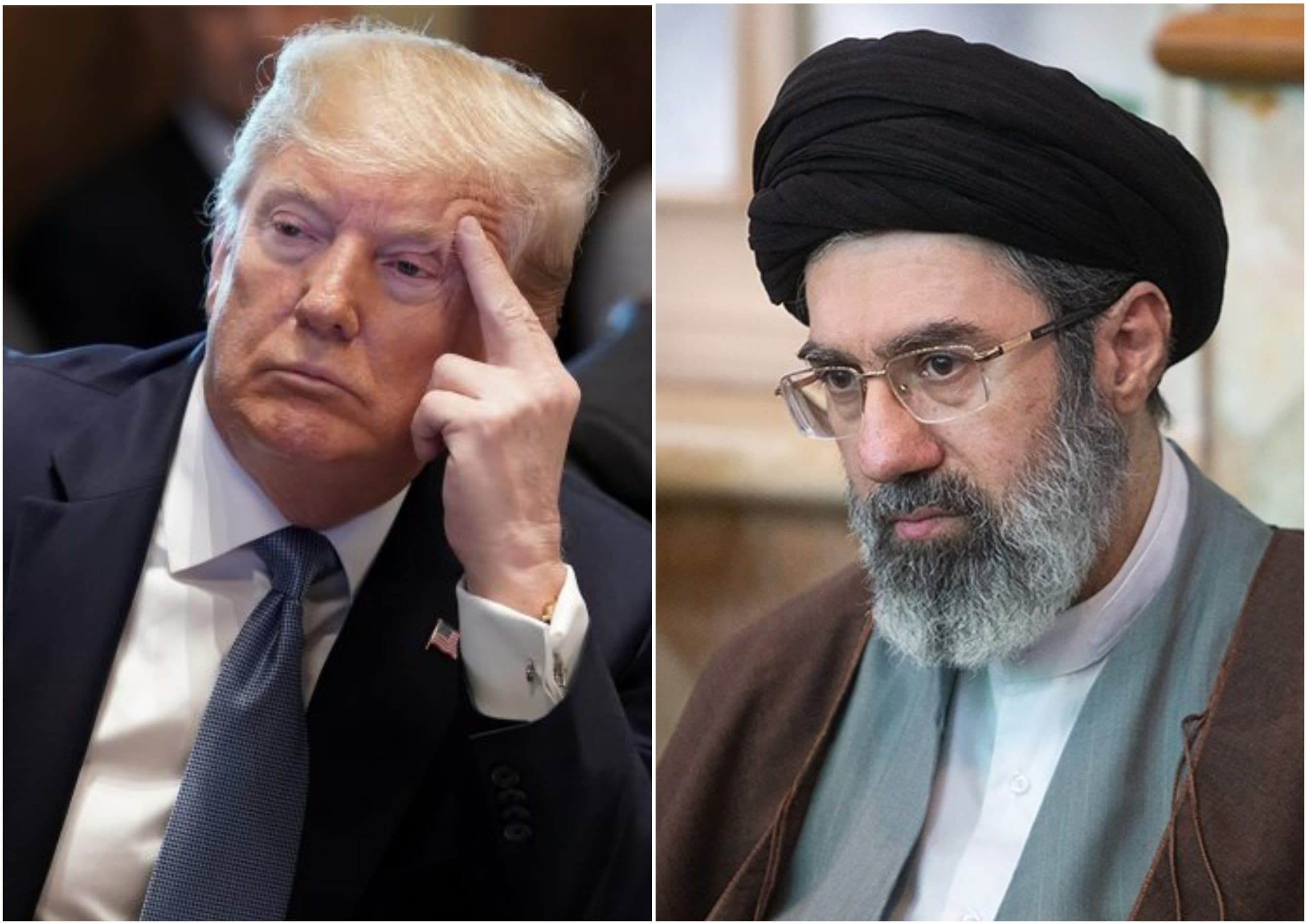
 Trump and Iranian Supreme Leader Ali Khamenei in split image showing key figures in Middle East crisis
Iran Rejects Trump's 15-Point Peace Plan, Sets Own Conditions
Left says
- •Trump's aggressive military campaign and harsh sanctions have pushed Iran into a defensive posture, making diplomatic solutions more difficult to achieve
- •The 15-point proposal demands Iran dismantle core sovereign capabilities while offering unclear sanctions relief, creating an unbalanced negotiating framework
- •Iran's counterproposal with five conditions represents a legitimate attempt to establish mutual terms rather than accept one-sided capitulation
- •Continued military pressure while seeking negotiations sends mixed signals that undermine the credibility of peace efforts
Right says
- •Iran's immediate rejection demonstrates the regime's unwillingness to abandon its destabilizing regional activities and nuclear ambitions
- •The 15-point plan appropriately addresses Iran's support for terrorist proxies and nuclear program, which pose genuine security threats
- •Iran's demands for sovereignty over the Strait of Hormuz would give the regime dangerous control over critical global shipping lanes
- •Tehran's contradictory statements about negotiations while rejecting reasonable terms shows the regime is not negotiating in good faith
Common Take
High Consensus- Both sides acknowledge that ongoing military conflict in the region carries significant risks and costs
- Pakistan has emerged as a potential mediator willing to facilitate communication between the parties
- The Strait of Hormuz remains a critical waterway for global commerce that requires secure passage
- Any sustainable resolution must address both security concerns and provide face-saving measures for all parties
The Arguments
Right argues
Iran's immediate rejection of the 15-point plan and contradictory statements about negotiations reveal a regime that is not negotiating in good faith and remains committed to destabilizing regional activities.
Left counters
Iran's rejection reflects the unbalanced nature of Trump's proposal, which demands Iran dismantle core sovereign capabilities while offering unclear sanctions relief, making it effectively a capitulation rather than a negotiation.
Left argues
The aggressive military campaign and harsh sanctions have pushed Iran into a defensive posture where accepting one-sided terms would be seen as capitulation, making diplomatic solutions more difficult to achieve.
Right counters
Iran's support for terrorist proxies and nuclear program pose genuine security threats that must be addressed; diplomatic solutions cannot ignore these legitimate concerns about regional stability.
Right argues
Iran's demand for sovereignty over the Strait of Hormuz would give the regime dangerous control over critical global shipping lanes, threatening international commerce and energy security.
Left counters
Iran's five-condition counterproposal represents a legitimate attempt to establish mutual terms and address their security concerns, rather than simply accepting demands that undermine their sovereignty.
Left argues
Continued military pressure while simultaneously seeking negotiations sends mixed signals that undermine the credibility of peace efforts and make it difficult for Iran to trust American intentions.
Right counters
The 15-point plan appropriately addresses Iran's nuclear ambitions and regional proxy support, which are the root causes of the conflict and must be resolved for any lasting peace.
Challenge Questions
These questions target genuine internal contradictions — meant to provoke honest reflection.
Right asks Left
“If Iran's counterproposal is truly a good-faith negotiating position, why does it include demands for control over international shipping lanes that would effectively give Iran leverage over global commerce?”
Left asks Right
“How can you argue Iran is negotiating in bad faith when the 15-point plan reportedly demands Iran dismantle core capabilities while offering only unclear sanctions relief - isn't this more of an ultimatum than a negotiation?”
Outlier Report
Left Fringe
Progressive anti-war activists like CodePink's Medea Benjamin and some Squad members like Rashida Tlaib who might frame any U.S. demands as inherently illegitimate imperialism, representing roughly 15% of the left coalition.
Right Fringe
Hardline hawks like John Bolton and some MAGA influencers calling for immediate military strikes rather than any negotiations, representing about 20% of the right coalition.
Noise Assessment
Moderate noise level - most discourse reflects genuine policy disagreements rather than performative positioning, though some amplification occurs around Iran's Strait of Hormuz demands which sound alarming to general public.
Sources (5)
Various news agencies and Iranian state media have reported that Tehran has responded "negatively" to the US proposal to end the war, but there are contradictory statements over whether it has rejected it outright. Reuters news agency, citing a senior Iranian official, reported that Tehran's initial response to the proposal was "not positive" but that it was still reviewing it. That is at odds with a report by the Iranian state-owned Press TV, which quoted a senior political security official saying Tehran has rejected the proposal, while putting forward its own conditions to end the war...
Iranian leaders are striking a note of defiance about ending the war waged against them by the United States and Israel, complicating President Trump’s apparent search for an off-ramp. The message being sent from Tehran over the past 24 hours has been unyielding.  An unnamed Iranian government official told state-owned Press TV that “Iran will…
Iran offered a counterproposal Wednesday to end the war in the region after rejecting a ceasefire plan backed by the Trump administration. Leaders in Tehran are asking for sovereignty over the Strait of Hormuz and a complete end to “aggression” from the U.S. and Israel, among other demands. “Iran will end the war at a…
White House press secretary Karoline Leavitt will brief reporters Wednesday afternoon after the U.S. reportedly proposed a 15-point peace plan to bring an end to the Middle East conflict and as strikes in the region persist. Pakistani intermediaries who delivered the proposal to Iran told The Associated Press that it includes sanctions relief, civilian nuclear…
<p>Iranian leaders rejected President Donald Trump's 15-point peace plan to end the ongoing U.S.-Israeli military effort against the regime, saying Wednesday that neither a ceasefire nor negotiations toward one are on the table.</p> <p>The post <a href="https://freebeacon.com/national-security/iran-does-not-accept-a-ceasefire-islamic-republic-rejects-trumps-peace-offer/">‘Iran Does Not Accept A Ceasefire’: Islamic Republic Rejects Trump’s Peace Offer</a> appeared first on <a href="https://freebeacon.com"></a>.</p>