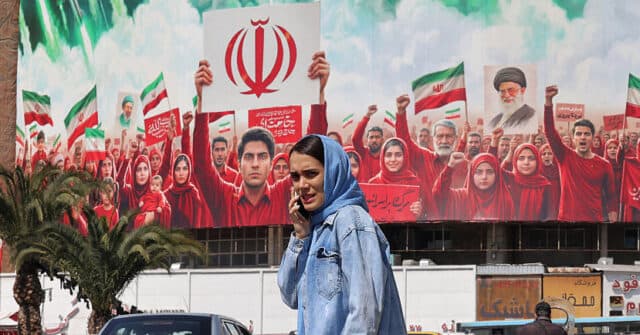
Iran rejects Trump's ceasefire proposal as Tuesday deadline looms
Left says
- •Trump's threats to bomb Iranian civilian infrastructure like power plants and water facilities could constitute war crimes under international law
- •Iran's demands for permanent peace guarantees and reconstruction aid reflect legitimate concerns about avoiding temporary ceasefires that could resume hostilities
- •The humanitarian consequences of destroying civilian infrastructure would be catastrophic for ordinary Iranians who have no role in the conflict
- •Regional mediators are working desperately to prevent massive escalation that could destabilize Gulf states' energy and water facilities
Right says
- •Iran continues to make maximalist demands while refusing reasonable ceasefire proposals, showing they are not serious about peace
- •Trump's firm deadline and credible threats are the only way to force Iran to negotiate after years of aggression and blocking vital shipping lanes
- •Iran's closure of the Strait of Hormuz threatens global energy security and economic stability, justifying strong American action
- •The administration is giving Iran every opportunity to avoid consequences through diplomatic channels before taking necessary military action
Common Take
High Consensus- Both sides are engaged in active negotiations through Pakistani, Egyptian, and Turkish mediators
- The proposed framework involves a two-phase process with an initial 45-day ceasefire followed by comprehensive peace talks
- Iran has submitted a formal 10-point response to ceasefire proposals through mediators
- The Tuesday 8 p.m. deadline represents a critical moment that could determine whether diplomacy succeeds or military action escalates
The Arguments
Right argues
Iran's rejection of reasonable ceasefire proposals while making maximalist demands for permanent guarantees, reconstruction aid, and regional concessions demonstrates they are negotiating in bad faith and using diplomacy as a stalling tactic. Trump's firm deadline creates necessary pressure to force Iran to abandon unrealistic positions and accept a workable agreement.
Left counters
Iran's demands for permanent peace guarantees are rational given the history of temporary ceasefires that collapse into renewed conflict, as seen in Gaza and Lebanon. Their insistence on reconstruction aid and broader regional peace reflects legitimate concerns about creating sustainable solutions rather than tactical pauses that benefit aggressors.
Left argues
Trump's threats to bomb civilian infrastructure like power plants and water facilities would constitute war crimes under international law and cause catastrophic humanitarian suffering for ordinary Iranians who bear no responsibility for the conflict. Such attacks violate the principle of distinction between military and civilian targets that forms the foundation of the laws of war.
Right counters
Iran's closure of the Strait of Hormuz is an act of economic warfare that threatens global energy security and civilian populations worldwide through higher fuel costs and supply disruptions. When Iran uses civilian shipping lanes as weapons, proportional responses targeting dual-use infrastructure become justified under the doctrine of military necessity.
Left argues
Regional mediators are desperately working to prevent massive escalation because Iran's threatened retaliation against Gulf states' energy and water facilities would destabilize the entire region and harm innocent civilians across multiple countries. The humanitarian and economic consequences of this conflict spiral would far exceed any strategic gains from military pressure.
Right counters
Iran's threats to attack Gulf state infrastructure prove they are the true regional destabilizer, holding civilian populations hostage to protect their aggressive policies. The only way to prevent this escalation is to demonstrate that Iran cannot use such threats with impunity and must face consequences for blocking international waterways.
Right argues
Iran has spent years blocking the Strait of Hormuz, which carries 20% of global oil supplies, effectively holding the world economy hostage while pursuing nuclear weapons and regional aggression. Trump's approach of credible military threats combined with diplomatic opportunities represents the only strategy that has brought Iran to the negotiating table after conventional diplomacy failed.
Left counters
Military threats against civilian infrastructure escalate rather than resolve conflicts, as evidenced by Iran's counter-threats against Gulf energy facilities. Sustainable peace requires addressing underlying grievances through patient diplomacy and confidence-building measures, not ultimatums that push both sides toward catastrophic escalation.
Challenge Questions
These questions target genuine internal contradictions — meant to provoke honest reflection.
Right asks Left
“If Iran's demands for permanent peace guarantees and reconstruction aid are legitimate, how do you reconcile supporting these maximalist positions while simultaneously arguing that Trump's deadline approach is counterproductive—doesn't Iran's rejection of reasonable interim measures prove that only pressure tactics can move them toward compromise?”
Left asks Right
“If Iran's closure of the Strait of Hormuz justifies targeting civilian infrastructure as dual-use facilities, how do you distinguish this from the war crimes you would condemn if committed by adversaries—and doesn't this logic legitimize Iran's threats against Gulf civilian infrastructure as retaliation for supporting U.S. military action?”
Outlier Report
Left Fringe
Progressive anti-war activists like CodePink's Medea Benjamin and some Squad members who might call for immediate withdrawal regardless of consequences represent roughly 15-20% of the left coalition.
Right Fringe
Hardline hawks like Senator Tom Cotton or commentators calling for immediate regime change without diplomatic attempts represent about 25-30% of the right, though Trump's own measured approach limits this faction's influence.
Noise Assessment
Moderate noise level - most discourse reflects genuine policy differences rather than performative positioning, though some social media amplification of extreme positions on both sides.
Sources (9)
<p>Iran sent a 10-point response to the proposals under discussion with the U.S. for ending the war, according to U.S. officials and the Iranian state news agency IRNA. </p><p><strong>Why it matters: </strong>The chances for a <a href="https://www.axios.com/2026/04/05/trump-iran-deal-power-plants" target="_blank">ceasefire deal</a> before Trump's deadline expires at 8pm ET on Tuesday currently appear slim. Trump says without a deal by then, he will order massive strikes on Iranian civilian infrastructure. <a href="https://www.axios.com/world/iran" target="_blank">Iran</a> says it would retaliate against energy and water facilities in the Gulf states.</p><hr /><ul><li>A U.S. official who saw the Iranian response called it "maximalist."</li><li>Trump told reporters Iran's response was "significant" but "not good enough." He said it was "highly unlikely" he'd extend his deadline again. "I gave them a chance and they haven't taken it," he said.</li><li>Meanwhile, Israeli Prime Minister Benjamin Netanyahu has warned Trump against a ceasefire deal, an Israeli official told Axios.</li></ul><p><strong>State of play:</strong> The U.S., Iran and a group of regional mediators are discussing the terms for a two-phase deal: a <a href="https://www.axios.com/2026/04/06/iran-war-us-tehran-ceasefire-talks" target="_blank">45-day ceasefire</a> that would then be used for negotiations; then a full agreement to end the war.</p><ul><li>The 45-day period could be extended if more time was needed for talks, one of the sources said.</li><li>Trump told Axios on Sunday that the U.S. was "in deep negotiations" with Iran and claimed a deal could be reached before Tuesday. "There is a good chance, but if they don't make a deal, I am blowing up everything over there," he said.</li><li>Trump has threatened <a href="https://www.axios.com/2026/04/05/trump-iran-strait-hormuz-bombing-threat" target="_self">to destroy infrastructure</a> that is vital to Iranian civilians if he is unable to reach a deal with the regime. Such attacks could constitute <a href="https://www.axios.com/2026/03/31/trump-iran-war-crimes-desalination-water" target="_self">war crimes</a>, and Iran's retaliation could also have major implications for civilians across the region.</li></ul><p><strong>What they're saying:</strong> According to the Iranian state news agency IRNA the Iranian response was discussed internally for two weeks, and sent on Monday to Pakistani mediators. </p><ul><li>The Iranian response emphasizes the need for a permanent end to the war and not just a temporary ceasefire.<strong> </strong> </li><li>Sources with knowledge of the negotiations said this is the key sticking point at the moment and the mediators are working on different formulas to guarantee that the ceasefire would lead to a permanent end of hostilities. </li><li>According to IRNA, the response includes a demand that ending the war in Iran would also include ending hostilities in other place in the region, like Lebanon, where Israel is conducting an invasion.</li><li>The Iranians demand "a protocol for safe passage through the Strait of Hormuz."</li><li>The Iranians also demand payment for reconstruction, and the lifting of sanctions imposed by the U.S. and the international community.</li></ul><p><strong>The other side:</strong> "They made a... significant proposal. Not good enough, but they have made a very significant step. We will see what happens," Trump told reporters on Monday.</p><ul><li>"If they don't make a deal they will have no bridges and no power plants," Trump added. </li><li>He noted that he would have gone even further to "keep the oil and make a lot of money," but stressed he knows the American people would not support such a move. "They like to see us win and come home."</li></ul><p><strong>Behind the scenes:</strong> On Sunday, Netanyahu expressed concern about a possible ceasefire deal in a call with Trump, an Israeli official said. </p><ul><li>The official said Netanyahu called Trump to congratulate him for the rescue of the F-15 crew member in Iran and said the call was warm and positive.</li><li>Trump told Netanyahu that if Iran agrees to the U.S. demands a ceasefire could happen, but stressed he won't give up on his demand that Iran hand over all of its enriched Uranium and agree not to resume enrichment, according to the Israeli official. </li><li>The White House didn't immediately respond to a request for comment. </li></ul>
<p>The U.S., <a href="https://www.axios.com/world/iran" target="_blank">Iran</a> and a group of regional mediators are discussing the terms for a potential 45-day ceasefire that could lead to a permanent end to the war, according to four U.S., Israeli and regional sources with knowledge of the talks.</p><p><strong>Why it matters:</strong> The sources said the chances for <a href="https://www.axios.com/2026/04/05/trump-iran-deal-power-plants" target="_blank">reaching a partial deal</a> over the next 48 hours are slim. But this last-ditch effort is the only chance to prevent a dramatic escalation in the war that will include massive strikes on Iranian civilian infrastructure and a retaliation against energy and water facilities in the Gulf states. </p><hr /><p><strong>Driving the news:</strong> President Trump's <a href="https://www.axios.com/2026/03/26/trump-iran-talks-deadline-extended-energy-strikes-pause" target="_self">10-day deadline</a> to Iran was expected to expire Monday evening. But on Sunday, Trump extended his deadline by 20 hours and <a href="https://truthsocial.com/%40realDonaldTrump/posts/116353078945787501" target="_blank">posted</a> on Truth Social a new deadline of Tuesday at 8pm ET.</p><ul><li>Trump told Axios on Sunday that the U.S. is "in deep negotiations" with <a href="https://www.axios.com/world/iran" target="_self">Iran</a> and that a deal can be reached before <a href="https://www.axios.com/2026/03/26/trump-iran-talks-deadline-extended-energy-strikes-pause" target="_blank">his deadline expires</a> on Tuesday.</li><li>"There is a good chance, but if they don't make a deal, I am blowing up everything over there," he said.</li></ul><p><strong>Trump has threatened</strong> <a href="https://www.axios.com/2026/04/05/trump-iran-strait-hormuz-bombing-threat" target="_blank">to destroy infrastructure</a> that is vital to Iranian civilians if he is unable to reach a deal with the regime.</p><ul><li>Such attacks could constitute <a href="https://www.axios.com/2026/03/31/trump-iran-war-crimes-desalination-water" target="_blank">war crimes</a>, and Iran has threatened to retaliate with attacks against infrastructure in Israel and the Gulf states. </li><li>Two sources said the operational plan for a massive U.S.-Israeli bombing campaign against Iran's energy facilities is ready to go, but stressed the extension of <a href="https://www.axios.com/politics-policy/donald-trump" target="_blank">Trump's</a> deadline was aimed at giving a last chance to reach a deal.</li></ul><p><strong>Behind the scenes:</strong> Four sources with knowledge of the diplomatic efforts said the negotiations are taking place through Pakistani, Egyptian and Turkish mediators and also through text messages sent between Trump's envoy Steve Witkoff and Iran's Foreign Minister Abbas Araghchi.</p><ul><li>A U.S. official said the Trump administration gave Iran several proposals in recent days, but so far Iranian officials hadn't accepted them. </li><li>The sources said the mediators are discussing with the parties the terms for two-phased deal; the first phase would a potential 45-day ceasefire during which a permanent end to the war would be negotiated.</li><li>The ceasefire could be extended if more time were needed for talks, one of the sources said. </li><li>The second phase would be an agreement on ending the war. </li><li>The sources said mediators think that fully reopening the <a href="https://www.axios.com/2026/04/04/trump-iran-hell-threat-deadline" target="_blank">Strait of Hormuz</a> and a solution for Iran's highly enriched Uranium — either through its removal from the country or dilution — could only be a result of a final deal.</li></ul><p><strong>Zoom in: </strong>The mediators are working on confidence building measures Iran could do regarding the reopening of the strait of Hormuz and it highly enriched Uranium stockpile, the sources said.</p><ul><li>These two issue are Iran's main bargaining chips in the negotiations and the Iranians will not agree to fully give up on them for only 45 days of ceasefire, two of the sources said. </li><li>The mediators want to see whether Iran could take partial step on both issues in the first phase of the deal. They are also working on steps the Trump administration could take to give Iran guarantees that the ceasefire will not be temporary and that the war will not resume. </li><li>The Iranian officials made clear to the mediators they don't want to be caught in a <a href="https://www.axios.com/2026/01/14/gaza-phase-two-hamas-disarm-israel" target="_blank">Gaza</a> or <a href="https://www.axios.com/2026/03/14/israel-lebanon-war-peace-hezbollah-france" target="_blank">Lebanon</a> situation where there is a ceasefire on paper, but that the U.S. and Israel can attack again whenever they want to. </li><li>The mediators are also working on other U.S. confidence-building measures the U.S. could take that would address some of Iran's demands. </li><li>The White House declined to comment. </li></ul><p><strong>What to watch:</strong> A source with direct knowledge said the the mediators are highly concerned that the Iranian retaliation for a U.S.-Israeli strike on the country's energy infrastructure would be destructive for Gulf countries' <a href="https://www.axios.com/energy-climate/oil-companies" target="_blank">oil </a>and water facilities.</p><ul><li>The mediators told the Iranian officials there is no time for further negotiation tactics and stressed the next 48 hours are the last opportunity for them to reach a deal and prevent massive destruction for the country. </li><li>The Iranian officials, at least in public, are still taking an extremely hard line and rejecting any concessions. The Iranian revolutionary guards corps navy said Sunday the situation in the Strait of Hormuz will "never return" to what it was before the war, especially for the U.S. and Israel.</li></ul><p><strong>More from Axios:</strong></p><ul><li><a href="https://www.axios.com/2026/04/05/oil-rises-iran-war-future-trump" target="_blank">Oil climbs anew on mixed signals about Iran war's future</a></li><li><a href="https://www.axios.com/2026/04/05/trump-us-suspected-iranian-trap-during-f15-rescue" target="_blank">Exclusive: Trump says U.S. feared Iran trap during F-15 crew rescue</a></li><li><a href="https://www.axios.com/2026/04/05/trump-iran-deal-power-plants" target="_blank">Trump to Axios: Iran deal possible by Tues., otherwise "I am blowing up everything"</a></li></ul>
<p>JD Vance, Witkoff, and Iran's Foreign Minister were in overnight talks that would see agreement announced as soon as today, report claims.</p> <p>The post <a href="https://www.breitbart.com/europe/2026/04/06/ceasefire-could-be-today-after-vance-in-overnight-talks-with-iran-report/" rel="nofollow">Ceasefire Could Be Today After JD Vance Overnight Talks With Iran and Pakistan: Report</a> appeared first on <a href="https://www.breitbart.com" rel="nofollow">Breitbart</a>.</p>
President Trump told reporters at the White House on Monday that a counterproposal from Iran to end the war was "substantial." CBS News' Nancy Cordes has more.
Trump tells reporters at the White House Easter Egg Roll that Iran made a significant proposal but says it is not good enough amid ongoing strikes.
The president has repeatedly declared that Iran seeks to negotiate an end to the conflict, despite Tehran's publicly bellicose stance and its rejection of core U.S. demands.
Iran has rejected a 45-day ceasefire proposal and instead wants a permanent end to the war, even as President Donald Trump's ultimatum looms.
President Trump said Monday the latest ceasefire proposal from Iran was “significant” but still “not good enough.” “They made a proposal, and it’s a significant proposal. It’s a significant step. It’s not good enough, but it’s a very significant step,” Trump told reporters ahead of the White House’s annual Easter Egg Roll. “They have made…
Iran again shot down a peace proposal from the U.S. on Monday, calling it “unrealistic.” The rejection comes as the countries approach a deadline imposed by President Trump for the Strait of Hormuz to be reopened or Iran would face “all Hell,” with military strikes on power plants. The U.S. and Iran received a draft ceasefire proposal…