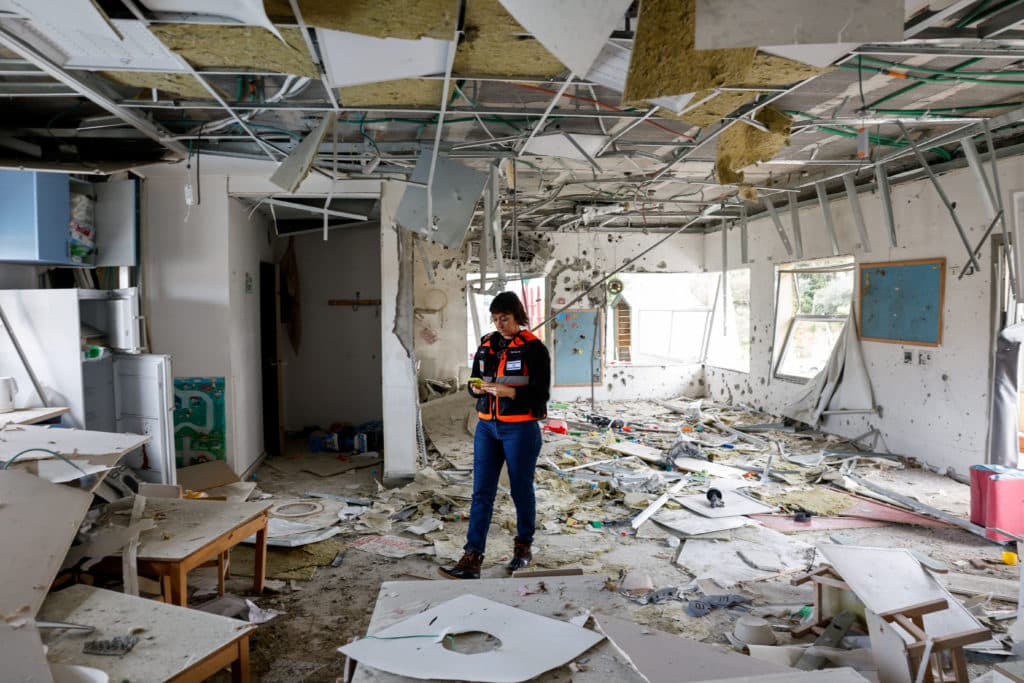
Iran Strikes Near Israeli Nuclear Site, Air Defenses Fail
Left says
- •The failure of Israel's sophisticated air defense systems to intercept these missiles represents a significant escalation that exposes vulnerabilities in military capabilities
- •Over 160 civilians were injured, including children, highlighting the human cost of this conflict and the need for immediate de-escalation
- •Iran's ability to strike near nuclear facilities demonstrates the dangerous potential for this conflict to spiral into catastrophic consequences for the region
- •The international community must intervene diplomatically to prevent further civilian casualties and nuclear-related incidents
Right says
- •Iran deliberately targeted civilian areas near critical nuclear infrastructure, demonstrating its intent to cause mass casualties and threaten global security
- •The strikes represent a dangerous escalation that proves Iran poses an existential threat not just to Israel but to international stability
- •Israel's defensive failures underscore the need for stronger military capabilities and continued international support to counter Iranian aggression
- •Iran's actions justify robust military responses to protect civilians and prevent further attacks on critical infrastructure
Common Take
High Consensus- Over 160 civilians were injured in the Iranian missile strikes on Dimona and Arad, including children who required hospitalization
- Israel's air defense systems failed to intercept the Iranian ballistic missiles that struck both cities
- This marked the first time Israel's nuclear research center area has been targeted since the current conflict began
- The strikes occurred hours after Iran's Natanz nuclear facility was reportedly attacked
The Arguments
Left argues
The failure of Israel's sophisticated Iron Dome and other air defense systems to intercept these missiles exposes critical vulnerabilities that could embolden further attacks and escalate regional conflict. With over 160 civilians injured, including children with head and chest injuries from debris, the human cost demonstrates why diplomatic intervention must take priority over military responses.
Right counters
Iran deliberately targeted civilian areas near nuclear infrastructure precisely to maximize casualties and create terror, proving that diplomatic engagement with a regime that uses mass civilian harm as a weapon is futile. The defensive failures underscore why Israel needs stronger military capabilities and international support, not diplomatic appeasement of Iranian aggression.
Right argues
Iran's targeting of areas near Israel's nuclear research center represents a dangerous escalation that threatens not just Israeli civilians but global security, as any damage to nuclear facilities could have catastrophic regional consequences. This calculated attack on critical infrastructure demonstrates Iran's willingness to risk nuclear disaster to achieve its military objectives.
Left counters
The International Atomic Energy Agency confirmed no damage to the actual nuclear facility, and Iran's strikes appear to be retaliatory responses to attacks on its own nuclear sites rather than unprovoked aggression. The focus should be on preventing further escalation through diplomatic channels rather than using this incident to justify expanded military action.
Right argues
Iran's ability to launch 400 missiles with only 92% interception rate, including successful strikes that injured over 160 people, proves that current defensive measures are insufficient against Iranian capabilities. The fact that children were among the seriously injured shows Iran's deliberate targeting of civilian populations as a terror tactic.
Left counters
A 92% interception rate actually demonstrates the effectiveness of Israel's defense systems, with the few missiles that got through causing injuries but no deaths due to proper shelter protocols. The civilian casualties, while tragic, highlight why de-escalation through international diplomatic intervention is essential to prevent further harm to innocent people on both sides.
Left argues
The strikes came hours after Iran's Natanz nuclear facility was attacked, suggesting this was a retaliatory cycle that could spiral into catastrophic consequences if not broken through immediate international diplomatic intervention. The proximity to nuclear facilities on both sides creates unacceptable risks that require urgent de-escalation rather than military escalation.
Right counters
Iran's retaliation specifically targeted civilian areas rather than military installations, revealing its strategy of using terror against innocent populations as a weapon of war. This pattern of deliberately endangering civilians while hiding behind claims of proportional response demonstrates why Iran cannot be trusted in diplomatic negotiations and must be deterred through strength.
Challenge Questions
These questions target genuine internal contradictions — meant to provoke honest reflection.
Right asks Left
“If diplomatic intervention is the solution, how do you propose the international community effectively engage with a regime that just demonstrated its willingness to target civilian areas near nuclear facilities as retaliation - what specific diplomatic leverage exists that hasn't already been tried and failed?”
Left asks Right
“If Iran poses such an existential threat that justifies robust military responses, why did Israel's own military deny responsibility for the Natanz attack that preceded Iran's retaliation, and how does escalating military action address the root causes of this conflict rather than perpetuating the cycle?”
Outlier Report
Left Fringe
Squad members like Rashida Tlaib and Ilhan Omar, along with anti-war activists like CodePink's Medea Benjamin, who might blame Israeli actions for provoking the strikes or call for immediate ceasefire without condemning Iran. Represents roughly 10-15% of the left.
Right Fringe
Figures like Tucker Carlson, Candace Owens, or America First isolationists who might argue the U.S. shouldn't be involved in Middle East conflicts at all, despite supporting Israel rhetorically. Represents about 15-20% of the right.
Noise Assessment
Moderate noise level - while partisan media will amplify their respective framings, the core facts (Iranian missiles hitting near nuclear sites, civilian casualties, defense failures) are clear enough that most discourse reflects genuine public concern rather than performative positioning.
Sources (5)
Iran struck two communities near Israel's main nuclear research center late Saturday, leaving buildings shattered and at least seven people seriously injured, hours after Tehran's main nuclear enrichment site was hit.
Israel is investigating how ballistic missiles got through the country's sophisticated air defences.
Iran struck two communities near Israel's main nuclear research center late Saturday, leaving more than 100 people wounded in the southern part of the country.
A missile rips through the night sky — then a blinding fireball engulfs the scene as the strike hits, all caught on video. The strike left around 75 people injured in Arad, including 10 who were seriously hurt and rushed to a hospital in Beersheba, according to The Jerusalem Post. Arad Mayor Yair Ma’ayan said ...
Israel’s military said it was unable to intercept the Iranian missiles that hit the cities of Dimona and Arad, the largest population centers near the facility in the Negev desert.