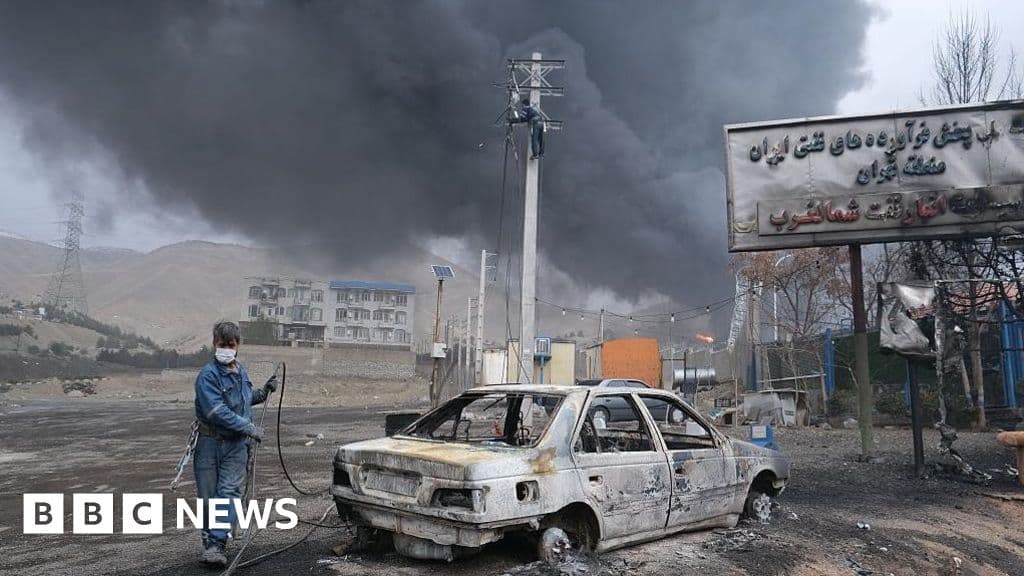
 Aftermath of conflict showing damaged vehicle and smoke in what appears to be Iran
Iran Strikes UAE Base Hours After Vowing Not to Attack Neighbors
Left says
- •The escalating conflict demonstrates the dangerous cycle of violence that results from aggressive military interventions in the Middle East
- •Civilian populations in Tehran and other cities are bearing the brunt of strikes on critical infrastructure, creating humanitarian crises
- •The targeting of oil facilities represents an escalation that threatens regional stability and global energy security
- •Iran's retaliatory strikes across the Gulf show how military actions inevitably spread conflict to neighboring countries
Right says
- •Iran's immediate violation of its president's pledge not to attack neighbors reveals the regime's duplicity and untrustworthiness
- •The strikes on Iranian oil infrastructure are necessary responses to Iran's destabilizing activities and support for regional proxy groups
- •Iran's attacks on multiple Gulf states demonstrate its role as the primary aggressor threatening regional peace
- •Decisive military action is required to deter Iran's continued aggression and protect key allies in the region
Common Take
High Consensus- Oil depot fires in Tehran and Karaj have created dangerous air quality conditions for civilian populations
- The conflict has expanded beyond Iran to include strikes reported in Saudi Arabia, UAE, Qatar, Bahrain, and Kuwait
- Iranian authorities have advised residents to stay indoors due to hazardous materials released from burning facilities
- The situation represents a significant escalation in regional tensions with potential global implications
The Arguments
Left argues
The strikes on Iranian oil infrastructure are creating humanitarian crises for civilian populations, with toxic smoke covering Tehran and residents unable to see the sun, demonstrating how military escalation inevitably harms innocent people.
Right counters
Iran's own actions targeting civilian infrastructure across multiple Gulf states show it has no regard for civilian harm, making surgical strikes on military-relevant oil facilities a proportionate response to deter further aggression.
Right argues
Iran's immediate violation of President Pezeshkian's public pledge not to attack neighbors by striking the UAE base reveals the regime's fundamental duplicity and proves diplomatic engagement is futile.
Left counters
The contradiction between diplomatic statements and military actions reflects the chaotic nature of escalating conflicts where multiple actors and pressures make consistent policy impossible, not inherent duplicity.
Right argues
Iran's simultaneous strikes across Saudi Arabia, UAE, Qatar, Bahrain, and Kuwait demonstrate it is the primary regional aggressor threatening multiple allies, requiring decisive military action to protect them.
Left counters
Iran's regional strikes are retaliatory responses to attacks on its own territory and infrastructure, representing defensive actions in an escalating cycle rather than unprovoked aggression.
Left argues
The targeting of oil facilities threatens global energy security and regional stability, as burning depots release toxic materials that endanger civilian populations on a massive scale according to Iranian officials.
Right counters
Iran's own support for proxy groups and destabilizing activities across the region pose a far greater long-term threat to stability than targeted strikes on infrastructure supporting those operations.
Left argues
The rapid spread of conflict from Iran to multiple Gulf states demonstrates how military interventions inevitably expand beyond their intended scope, creating the very regional instability they claim to prevent.
Right counters
Iran's ability to simultaneously strike multiple countries shows its existing destabilizing capabilities that require containment, not the result of current military actions but the reason they became necessary.
Challenge Questions
These questions target genuine internal contradictions — meant to provoke honest reflection.
Right asks Left
“If military interventions inevitably create cycles of violence and harm civilians, how do you propose stopping Iran's documented attacks on multiple neighboring countries without any military response?”
Left asks Right
“If Iran's strikes across multiple Gulf states are merely defensive retaliation, why did Iran's president publicly promise not to attack neighbors just hours before authorizing exactly such attacks?”
Outlier Report
Left Fringe
Squad members like Rashida Tlaib and Ilhan Omar who consistently oppose any military engagement in Middle East conflicts, representing roughly 15-20% of the Democratic base based on their primary vote shares and progressive caucus membership.
Right Fringe
Figures like Tucker Carlson and some America First Republicans who oppose overseas military entanglements entirely, representing approximately 10-15% of the Republican base based on their influence in Trump-skeptical conservative media.
Noise Assessment
Moderate noise ratio - this story involves active military strikes which typically generate genuine rather than performative responses, though social media amplification of extreme positions likely exceeds actual public sentiment by 20-30%.
Sources (3)
Iran said it struck a U.S. air base in the United Arab Emirates on Saturday, shortly after Iranian President Masoud Pezeshkian said his country would stop attacking neighboring countries. Iran's Tasnim News agency said the Islamic Revolutionary Guard Corps' navy drone unit attacked the Al Dhafra air base south of the capital Abu Dhabi.
Fuel depots were hit in Tehran and Karaj overnight, with videos showing huge fires and plumes of smoke in multiple locations.
<p>A huge column of fire and smoke could be seen rising from an oil depot in the Iranian capital in video shared on social media.</p><p></p><p>Footage from central Tehran shows fires across the skyline as the US and <a href="https://www.theguardian.com/world/israel">Israel</a> hit five oil facilities in overnight strikes in and near the city, an official told state TV.</p><p></p><p>A fresh wave of Iranian strikes hit the Gulf on Sunday, with Saudi Arabia, the United Arab Emirates, Qatar, Bahrain and Kuwait all reporting attacks</p><p></p><ul><li><p><a href="https://www.theguardian.com/world/live/2026/mar/08/middle-east-crisis-live-china-warns-world-cannot-return-to-law-of-the-jungle-trump-says-iran-being-decimated?filterKeyEvents=false&page=with%3Ablock-69ad17a48f08ef977b471d72#block-69ad17a48f08ef977b471d72"><strong>Middle East crisis: latest updates</strong></a></p></li></ul> <a href="https://www.theguardian.com/world/video/2026/mar/08/tehran-oil-sites-on-fire-as-iran-exchanges-strikes-with-israel-and-us-video-report">Continue reading...</a>