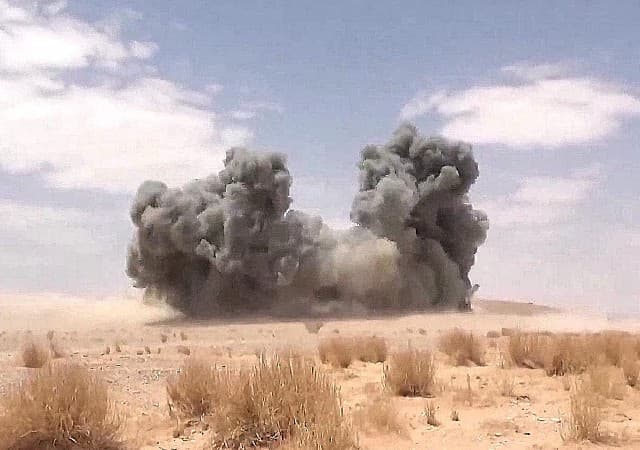
Iran's Proxies Squeeze Saudi Oil From Two Fronts as Trump Hesitates
Left says
- •Saudi Arabia finds itself caught in a war it never wanted, having invested heavily in regional diplomacy and de-escalation with Iran before this conflict erupted.
- •The Trump administration's hesitance to widen U.S. military involvement reflects legitimate political constraints, including an unpopular, stalemated Mideast war and looming congressional elections.
- •Trump's own comments suggest an effort to de-escalate rather than inflame the situation, noting the Houthis' reluctance to fight the U.S. directly.
- •The crisis underscores how fragile global energy infrastructure is to asymmetric warfare, raising questions about long-term U.S. strategy beyond military reaction.
Right says
- •Iran is orchestrating a coordinated, multi-front campaign through its proxies—the Houthis and Iraqi militias—to strangle Saudi oil exports and Western-aligned economies.
- •U.S. hesitation and unpredictability under Trump are leaving a key ally, Saudi Arabia, exposed at a moment of maximum vulnerability, with few good options left to defend itself.
- •The attacks represent a deliberate escalation designed to squeeze global oil markets and undermine U.S. credibility in the region, not isolated incidents.
- •Iraq's government has effectively admitted responsibility by dismissing officials and pledging investigation, even as Iran-backed militia umbrella groups deny involvement, showing accountability gaps enabling continued attacks.
Common Take
High Consensus- Saudi Arabia's East-West pipeline, a critical bypass for the Strait of Hormuz, was shut down after drone attacks traced to Iraq.
- Iran-backed Houthi forces have seized strategic territory near the Bab al-Mandeb Strait, threatening a vital global shipping route.
- Oil prices are surging as a direct result of these combined disruptions to Saudi energy infrastructure.
- Iraq's government confirmed the attacks originated from its territory and took action, including dismissing two senior officials, while denying direct militia responsibility.
The Arguments
Right argues
Iran is running a coordinated, multi-front proxy campaign—Houthis in the Red Sea, militias in Iraq—deliberately timed to strangle Saudi oil exports from two directions simultaneously, exploiting the closure of the Strait of Hormuz to maximize economic damage to a key U.S. ally.
Left counters
Coordination between geographically and politically distinct proxies is asserted by 'regional officials' but not conclusively proven, and treating every setback for Saudi Arabia as a unified Iranian master plan risks overstating Tehran's command and control over groups with their own local grievances and incentives.
Left argues
Saudi Arabia is a reluctant participant in a war it worked hard to avoid through years of diplomacy and de-escalation with Iran, and its current predicament reflects the collapse of that diplomatic effort rather than any Saudi provocation.
Right counters
Saudi Arabia's past diplomacy with Iran did nothing to stop Tehran's proxies from arming, expanding, and eventually striking—goodwill gestures did not buy security, and the kingdom's current vulnerability shows the limits of appeasement-style outreach to a regime committed to regional destabilization.
Right argues
Trump's hesitance to widen U.S. involvement leaves Saudi Arabia dangerously exposed at precisely the moment it needs American backing most, and this unpredictability undermines U.S. credibility as a security guarantor in the region.
Left counters
Trump's reluctance reflects legitimate democratic accountability—an unpopular, stalemated war and looming elections are real constraints, and his own comments suggest a calculated attempt at de-escalation, noting even the Houthis don't want to fight the U.S. directly, which could actually reduce regional escalation.
Left argues
The crisis exposes a deeper structural problem: global energy infrastructure remains extraordinarily vulnerable to asymmetric warfare by non-state proxies, raising questions about long-term U.S. and Saudi strategy that go beyond any single administration's immediate military response.
Right counters
Focusing on abstract 'infrastructure vulnerability' distracts from the immediate, identifiable cause—Iran's deliberate sponsorship of attacks—and risks letting Tehran off the hook by reframing a hostile campaign as a systemic or structural inevitability rather than a policy choice by a specific adversary.
Right argues
Iraq's government effectively conceded involvement by dismissing officials and launching an investigation after the pipeline attack, even as Iran-backed militia umbrella groups issued denials—showing an accountability gap that lets these attacks continue with minimal consequence.
Left counters
Iraq's personnel changes and pledge to investigate could just as easily reflect a weak central government scrambling to manage militias it doesn't fully control, rather than proof of state complicity—conflating Baghdad's inability to rein in armed factions with deliberate government sponsorship oversimplifies a genuinely fractured security situation.
Challenge Questions
These questions target genuine internal contradictions — meant to provoke honest reflection.
Right asks Left
“If Saudi Arabia's diplomatic outreach to Iran before this conflict is presented as evidence of good-faith de-escalation, how does the left reconcile that narrative with the reality that Iran's proxies expanded and struck anyway—doesn't this suggest the diplomacy failed to address the actual threat, regardless of intent?”
Left asks Right
“If the right argues that Iran's proxy network represents a deliberate, coordinated campaign under Tehran's direction, how does it explain the Houthis' documented internal panic, near-collapse, and rapid reversal of fortune days before their offensive succeeded—doesn't that instability undercut the claim of centralized, strategic control from Iran?”
Outlier Report
Left Fringe
Progressive anti-war voices like Rep. Ilhan Omar or commentators such as Jeremy Scahill who frame Saudi Arabia as an unsympathetic autocratic actor undeserving of U.S. concern represent maybe 10-15% of the left, pushing back on any framing that treats Saudi Arabia as a sympathetic victim.
Right Fringe
Hawkish figures like Sen. Lindsey Graham or commentators such as Mark Levin who argue Trump's hesitance constitutes dangerous weakness demanding immediate military action represent roughly 15-20% of the right, going further than the mainstream right framing which mainly criticizes unpredictability rather than demanding intervention.
Noise Assessment
High noise ratio: much of the fast-moving battlefield detail (pipeline strikes, Houthi territorial gains) generates intense social media amplification from foreign policy accounts and oil market traders, but general public attention to this specific unfolding conflict remains relatively low and issue salience for average Americans is modest compared to domestic economic concerns.
Sources (10)
<p>"Yemen’s rampant Houthi forces have captured the strategic island of Perim in the Bab al-Mandab strait, expanding their control of the narrow waterway, one of the world’s vital shipping routes."</p> The post <a href="https://legalinsurrection.com/2026/09/saudi-arabia-shuts-down-key-pipeline-as-iranian-proxies-wage-multi-front-assault/">Saudi Arabia Shuts Down Key Pipeline as Iranian Proxies Wage Multi-Front Assault </a> first appeared on <a href="https://legalinsurrection.com">Le·gal In·sur·rec·tion</a>.
Saudi Arabia on Friday moved to halt a key oil pipeline used to bypass the Strait of Hormuz after Iranian-backed Houthi militants launched a series of attacks the day prior, dealing another blow to the kingdom's ability to move oil. The Saudi energy minister said Friday that the East-West Pipeline was closed as a precaution after multiple attacks in the region. The energy minister did not say who was behind the attacks, but said shutting down the pipeline was a "precautionary measure."...
A drone attack from Iraq forced Saudi Arabia to close its East-West pipeline, the kingdom said, threatening a key workaround to Iran’s Persian Gulf blockade.
A lightning advance by Houthi rebels threatens a crucial Red Sea shipping route. Drone attacks blamed on Iraqi militias have forced the closure of a major pipeline, and Iran is still disrupting the Strait of Hormuz.
Though an umbrella group of Iran-backed militias in Iraq denied their involvement, Iraq's government confirmed the attacks had originated from its territory, pledged to investigate and dismissed two senior officials.
<p>Having the Strait of Hormuz and energy exports via the Red Sea shut down at the same time has long been a top fear for global oil markets. </p> <p>The post <a href="https://www.twz.com/news-features/saudis-remaining-energy-lifeline-to-the-world-under-threat-after-successful-houthi-strikes">Saudi’s Remaining Energy Lifeline To The World Under Threat After Successful Houthi Strikes (Updated)</a> appeared first on <a href="https://www.twz.com">TWZ</a>.</p>
The world’s top three container operators said they fear instability in Gaza and broader regional tensions mean continued danger.
Saudi Arabia has closed a critical oil pipeline after it was struck by drones launched from Iraq, with the latest squeeze reverberating through the region Saturday as attacks by Iran-backed Houthi rebels threatened to deepen the world’s energy crisis.