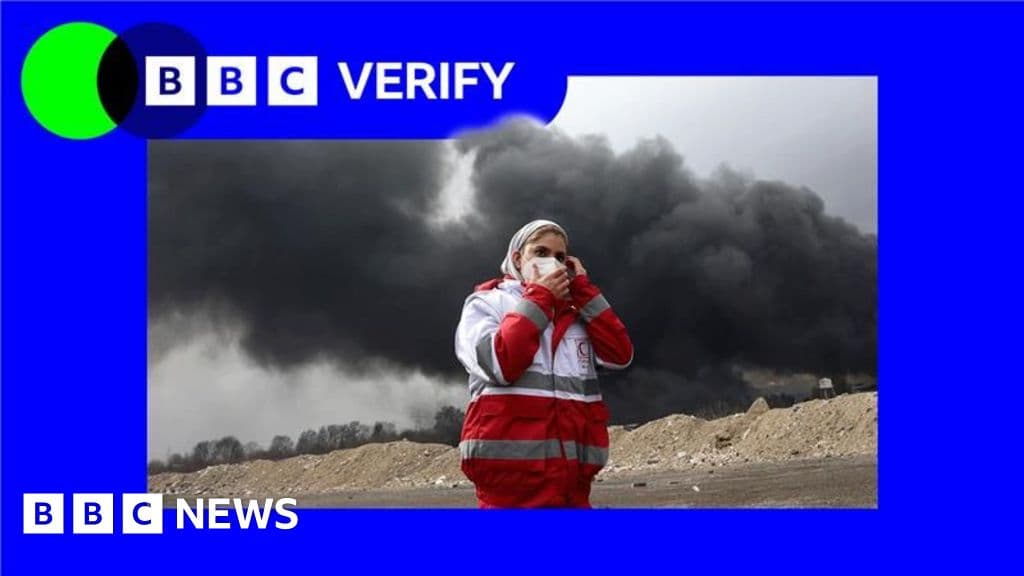
 Massive fires and black smoke rise over city after oil facility strikes
Israeli Strikes on Iranian Oil Facilities Cause Toxic Black Rain
Left says
- •The strikes represent a devastating environmental and public health catastrophe, with toxic chemicals contaminating Tehran's air, water, and soil that will harm millions of residents for years to come
- •Children, elderly people, and those with pre-existing conditions face the most severe health risks from the toxic fallout and acid rain
- •The attacks on civilian infrastructure violate international humanitarian law and constitute collective punishment of Iranian civilians
- •The environmental damage from burning oil facilities will have long-term consequences that monitoring agencies are struggling to track amid the widening conflict
Right says
- •The strikes targeted legitimate military infrastructure that Iran uses to fund terrorism and threaten regional stability
- •Israel acted in self-defense after sustained Iranian attacks and provocations against Israeli territory and allies
- •The precision strikes focused on fuel depots and military facilities rather than civilian population centers
- •Iran's continued aggression and support for proxy groups necessitated decisive action to degrade their operational capabilities
Common Take
High Consensus- Israeli strikes hit multiple oil facilities in and around Tehran, causing massive fires and toxic smoke plumes
- The attacks have created serious environmental and health hazards for Tehran's nearly 10 million residents
- Black rain containing soot and particulate matter fell across Tehran following the strikes
- The World Health Organization has warned about severe health risks from the contaminated air, water, and food supplies
The Arguments
Left argues
The strikes have created an unprecedented environmental and public health catastrophe, with toxic black rain contaminating Tehran's air, water, and soil, putting millions of civilians at severe health risk for years to come. The WHO has specifically warned that attacks on petroleum facilities pose serious health impacts, especially for children, elderly, and those with pre-existing conditions.
Right counters
While environmental damage is regrettable, Israel targeted legitimate military infrastructure that Iran uses to fund terrorism and threaten regional stability. The precision strikes focused on fuel depots and military facilities rather than population centers, and such action was necessary to degrade Iran's operational capabilities after sustained Iranian attacks.
Right argues
Israel acted in legitimate self-defense after sustained Iranian attacks and provocations, targeting military infrastructure that directly supports Iran's funding of terrorism and proxy groups throughout the region. The strikes were precision operations aimed at degrading Iran's operational capabilities rather than harming civilians.
Left counters
Attacking civilian infrastructure that causes widespread environmental contamination and health risks to millions of innocent people violates international humanitarian law and constitutes collective punishment. The long-term health consequences for Tehran's population far exceed any military objectives achieved.
Left argues
The attacks violate international humanitarian law by targeting civilian infrastructure and creating collective punishment for Iranian civilians who have no role in their government's policies. Environmental monitoring agencies are struggling to track the full scope of disasters from this widening conflict.
Right counters
These facilities serve dual military-civilian purposes and are legitimate targets under international law when they directly support military operations and terrorism financing. Iran's continued aggression against Israeli territory and allies necessitated decisive action to prevent further escalation.
Right argues
The targeted oil facilities are integral to Iran's ability to fund proxy groups and terrorist activities across the region, making them legitimate military targets. Iran's environmental agency and Red Crescent warnings demonstrate the regime's awareness of risks but failure to cease provocative actions.
Left counters
Even if facilities have military connections, the scale of environmental contamination affecting millions of civilians is disproportionate to any military advantage gained. The toxic fallout is already contaminating soil and water supplies, creating long-term health crises that will persist long after any military objectives are achieved.
Challenge Questions
These questions target genuine internal contradictions — meant to provoke honest reflection.
Right asks Left
“If environmental protection and civilian welfare are paramount concerns, how do you reconcile advocating for restraint against a regime that has consistently used civilian areas to shield military assets and has itself caused environmental damage through proxy conflicts across the region?”
Left asks Right
“If precision strikes on military infrastructure are justified for self-defense, how do you account for the fact that the environmental and health consequences of these particular targets were predictable and will harm millions of civilians who pose no military threat?”
Outlier Report
Left Fringe
Cannot identify specific named figures taking extreme positions from the provided sources, as coverage focuses on factual reporting of environmental impacts rather than commentary from political figures.
Right Fringe
Cannot identify specific named figures taking extreme positions from the provided sources, as the right-leaning coverage remains within mainstream tactical reporting rather than featuring commentary from political figures.
Noise Assessment
Low noise ratio - coverage appears substantive and fact-based across sources, focusing on verifiable environmental and health impacts rather than performative political positioning.
Sources (5)
Israeli air strikes targeted an oil storage facility in Tehran on Saturday night, according to reports.
Air strikes have damaged at least four oil facilities since US-Israeli attacks on Iran began last month.
This story was originally published by Guardian and is reproduced here as part of the Climate Desk collaboration. Israel’s bombing of Iran’s oil infrastructure will have major long-term environmental repercussions, experts have warned, as monitors admitted they were struggling to keep track of the environmental disasters arising from the widening war. Even as Iranians filled the streets to mark the appointment […]
Video shows fires in Tehran amid strikes on oil depot
<p>A huge column of fire and smoke could be seen rising from an oil depot in the Iranian capital in video shared on social media.</p><p></p><p>Footage from central Tehran shows fires across the skyline as the US and <a href="https://www.theguardian.com/world/israel">Israel</a> hit five oil facilities in overnight strikes in and near the city, an official told state TV.</p><p></p><p>A fresh wave of Iranian strikes hit the Gulf on Sunday, with Saudi Arabia, the United Arab Emirates, Qatar, Bahrain and Kuwait all reporting attacks</p><p></p><ul><li><p><a href="https://www.theguardian.com/world/live/2026/mar/08/middle-east-crisis-live-china-warns-world-cannot-return-to-law-of-the-jungle-trump-says-iran-being-decimated?filterKeyEvents=false&page=with%3Ablock-69ad17a48f08ef977b471d72#block-69ad17a48f08ef977b471d72"><strong>Middle East crisis: latest updates</strong></a></p></li></ul> <a href="https://www.theguardian.com/world/video/2026/mar/08/tehran-oil-sites-on-fire-as-iran-exchanges-strikes-with-israel-and-us-video-report">Continue reading...</a>