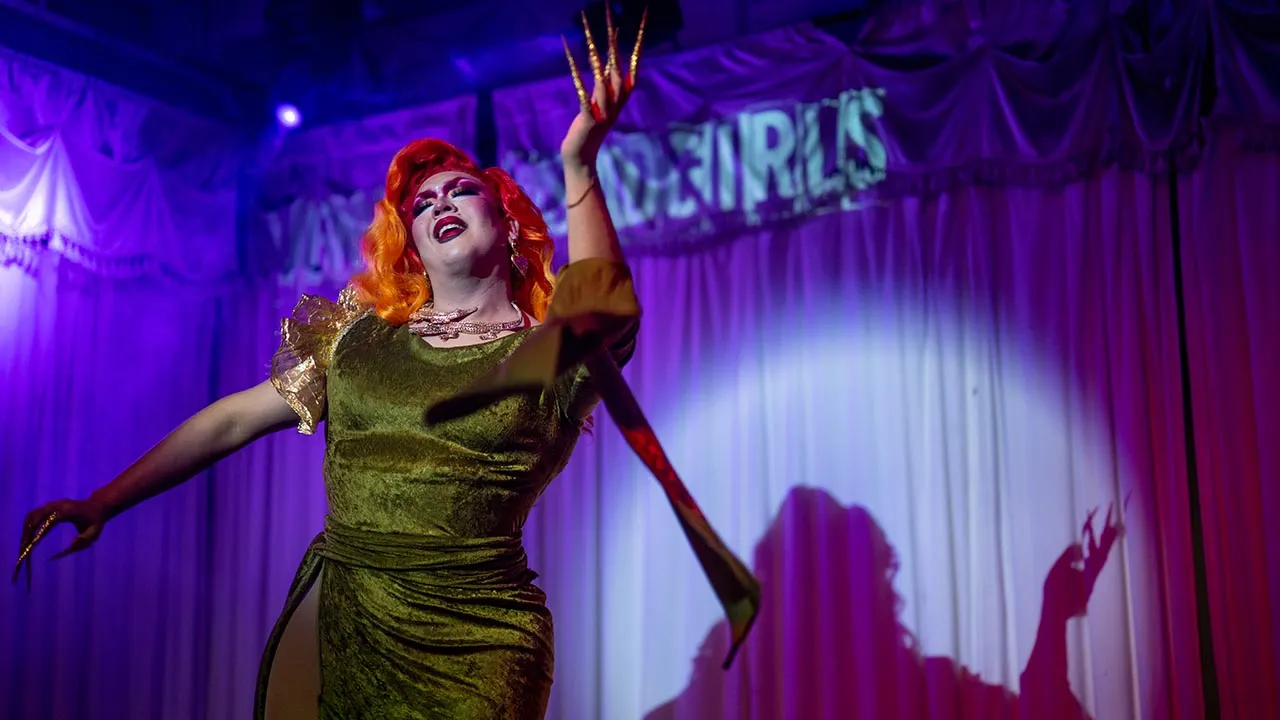
 Drag performer on stage in dramatic pose, representing the Texas drag ban ruling.
Judge Strikes Down Texas Drag Ban, Cites Dolly Parton Risk
Left says
- •The ruling protects free expression and reaffirms that vague, sweeping laws cannot be used to criminalize LGBTQIA+ performers and allies under the guise of protecting children.
- •The ACLU and other advocates see the law as part of a broader pattern of targeting drag performances and LGBTQIA+ expression, and view this ruling as a necessary check on government overreach.
- •Judge Hittner's suggestion that offended residents simply avoid such shows reflects a view that personal discomfort should not justify restricting others' constitutional rights.
- •The law's chilling effect discouraged people from attending or hosting legal performances out of fear of prosecution, which the ruling seeks to remedy.
Right says
- •Texas lawmakers and Gov. Greg Abbott designed the law to protect children from sexually explicit content in public settings, and see judicial intervention as thwarting a legitimate state interest.
- •Attorney General Ken Paxton has fought to enforce the law twice, reflecting continued political and public support in Texas for restricting sexually oriented performances where minors could be present.
- •Some view the judge's comparison of drag shows to performers like Dolly Parton and Elvis as a rhetorical device that trivializes concerns about age-appropriate content rather than addressing the law's actual intent.
- •The back-and-forth history of the case, including the Fifth Circuit's reversal of the judge's earlier ruling, shows this remains a genuinely contested legal question rather than settled law.
Common Take
High Consensus- Both sides agree the law, Texas Senate Bill 12, was passed in 2023 and imposed fines up to $10,000 and possible jail time for violations.
- Both sides acknowledge Judge David Hittner, a Reagan appointee, has now struck down the law twice on First Amendment grounds.
- Both sides recognize the case has a complicated legal history, including a Fifth Circuit reversal in 2025 that sent it back to Hittner.
- Both sides agree the law's broad language raised genuine questions about which performances, from cheerleading to concerts, could be swept into its restrictions.
The Arguments
Left argues
The law's definition of 'sexually oriented performance' was so vague and broad that it could sweep in mainstream entertainers like Dolly Parton, Elvis, or cheerleaders, making it impossible for ordinary people to know what conduct is actually prohibited.
Right counters
Comparing drag performances to Dolly Parton or Elvis is a rhetorical flourish that sidesteps the law's actual target: sexually explicit content presented specifically where minors are present, not general performance style or flamboyance.
Right argues
Texas lawmakers and Gov. Abbott passed SB 12 to serve a legitimate and widely supported state interest: shielding children from sexually explicit performances in public venues, a goal that doesn't require banning drag as an art form generally.
Left counters
If protecting children from explicit content were the real goal, the law could have been narrowly drafted to target actual obscenity; instead its vague, sweeping language function as a pretext to chill and criminalize LGBTQIA+ expression broadly.
Left argues
The chilling effect of SB 12 was real and documented — performers, venues, and attendees avoided legal shows out of fear of prosecution, showing the law suppressed protected speech even before any specific violation was proven.
Right counters
A law having a deterrent effect on conduct the state deems harmful to minors is not evidence of unconstitutional overreach — it may simply mean the law was doing what legislators intended, and any imprecision should be fixed through narrower drafting, not total invalidation.
Right argues
The Fifth Circuit's earlier reversal of Hittner's first injunction, and Paxton's repeated efforts to enforce the law, demonstrate this is a genuinely unsettled legal question with serious appellate court support for the law's constitutionality, not a fringe position being struck down by a lone activist judge.
Left counters
That the law has bounced between courts reflects its inherent vagueness and constitutional infirmity, not legitimacy — a Reagan-appointed judge independently reached the same conclusion twice after being specifically instructed to reassess it under new Supreme Court precedent.
Left argues
Judge Hittner's suggestion that offended residents simply avoid drag shows reflects a core First Amendment principle: personal discomfort or disapproval of speech is not a constitutionally valid basis for the government to criminalize it.
Right counters
That logic fails when children can be present in public spaces without consent or advance warning — the state's interest is precisely in protecting minors who cannot simply choose to 'avoid' exposure to sexually oriented content in shared public settings.
Challenge Questions
These questions target genuine internal contradictions — meant to provoke honest reflection.
Right asks Left
“If SB 12's language is unconstitutionally vague because it could theoretically apply to performers like Dolly Parton, why shouldn't the response be urging the legislature to draft a narrower, more precise law targeting actual sexual explicitness, rather than opposing any restriction on performances where children are present?”
Left asks Right
“If the law's true purpose is narrowly protecting children from explicit content, why did the state defend statutory language broad enough that a federal judge—twice, using different legal frameworks—found it could criminalize mainstream, non-explicit performers and everyday activities like cheerleading?”
Outlier Report
Left Fringe
Groups like the ACLU and ACLU of Texas (Brian Klosterboer) frame this as part of a systemic anti-LGBTQ crusade, a view shared by maybe 25-30% of the left that sees any regulation of drag as inherently discriminatory rather than child-safety related.
Right Fringe
Figures like Ken Paxton and some Christian conservative commentators (e.g., voices on outlets like The Daily Wire) treat all public drag performances as inherently predatory or grooming-adjacent, a more extreme framing held by roughly 20-25% of the right that goes beyond the 'protect kids from explicit content' mainstream argument.
Noise Assessment
High—social media reactions to the Dolly Parton line are largely viral/humor-driven rather than substantive engagement with the law's constitutional merits, and much of the loudest commentary from both sides overstates how settled or extreme the issue actually is among average Americans.
Sources (8)
<p>A federal judge struck down a 2023 Texas law Tuesday, ruling that the state cannot enforce its drag show ban as it violated the First Amendment’s guarantee of free speech while its definitions were so broad it could have landed the late Dolly Parton behind bars.</p> <p>The post <a href="https://www.breitbart.com/entertainment/2026/08/26/federal-judge-kills-texas-drag-show-ban-saying-it-would-even-land-dolly-parton-in-jail/" rel="nofollow">Federal Judge Kills Texas Drag Show Ban, Saying It Would Even Land Dolly Parton in Jail</a> appeared first on <a href="https://www.breitbart.com" rel="nofollow">Breitbart</a>.</p>
Judge David Hittner blocked Ken Paxton from enforcing Texas Senate Bill 12, citing First Amendment protections for drag shows and free speech.
U.S. District Judge David Hittner gave a simple solution to those who find the performances offensive: “Just don’t go.”
A federal judge on Tuesday struck down, for the second time, a Texas law that would have restricted public drag performances in the state, name-checking the late Dolly Parton in doing so. U.S. District Judge David Hittner ruled that the state Senate Bill 12, which was passed in 2023, violated the First Amendment and “is…
Attorneys are presenting closing arguments in Lindsay Clancy's murder trial in Massachusetts after 21 days of testimony.
The defense and prosecution in the trial against Lindsay Clancy will give their closing arguments today. CBS News' Shanelle Kaul has more on what to expect.
Testimony in Lindsay Clancy's trial is finished after jurors in the Massachusetts murder case heard from 85 witnesses.
Closing arguments will get underway in the trial of Lindsay Clancy with the prosecution and defense set to make their final pitches to a Massachusetts jury. On Wednesday, the judge signaled that the jury will now be allowed to consider a manslaughter charge after a request from the defense. NBC’s Emilie Ikeda reports for TODAY.