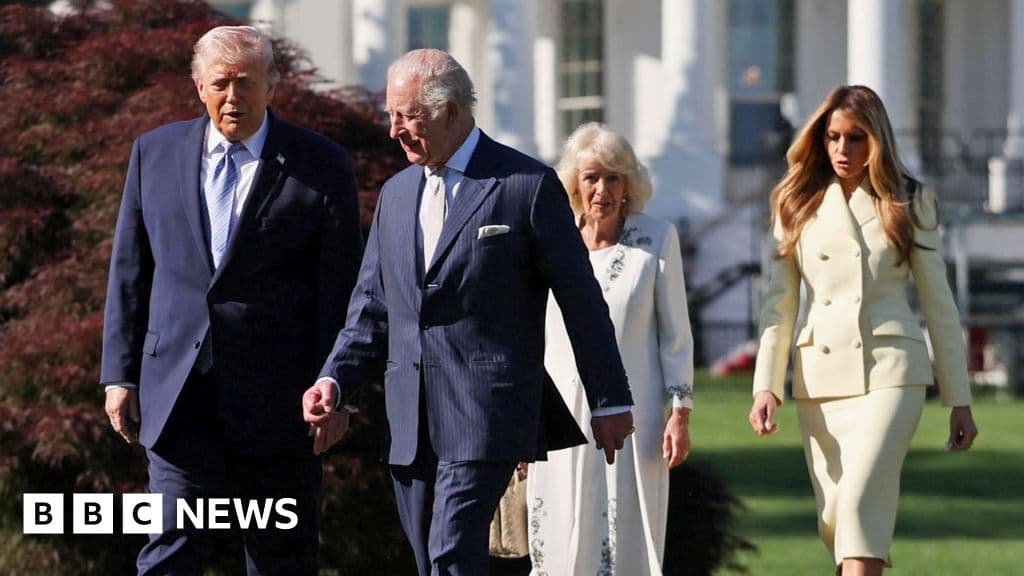
King Charles addresses Congress amid US-UK tensions over Iran war
Left says
- •King Charles's address represents crucial diplomatic bridge-building at a time when Trump's criticism of NATO and unilateral approach to Iran threatens decades of transatlantic cooperation
- •The monarch's emphasis on democratic values, tolerance, and supporting Ukraine serves as a gentle but important reminder of shared principles that transcend current political disagreements
- •The closed-door meeting format protects the dignity of the constitutional monarchy while preventing Trump from potentially embarrassing a head of state on camera
Right says
- •Britain's refusal to support America's war effort in Iran demonstrates how traditional allies are abandoning the US when decisive action is needed against a dangerous regime
- •The King's ceremonial visit highlights the contrast between symbolic gestures and the hard realities of military partnership that America requires from its closest allies
- •Trump's frustration with Prime Minister Starmer reflects legitimate concerns about burden-sharing and commitment when America leads on critical security issues
Common Take
High Consensus- King Charles is delivering only the second address by a British monarch to the US Congress, making this a historically significant diplomatic moment
- The visit commemorates the 250th anniversary of American independence and celebrates the enduring relationship between the two nations
- Both countries recognize the importance of the transatlantic alliance that has been foundational since World War II
- Security concerns following the recent assassination attempt have heightened precautions around all events during the state visit
The Arguments
Left argues
King Charles's address serves as crucial diplomatic bridge-building at a moment when Trump's unilateral approach to Iran and criticism of NATO threatens to fracture decades of transatlantic cooperation that has been essential for global stability.
Right counters
Ceremonial speeches and symbolic gestures cannot substitute for concrete military support when America needs its closest allies to stand with it against dangerous regimes like Iran that threaten regional and global security.
Right argues
Britain's refusal to support America's military action in Iran demonstrates how traditional allies are abandoning the US when decisive action is needed, leaving America to bear the burden of confronting threats alone despite decades of mutual defense commitments.
Left counters
The UK's measured approach reflects legitimate concerns about unilateral military action and the importance of multilateral consensus-building, which has historically produced more sustainable and effective foreign policy outcomes.
Left argues
The closed-door meeting format protects the dignity of the constitutional monarchy while preventing Trump from potentially creating an international incident by publicly berating a head of state, as he has done with other world leaders.
Right counters
The need to shield the King from public interaction with the US President reveals the fundamental weakness in Britain's position and their inability to defend their policies in open diplomatic discourse.
Right argues
Trump's frustration with Prime Minister Starmer reflects legitimate concerns about burden-sharing and commitment when America consistently leads on critical security issues while allies benefit from US protection without reciprocating when needed.
Left counters
True alliance partnership requires consultation and consensus-building rather than expecting automatic support for unilateral decisions, and the UK's independent assessment of military action demonstrates responsible sovereignty.
Left argues
The King's emphasis on democratic values, tolerance, and supporting Ukraine serves as an important reminder of shared principles that transcend current political disagreements and should guide long-term strategic cooperation.
Right counters
Abstract appeals to shared values ring hollow when Britain refuses to act on those values by supporting America's efforts to confront Iran's destabilizing influence and threats to democratic allies in the region.
Challenge Questions
These questions target genuine internal contradictions — meant to provoke honest reflection.
Right asks Left
“If diplomatic bridge-building and symbolic gestures are so valuable for maintaining alliances, why shouldn't this same principle apply to Britain demonstrating good faith by providing at least some form of support for America's Iran policy rather than complete opposition?”
Left asks Right
“If burden-sharing and alliance commitments are truly reciprocal obligations, why shouldn't America's expectation of support be balanced by Britain's expectation to be consulted before major military decisions that affect global stability?”
Outlier Report
Left Fringe
Progressive isolationists like some DSA members who oppose any military cooperation or ceremonial visits that legitimize foreign monarchies represent roughly 15% of the left coalition.
Right Fringe
America First hardliners like Steve Bannon and some MAGA influencers who view any diplomatic accommodation as weakness and want complete rejection of traditional allies represent about 25% of the right coalition.
Noise Assessment
Moderate noise level - while partisan media amplifies tensions, most Americans aren't deeply engaged with the nuances of US-UK diplomatic protocol during wartime, leading to more performative outrage than genuine public division.
Sources (6)
King Charles will address the US Congress on Tuesday at a time of diplomatic tensions between London and Washington.
King Charles III will deliver a rare address to a joint meeting of Congress Tuesday before attending a state dinner at the White House.
King Charles is set to address Congress during his U.S. state visit, becoming only the second British royal to speak before the legislative body.
King Charles III is set to deliver a joint address to Congress on Tuesday and where he's expected to highlight how the U.S. and the U.K. “have always found ways to come together” despite disagreements, as he uses his own relationship with the President to try to repair the rift that’s emerged over the war against Iran. NBC’s Hallie Jackson reports for TODAY.
The state visit of King Charles III comes at a moment of tension over the war in Iran between President Trump and Prime Minister Keir Starmer.
<p>State visit of UK royals continues as monarch to tell US lawmakers that ‘our countries have always found ways to come together’</p><ul><li><p><a href="https://www.theguardian.com/news/2026/feb/17/sign-up-for-the-breaking-news-us-email-to-get-newsletter-alerts-direct-to-your-inbox?utm_medium=ACQUISITIONS_STANDFIRST&utm_campaign=BN22326&utm_content=signup&utm_term=standfirst&utm_source=GUARDIAN_WEB">Sign up for the Breaking News US email</a></p></li></ul><p><strong>King Charles</strong> and <strong>Queen Camilla</strong> kicked off their state visit yesterday by meeting with <strong>Donald</strong> and <strong>Melania Trump</strong> at the White House for afternoon tea, before heading to a garden party at the British ambassador’s residence in Washington.</p><p>There, Charles and Camilla mingled with top US officials, including cabinet members, Trump’s advisers and US lawmakers.</p> <a href="https://www.theguardian.com/us-news/live/2026/apr/28/donald-trump-king-charles-melania-camilla-white-house-congress-latest-news-updates">Continue reading...</a>