King's Speech overshadowed as 90 Labour MPs call for Starmer's resignation
Intra-Party Split Detected
Labour Party deeply divided with about 90 MPs calling for Starmer to resign while 100+ MPs signed letter supporting him
Left says
- •Starmer's government maintains legitimacy through its substantial parliamentary majority and democratic mandate from the 2024 election
- •The King's Speech presents a comprehensive legislative agenda addressing key priorities like housing reform, workers' rights, and economic growth
- •Leadership speculation distracts from urgent policy work needed to deliver on Labour's promises to voters
- •The ceremonial continuity of parliamentary traditions demonstrates institutional stability despite political turbulence
Right says
- •Starmer's weakened position undermines effective governance and creates dangerous political instability
- •The timing of the King's Speech appears calculated to distract from Labour's electoral failures and internal crisis
- •A prime minister who has lost the confidence of nearly half his parliamentary party cannot credibly lead the country
- •The contrast between royal ceremony and political chaos highlights Labour's inability to provide stable leadership
Common Take
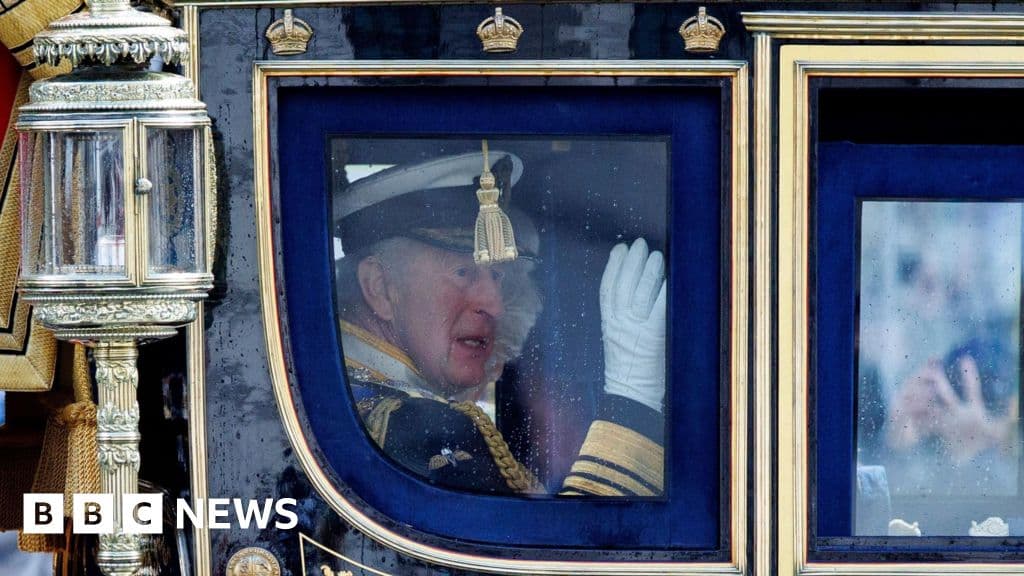
High Consensus- King Charles III delivered the traditional King's Speech outlining the government's legislative agenda for the coming parliamentary session
- Approximately 90 Labour MPs have called for Starmer's resignation or departure timeline following poor local election results
- The ceremonial State Opening of Parliament proceeded with traditional pomp despite the political uncertainty
- The speech contained 37 proposed bills covering areas including housing, transport, and economic policy
The Arguments
Right argues
A prime minister who has lost the confidence of 90 MPs from his own party—nearly half his parliamentary caucus—cannot effectively govern or command authority in Parliament. This level of internal rebellion fundamentally undermines the government's ability to pass legislation and maintain stability.
Left counters
Starmer retains the support of over 100 Labour MPs who signed a letter backing his leadership, demonstrating he still commands majority confidence within his party. Democratic legitimacy comes from the 2024 election mandate, not from internal party dynamics that can shift with political winds.
Left argues
The King's Speech presents a comprehensive 37-bill legislative agenda addressing critical issues like housing reform, workers' rights, and economic growth that voters elected Labour to deliver. Focusing on leadership speculation distracts from the urgent policy work needed to fulfill campaign promises.
Right counters
A weakened prime minister cannot effectively shepherd this ambitious legislative agenda through Parliament, especially when facing such significant internal opposition. The timing of the King's Speech appears calculated to distract from Labour's electoral failures rather than demonstrate genuine governing capacity.
Left argues
The ceremonial continuity of parliamentary traditions like the State Opening demonstrates institutional stability that transcends temporary political turbulence. Britain's constitutional system is designed to maintain governance even during periods of political uncertainty.
Right counters
The stark contrast between royal ceremony and political chaos actually highlights Labour's inability to provide stable leadership. Having the king read the words of a prime minister whose own party is calling for his resignation creates a constitutional paradox that undermines governmental authority.
Right argues
The disastrous local election results, where Labour was pushed into third place in seats they won with over 50% of the vote in 2024, demonstrate a catastrophic loss of public confidence that makes Starmer's position untenable. These results preview electoral annihilation if repeated nationally.
Left counters
Local elections often serve as protest votes against governing parties and don't necessarily predict general election outcomes. Labour's substantial parliamentary majority provides the stability needed to implement policies that can rebuild public support over the remaining years of the term.
Challenge Questions
These questions target genuine internal contradictions — meant to provoke honest reflection.
Right asks Left
“If democratic legitimacy truly comes from the 2024 election mandate rather than ongoing party confidence, how can you reconcile this with Labour's own precedent of forcing out previous leaders when they lost party support, and doesn't this position essentially argue that no prime minister should ever resign regardless of circumstances?”
Left asks Right
“If internal party rebellion automatically disqualifies a prime minister from governing effectively, how do you explain the many successful governments that have weathered significant internal dissent, and doesn't this standard essentially give any faction of MPs veto power over democratically elected leadership?”
Outlier Report
Left Fringe
Progressive activists like Alexandria Ocasio-Cortez's wing who might argue that internal party democracy and accountability should override stability concerns, representing roughly 15-20% of the left coalition.
Right Fringe
MAGA-aligned figures like Steve Bannon or Tucker Carlson who might celebrate any Western democratic instability as validation of populist movements, representing about 25-30% of the right coalition.
Noise Assessment
Moderate noise level - this is primarily a substantive governance story rather than performative political theater, though some amplification occurs from partisan figures using it to validate broader anti-establishment narratives.
Sources (6)
King Charles III has unveiled the government's agenda in a speech to Parliament.
The monarch has outlined the government's plans for new laws in the next session of Parliament.
BBC Chief Political Correspondent Henry Zeffman explains what is next for the government after the King's Speech.
LONDON — Plotters are trying to bring down the British prime minister.
King Charles III read out Keir Starmer’s legislative agenda in the traditional manner, even as the British prime minister’s leadership remained under pressure.
While more than 100 Labour lawmakers signed a letter of support for Starmer, about 90 others urged him to set a timetable for his departure.