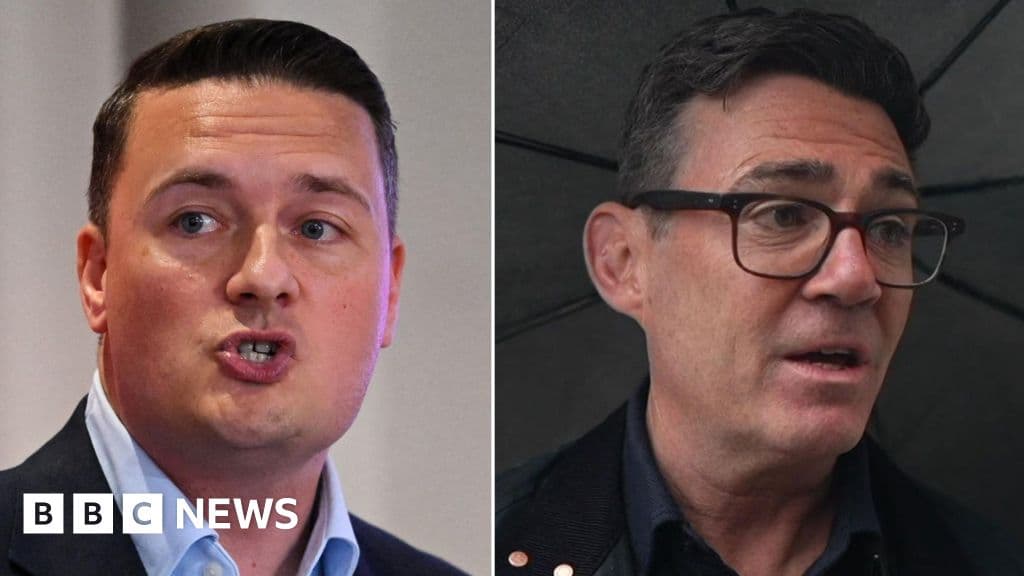
Labour Leadership Race Begins as Starmer Refuses to Resign
Intra-Party Split Detected
Over 90 Labour MPs calling for Starmer's resignation while others support him staying, with cabinet ministers and advisers divided on his future
Left says
- •Starmer's catastrophic leadership has enabled the far-right Reform UK party to surge in popularity and dominate British politics, betraying Labour's core values
- •The party's crackdown on pro-Palestine activism and disrespect for its grassroots base has driven supporters to the Greens and other alternatives
- •Labour's collapse in traditional strongholds like mining towns represents a fundamental betrayal of working-class communities that have supported the party for generations
- •The leadership's adherence to procedural rules while ignoring widespread calls for resignation demonstrates dangerous detachment from democratic accountability
Right says
- •Starmer's remarkable resilience in clinging to power despite unanimous consensus about his political incompetence shows his stubborn adherence to procedure over effective governance
- •The leadership contest reveals Labour's internal chaos and inability to govern effectively during critical times when the country needs stable leadership
- •Reform UK's electoral success demonstrates legitimate public frustration with Labour's failures on core issues like immigration, the economy, and healthcare
- •The party's potential for having seven prime ministers in ten years would create unprecedented instability and damage Britain's international standing
Common Take
High Consensus- Labour suffered devastating losses in local elections across England, Scotland, and Wales
- Reform UK made significant electoral gains, particularly in traditional Labour strongholds in northern England
- Starmer faces historically low approval ratings and calls for resignation from over 90 Labour MPs
- Multiple cabinet members and junior ministers have resigned from Starmer's government
- Any leadership contest would require 81 Labour MPs to formally trigger the process under party rules
The Arguments
Left argues
Starmer's leadership has enabled the far-right Reform UK party to surge from third place to leading opinion polls, fundamentally betraying Labour's anti-fascist values and allowing extremists to dominate British politics. His crackdown on pro-Palestine activism and dismissal of grassroots concerns has driven traditional Labour supporters to the Greens and other alternatives, fragmenting the left-wing vote.
Right counters
Reform UK's success reflects legitimate public frustration with Labour's failures on core issues like immigration, healthcare, and the economy, not Starmer's supposed betrayal of values. The party's electoral gains demonstrate that voters are rejecting Labour's policies and governance, not being manipulated by far-right extremism.
Right argues
Starmer's stubborn refusal to resign despite unanimous consensus about his political incompetence demonstrates dangerous adherence to procedure over effective governance when Britain needs stable leadership. A potential seventh prime minister in ten years would create unprecedented instability and severely damage Britain's international standing and credibility.
Left counters
Starmer is following democratic procedures and party rules rather than bowing to informal pressure, which actually demonstrates respect for institutional governance. The calls for resignation come from a party establishment that has consistently ignored grassroots voices and working-class concerns.
Left argues
Labour's collapse in traditional strongholds like mining towns represents a fundamental betrayal of working-class communities that have supported the party for generations. The leadership's detachment from its base while pursuing centrist policies has abandoned the very people Labour was founded to represent.
Right counters
Labour's losses in working-class areas reflect the party's failure to address voters' real concerns about immigration, economic security, and national identity. These communities are rejecting Labour's progressive agenda in favor of parties that actually listen to their priorities.
Right argues
The leadership contest reveals Labour's internal chaos and inability to govern effectively during critical times when the country faces a cost of living crisis and international conflicts. The party's focus on internal power struggles rather than addressing public concerns demonstrates fundamental unfitness for government.
Left counters
The leadership challenge represents democratic accountability in action, with MPs and party members demanding change after catastrophic election results. This internal debate is necessary to prevent Labour from continuing down a path that has enabled far-right extremism to flourish.
Challenge Questions
These questions target genuine internal contradictions — meant to provoke honest reflection.
Right asks Left
“If Starmer's policies are truly responsible for Reform UK's rise, how do you explain similar far-right surges across Europe where Labour-style parties aren't in power, and doesn't blaming Starmer for voters choosing far-right parties ultimately excuse those voters' own agency and responsibility for their political choices?”
Left asks Right
“If stability and avoiding a seventh prime minister is so crucial for Britain's governance and international standing, why are you simultaneously arguing that the current government is so incompetent that it needs to be replaced, and how do you reconcile demanding both continuity and change?”
Outlier Report
Left Fringe
Progressive activists like those associated with Democratic Socialists of America who might view Starmer's centrist positioning as a betrayal of leftist principles, representing roughly 15-20% of the American left.
Right Fringe
MAGA-aligned commentators like Steve Bannon or Tucker Carlson who might celebrate any Western democratic instability as validation of populist movements, representing about 25-30% of the American right.
Noise Assessment
Moderate noise level - most Americans have limited knowledge of UK internal politics, so opinions would be largely based on general attitudes toward political stability rather than deep engagement with the specific issues.
Sources (10)
The former health secretary says there must be a 'proper contest' while Burnham says Labour needs to be 'saved from where it's been'.
Labour is consumed by drama, but the PM still faces big decisions - and what could be his final choice.
<p>Britain's government is in turmoil and the man many think could save it isn't even eligible for the job of prime minister.</p> <p>The post <a href="https://www.breitbart.com/europe/2026/05/16/burnham-emerges-as-top-starmer-challenger-but-he-needs-to-win-seat-in-parliament-first/" rel="nofollow">Burnham Emerges as Top Starmer Challenger, But He Needs to Win Seat in Parliament First</a> appeared first on <a href="https://www.breitbart.com" rel="nofollow">Breitbart</a>.</p>
Wes Streeting is one of several challengers who could try to unseat the U.K. prime minister.
Despite what many expected at the start of this week, Sir Keir Starmer remains prime minister of the United Kingdom — for now. The race to replace him has begun, though slowly and awkwardly, in part due to Starmer’s surprising resilience. For months, there has been a broad consensus that the Labour Party would move ...
This year’s local election results from the United Kingdom are in. The far-right, anti-immigrant Reform UK party made substantial gains, while the ruling Labour Party suffered heavy losses, signaling what London-based journalist Daniel Trilling calls a “wider fragmenting of politics” and a generational shift away from the two-party political system. We get an overview of major developments to the U.K. political scene from Trilling, including how Donald Trump’s transformation of the U.S. right-wing movement has inspired Nigel Farage’s Reform UK party, and how the Labour Party’s crackdown on pro-Palestine activism led to rising support for the left-wing Green Party. Trilling also discusses how populist sentiment continues to influence other countries in Europe after Hungary’s extremist leader Viktor Orbán suffered a major election defeat last month.
Britain’s PM can't contain the damage after disastrous election. But ousting him will create a huge mess
<p>Marcus Barnett</p> <div><img alt="" src="https://www.thenation.com/wp-content/uploads/2026/05/keir-starmer-loser-elections.jpg" /></div> <div> <div class="wp-block-the-nation-dek article-title__dek"> <p>Labour leadership’s free fall is also tied to its lack of respect for the base it relies on to function.</p> </div> </div> <p>The post <a href="https://www.thenation.com/article/world/labour-uk-elections-starmer-populism/">Reeling From the UK Election and the Collapse of Labour</a> appeared first on <a href="https://www.thenation.com">The Nation</a>.</p>
<p>Evan Robins</p> <div><img alt="" src="https://www.thenation.com/wp-content/uploads/2026/05/GettyImages-2275129676.jpg" /></div> <div> <div class="wp-block-the-nation-dek article-title__dek"> <p>How the Labour Party’s catastrophic prime minister paved the way for fascists to dominate British politics.</p> </div> </div> <p>The post <a href="https://www.thenation.com/article/world/uk-local-elections-reform-keir-starmer/">The UK’s Far Right Is On the March—Thanks to Keir Starmer</a> appeared first on <a href="https://www.thenation.com">The Nation</a>.</p>
Britain's government is in turmoil and the man many think could save it isn't even eligible for the job.